
Turning OPPORTUNITIES Into INTERVIEWS

Compass-seaLThis topic represents what most people call ‘active job search, but, as you can learn, the HOW –TO is what creates your success in networking. It professes strategies and tactics that will generate more effective networking.

In your ‘first wave’ of networking you had the opportunity to reconnect with people you already know or have cause to know… a nice by product of your efforts is the identification of attractive opportunities, and targeted organizations!

Make FIT happen!


NEXT SESSION: Turning Opportunity into INTERVIEWS!  Thursday, January 4th at The Egg and I Restaurant in Addison


chalk1You’ll be the first to know when you’re ready for ‘wave 2’ of networking… which, simply put, is networking your way in to attractive opportunities.  You will focus your activity and time management to the business of creating INTERACTIVE COMMUNICATION with employees, customers, and vendors–the “stakeholders”– within and surrounding any targeted organization.

 THE BASICS

So what are those basics that will allow you to effectively network to identify appropriate opportunities, and then secure the requisite INTERVIEWS in order to “close the deal?”

  1. Practice your two minute drill every chance you get…. it’s the fundamental building material of your communication strategy–your verbal collateral materials!
  2. Practice your exit and qualification statements… most all potential employers and networking contacts will want to know your current situation and why you are available.
  3. Practice answering both common and tough questions… including PRE-offer negotiation tactics. The most asked question during career transition is, “Tell me about yourself.” Appropriate use of your two-minute drill and related verbal strategies, your “verbal collaterals,” is a key ingredient to personal salesmanship.

Let’s not forget a couple of additional ‘collaterals’ that will help you round out your ability to ‘get the word out’ and serve as evidence of your qualifications.

  1. Brag bytes… Wordcraft various collections of words, phrases and sentences to capture memorable moments or accomplishments–the best you have to offer. “…saved 80% cost-perhire…” Used in MSWord, ‘Quick Parts’ can be quite efficient when building high impact correspondence as well.
  2. Personal Portfolio… Your collection of certificates, examples of work, reference letters, etc that can bring life and interest (not to mention PROOF) to your story.

Informational “Interviews” With Key Contacts

In addition to being introspective, it’s also important to get out there and start becoming your own best CAREER Coach, learning about satisfying next steps, the career moves you’re interested in.   And what better resource than the very people already in, or connected with, those you seek?

As an active job seeker, especially in the first few months of a job search, networking your way to one informational interview per week is essential to your campaign’s success.  This may sound like a lot, but initially quantity is more important than quality as you want to get a sense of a wide variety of roles in different industries based on the results of your introspection.

The more people you speak with, the more you’ll be exposed to fields you might wish to pursue. With that said, you don’t want the person on the receiving end to feel that way—so always make sure to come prepared and send a thank you.

The GREAT Informational Interview

Let’s say you managed the tricky process of asking for an informational interview and have succeeded in arranging a meeting with an amazing contact. What now? How do you make the most of this conversation—while still keeping things casual and comfortable?

As always, it’s just a matter of being prepared. Here’s a three-part process for your next meeting that’ll make sure you get the advice you need… and make a great  impression on those who may direct you to your next steps.

  1. The Warm Up

People love to talk about themselves, so when you first sit down, give them a perfect opportunity!  Get the conversation going by asking your contact something about his or her experiences thus far—something he or she knows all about. Some good places to begin:

  • How did you get your start in this field?
  • What’s it like working at your company?
  • What projects are you working on right now?
  • What’s your opinion on [exciting development in the industry]?

You should also be prepared to chat about yourself, your past experiences, and your career goals. Remember, this meeting isn’t just a time to ask for advice and learn from your contact’s experiences—it’s also a chance to make an impression.

  1. Your Pitch

After you’ve made some general conversation, it’s time to move on to what you came for: the advice you can’t get anywhere else. Before the meeting, think through the insider information you want to learn from this person.

  • What information are you seeking?
  • Is there something you can learn from this person that would be difficult for you to learn on your own?

Depending on where you are in the job search process, adjust your questions accordingly. For example, if you’re still in exploration mode, trying to find out if, say, working for an technology startup is for you, then ask questions like:

  • How did you choose this company or position over others in your field?
  • What is the most rewarding thing about working in this industry? The most challenging?
  • My background is in ___________… how do you think I can best leverage my previous experience for this field?

If you’re further along in your job search and could use some job hunting and interviewing tips for specific companies, don’t be afraid to ask questions like:

  • What experiences, skills, or personality traits does your company look for in new hires?
  • What do you wish you had done differently when you first started at your company?
  • What job search advice would you give to someone in my situation?

Of course, you’ll want go with the flow of the conversation—you’re trying to build a relationship, not fire off as many questions as you can.

Also remember that what these questions have in common is that they are all seeking advice, information, or referrals (AIR not JOB). Keep it that way. It’s no mystery that you are clearly looking for a new position or career change, and the fastest way to alienate your contact is to ask for a job (or anything along those lines).

REPEAT: The fastest way to alienate your contact is to ask for a job (or anything along those lines). If your contact offers to forward your resume based on your conversation, then by all means, take advantage of it. But that process is for him or her to initiate, not you.

  1. Tap Into Their Network… a “Lost Owl” Strategy

When wrapping up the meeting, you should ask for recommendations for two or three more people who would be good to talk to as you continue networking.  “WHO else or WHERE else might I go for more advice and information?  The likelihood someone will take time to chat with you goes up significantly if your initial request comes through a mutual contact, so it’s a fast, easy way to broaden the reach of your networking effort.

The key here is to make your request as specific as possible. This might be counter-intuitive, but it actually makes it easier for your contact to think of someone when you say, “Could you recommend a couple more people for me to speak with to learn more about harnessing of available wind energy?”  …than to come up with an answer to, “Is there anyone else you would recommend that I speak with?”

To recap: Get the conversation going, know what you want to get out of the meeting, and don’t leave without knowing who you’re contacting next. And don’t forget to follow up with a thank-you note!

Better yet, follow up again with an update on your meetings with the people he or she recommended and the results of your job search. After all, your informational interviewees aren’t just useful for their one-time advice—they can become a long-term part of your network.

Networking is a CONTACT Sport

chalk1Job search does not happen in a digital vacuum.  You have learned in earlier sessions that the key to the whole notion of productive and efficient networking is to generate INTERACTIVE communication, the initial basis of relationship building!

When involved with active job search, part of our preparation is to develop your set of Personal Marketing collateral materials.   I have long suggested that steps one and two of our 12-step Process M.A.P. give us all the ingredients we need to “get in the galley” and cook up a three course meal of our personal marketing collateral materials.


This week’s session, Thursday, December 7th:  Implementing Your Personal Marketing Plan during the HOHoholidaze ahead


Pilot OnboardWhile most job seekers seem to prefer starting with a resume, so that they can begin simply applying to any job that seems remotely close to what they can do… I encourage you to work with all your ingredients at the same time…if your desired result is a nice prime rib dinner, don’t start with the meat—start with the seasonings and vegetables, even get your dessert started…

Because that “meaty” resume is the easiest and quickest of what you need to prepare!  So…job seeking ‘chefs,’ let’s look at the ingredients that you have identified through assessment of your galley shelves, and your dinner of choice.

WHERE To Start

As a contact sport, networking is about interaction between sender and receiver, buyer and seller… job seeker and potential employers. The great news is that you get to start from YOUR ‘sweet spot’ or middle ground where all this interaction occurs the easiest!

You start with people that you already know or have some connection to. If your ‘natural network’ doesn’t have a regular meeting—most do not, by their very diverse nature—groups of like-minded people are easy to identify and attend. As you begin to reach out and broaden your ‘sweet spot,’ be selective in your attempt to create a supportive ‘community’ grouping close to your targeted marketplace.

Networking within your targeted marketplace, your unique, job search ‘community’ should play a critical role in your Personal Marketing strategies. It is an easy means to getting the word out about your business to people who may purchase and influence others to purchase your service or goods. But just as with any other job search activity, we get what we put into it.

That being said, local networking events are seeing record turnouts lately, a sign that leads us to believe the networking is paying off. A Local Networking Group is any organization, which meets on a regular basis, to share and receive referrals and leads.

Some of the largest local organizations devoted to supporting job seeker efforts are  Frisco Connect, Cathedral of Hope, the Southlake Group, Watermark Church… to name just a few. Many are associated with church support organizations… but are completely nondenominational in their approach, operation and outreach.

WHAT to start with if you have a huge personal contact network to start with… great! Start by prioritizing your list into three sub categories… Seasoned networkers with terrific phone and interview skills will undoubtedly start their networking efforts at the “B” and “SEE” list levels… but for the ‘normal’ job seeker this represents pre-mature activity.

Use the earlier preparation steps, practice time, and your first several ‘baby steps’ to develop your effectiveness BEFORE having to perform for your best contacts. “Don’t shoot yourself in the foot.” Further, try to avoid the temptation to respond to your sense of urgency in securing your next employment, with lack of adequate preparation and planning— the first seven steps—don’t be guilty of… “Ready… FIRE… Aim” It is as easy as a-b-c…

YOUR DISTRIBUTION NETWORK

Steps six and seven of our 12-step Process M.A.P., initial research and pulling together your initial contact list are in place to create focus to your efforts… What are the trends in the market that are attractive to you, and which target organizations are most needy of your value proposition?

Your evolving contact list will take you through the A-B-C’s of networking and the development of your distribution channels…

  1. Start with people you already know or have reason to “should know,” as they are the most likely to be receptive to your initial efforts.
  2. As you develop your network, identify key bridge contacts that can give you specific information or introduce you to key decision-makers and hiring authorities.
  3. Critical to your success is building relationships with people who can influence your hiring. This ‘must see’ list of influential contacts and hiring authorities is the epicenter of your job search campaign!

BABY STEPS Revisited Be your own best coach… pay homage to the demon in the room, TECHNOLOGY, specifically social media… and your own communication preferences. Even the most passive communicators must learn to engage and interact… but with whom?

Use your FREE LinkedIn account to organize your contact list and to function like a road map of who to network to next. Once identified, get on the phone and meet your newest “A” list contact.

You’ll never know when a ‘hidden gem’ of a “B” or “See” list contact will materialize in the process. When you’re networking, ask for a reference, not a job. Whether you’re doing catch-up drinks or grabbing lunch to reconnect, your main goal is to get an ally, not a tally of job listings.

Recruiting a helping hand to your search is your aim.

So don’t ask your college buddy if he knows of any jobs for people like you. How would he know? And don’t ask your boss from two jobs ago if she has the names of any people who are currently looking to hire somebody like you. It puts her on the spot. No, instead, ask for their advice, some information, or a reference.

Hmmmm… JOB vs. A.I.R.

Mention that you’re going to be moving on, or you’re already looking, or that you’re actively “out there looking.”   Let them know the type of positions that are a good CareerFIT for you, and what you’re hoping to achieve in your next opportunity. And, if appropriate, ask them if — when it gets to the actual interviewing process — it would be OK to use them as a reference.

By letting them know that you hold them in high enough esteem to potentially use them as a reference, you’re actually paying them a compliment. By not putting them on the spot about specific job openings, you eliminate making them consider you as a Yes-NO-Maybe “applicant,” thus reducing the awkwardness inherent in the networking conversation.

You’re also making it easier for them to say “yes”, or convey useful information… or simply to feel good about themselves for being a good friend and helping you out with this little favor. All of which means that you have a new buddy in your search — one who’s going to be thinking about keeping an eye out for new opportunities and an ear open for fresh possibilities for their reference-able friend: you.

Now, this doesn’t work for just any old person you meet on the street. There’s probably a pretty good match between people you’d take to lunch and those you could ask to be a reference. So my advice would be to stick to asking those you know well enough.

Being realistic, the widely offered and deeply wrong advice from past decades of job search tricks and tips… that you should try to extract favors, concessions, names, jobs, and career assistance from people you’ve only met over the phone is not only useless, it can be counterproductive to your aims by antagonizing your broader network.

ADVICE OVERLOAD vs. “LISTENING TO YOUR MARKETPLACE”

Compass-seaLMany people talk about “information overload” and “decision fatigue” when it comes to how to conduct your job search, or write your resume, or develop your LinkedIn Profile…or answer those challenging interview questions.


This Week’s session, Thursday, November 30th… Development of YOUR Personal Marketing Plan (PMP)


chalk1THE Careerpilot  believes there’s another side to the coin… Receiving options is actually motivational and liberating, with the right mindset.  Asking for someone else’s advice isn’t about getting the right answer out of them. Rather, it’s about adding perspective to your view so you can choose the right answer for you.
So, how can you ensure another ‘second opinion’ doesn’t cloud your judgement?

First and foremost, understand that your ‘core personality,’ defined by your unique strengths, skills, interests, preferences, and values (Step#1: ASSESSMENT), drives your “gut feel” on matters of choice.  TRUST that!

In THE Careerpilot’s 12-Step M.A.P. for career transition, Steps #1 and #2 are in place for one simple reason: If you don’t have a grip on what you want to do next in your career, work toward giving yourself that grip!  Your core personality should be represented in your offer criteria BEFORE development of your Personal Marketing collateral materials, like your resume!

If you cannot connect your motivated skills and strengths to supportive and confirming episodes from your actual experience, you should be utilizing your first wave of implementing your Personal Marketing Plan (Step#9) to identify and resolve this vital issue. Only then will it become effective to proceed with Step#3 in the development and practice of your collective communication strategies (keywords) in the design of your collateral materials, both verbal and written.

Remember: Perfect practice makes PERFECT!

Task #2 and 3: Building a FOCUSED LinkedIn Network

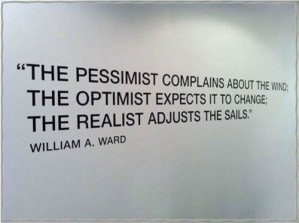
AjustDaSailsNever allow your LinkedIn usage to spiral out of control… However, that said, you want to get to your statistical ‘tipping point’ as soon as possible to cut the workload.

Your ultimate goal with social media is to STAY FOCUSED.  Only connect with others who share your professional interests or are related to those interests in a complementary way… and can help you meet your goals.  After you’ve created your profile, it’s time to begin to connect to others.  Remember your goals and adjust to your growing comfort and confidence with this ever evolving digital tool.


Our next session is Thursday, September 14th… LinkedIn Primer Task#2&3: Build your social network and explore ways to apply for posted jobs.


Pilot OnboardLinkedIn will allow you to search for people you know to see if they’re already members. But once you connect to someone, you can also look at the profiles of anyone they know, and in turn anyone those people know. Because of these three degrees of separation, your network can grow rapidly. Before you begin connecting, decide who you want to connect to. LinkedIn suggests in its FAQ, “Only invite those you know and trust.”

I started with twenty contacts from my MSOutlook.  My first line has grown to well over two hundred by accepting and sending out INVITATIONS to people I know, are likely to be interactive within our network, or who could provide resources to me or the Candidates I serve… what’s really impressive is how this translates, numerically, into your second and third lines of contact… we’re talking, WOW!!!

The 411 on “How Not to Be Connected”

If someone contacts you and you don’t want to form a connection with them, you don’t need to flatly reject them and worry about the attendant awkwardness. When looking at the invitation to connect, simply hit “Archive.” The other person does not receive a message saying their invitation has been rejected, and you don’t have to worry about unwanted invitations clogging up your inbox.

Likewise, if you find that an existing contact is blasting you with too much information or making overly aggressive requests for introductions and recommendations, LinkedIn will let you remove that person easily — and without the contact knowing they’re out of your network.

If only it were that easy in real life.

What’s Next?

  1. Check in on “Network Updates.” Found on your LinkedIn homepage, Network Updates are kind of like your Facebook news feed. Check these periodically for a quick snapshot of what your connections are up to and sharing.
  2. Be identifiable. Find out who’s checking out your profile by allowing others to see who you are if you view theirs. When you click the information under “Who’s Viewed My Profile” on your profile page, you’ll be able to view users who have looked at your profile, stats on your profile’s number of views, and its appearances in search recently. To change this, go into your settings and click “See what others see when you’ve viewed their profile.”
  3. Export connections. Transfer your LinkedIn connections to another contact management system? LinkedIn enables you to easily export your connections. Just click on “Contacts,” “My Connections,” and then scroll down and click “Export Connections.” You have the option of either exporting as a .CSV or .VCF file.
  4. Easily find email contacts on LinkedIn. Speaking of connections, the “LinkedIn Companion for Firefox” is a great plugin that helps you identify the LinkedIn profiles of people who are emailing you. It also enables you to easily access other LinkedIn features via your browser.
  1. Leverage the power of LinkedIn Groups. Did you know that if you’re a member of the same group as another user, you can bypass the need to be a first degree connection in order to message them? In addition, group members are also able to view the profiles of other members of the same group without being connected. Join more groups to enable more messaging and profile viewership capabilities.

OK, I’m Prepared… NOW What?

happy-LABOR-dayYou’ve given yourself a Personal Marketing Plan… But, one last gut check:  Do you know where you’re headed (see: Offer Criteria) and HOW you’re planning to get there?  If you are not absolutely clear about what you want as that NEXT STEP in your career, envision an ideal position that will value you for the main characteristics and experiences you want to be hired for.


Thursday, September 7th… Implementing Your PMP:  Learn to manage the “waves” of time management and activity during your job search.


Pilot OnboardSince you need to be concise and clear when developing your Personal Marketing collateral materials (resume, BIO, verbal communication, and your LinkedIn profile),  it’s important to figure out what you best offer in your next position, so you know exactly what skills and experiences to highlight.  Make FIT happen!

RESEARCH: Analyze Your Target Industry

Once you know what you want to do, your next step is identifying where you want to be—think industry, city, and companies. Then, research your industry and key trends affecting it now: Read relevant industry news articles, research companies, and analyze job descriptions you’re interested in.

Find Your CareerFIT and Focus on CAREER Objectives

With your knowledge of your target industry, it’s time to figure out how you fit in (or want to). Identify, describe, and refine your key selling points with your end goal in mind. Then, craft them into 4-6 bullets, shooting for statements that are vivid and that clearly illustrate what you bring to the table over anyone else.

Ask Yourself

  • What is the intersection of your ‘value proposition’ and what your target industry, or specific Company, needs?
  • What are your most impactful areas of experience, knowledge, or skill?
  • What critical problems are you well suited to solve?

Pay Attention to the Nitty Gritty

As you begin to think about the type of career transition you want to make, what IS the next appropriate employment for you… start out by documenting what you already know to be true about your professional self.

  1. Give specific attention to what you spend the most time doing, those functional details of your work that have the greatest impact on your employer’s success, and, especially, what are you uniquely providing that gives value to your role?
  2. Take notes about when you’re feeling particularly unmotivated or unenthused about your job. Write down the tasks that bring you down as well as those that get you excited.
  3. It may seem like a tedious exercise, but if you stick with it, patterns will start to emerge. And it’s in teasing out these patterns that’ll help you build a picture of the role that’s right for you.

So, What’s YOUR Story?

To manage your career you should…

  • Keep your “offer criteria” in that dynamic state of change that allows you to adapt to market conditions…stay aware of ‘next steps.’
  • If your current goal is to find a new position, then you should prepare your search as a “business model”, manage it accordingly, be flexible, and be ready for the unexpected.

THIS Week’s session:  CareerFIT II… Understanding how and what to communicate about yourself during active career transition.


Pilot OnboardYou understand that managing your own career involves three key ingredients:

  1. Confidence in knowing that your career is on the right path;
  2. Continuous research and networking leading to awareness of potential “next steps…” to keep your career moving forward;
  3. Competency with career transition strategies and job-changing skills.

To manage your career wisely has you extending the same concepts.  Consider some of the factors listed below … Examine each factor through the questions listed – and then ask “does this opportunity fit me?”

Work Requirements and Expectations: What is the next  appropriate work for you? Is the work process or project oriented?  If it’s process oriented, are the requirements and expectations clear?  What kinds of projects will you work on? Will you work on one project at a time, or multiple projects? Are the projects long term or short term? Will you work on a project long enough to see the end result? Is it important to you to be able to see the project as a whole, including the result? Or will you be content to do the work without a big picture understanding?

Work Environment: Will the work space be a source of comfort and confidence for you? How formal or informal is the environment? Hectic, fast paced? Will you have the opportunity to have flex time, or to tele-commute? How many hours a week does the employer expect you to work? Will you have the freedom to wear casual clothes? What is a typical day like at the company you are considering?  Would they allow a “trial visit” or at least a site visit?

Career Path: Is there a defined succession plan? What position(s) can you move to next? How long do new hires generally stay in the same job? How quickly do people get promoted? Are your opportunities for professional development well defined and available to you? Are mentors available?

Training and Personal Development: what kind of training will you get from the employer to do the job? What kind of training will you get to stay current in your area of interest? Are the answers to these two questions different? Does it matter to you if the answers are different?

sq-knot2

GETTING RECRUITED

Determine your career objective…Know what your next right employment  is. This will help focus your actual search. With clarity in your positioning goals, you can write a great resume to convey your story.

“WORDCRAFT” your resume and other collateral materials…Create a forward looking “story” of what YOU CAN DO. Target your accomplishments, such as increased sales and profits, reductions in costs, etc. Focus on achievements that support your qualifications for your job goal.

Are you challenged in finding the right words?  LinkedIn can be a valuable tool for you to use in self-assessment.  Access the LinkedIn Profiles of other professionals like you… experiment by searching for a person like you in LinkedIn.

KEYWORDS become personalized phrases by incorporating adjectives and adverbs that uniquely FIT you…

Those phrases should be confirmed for the reader and listener with high-impact accomplishment statements (think behavioral evidence, like the bulleted information in a well written resume)…

a well-‘crafted’ accomplishment statement can trigger appropriate questions that allow you to expand on your strengths, with positive, supportive examples, elements of your career story—PROOF of your value proposition.

WHAT IS This “Other” Job Market???

Compass-seaLIn every marketplace, there are buyers and sellers.  In the traditional job market, the one that our Department of Labor measures for us, job seekers are the sellers and their potential employers are the buyers.  The commodity is productive work and the competition is fierce.


NEXT SESSION: Thursday, July 20th… Embracing The OTHER Job Market, our introductory event covering an overview of the 12-step process and ‘The Basics’ of efficient job search.


Pilot OnboardIn the OTHER Job Market, buyers and sellers hold equal responsibility for the recruitment process.  When employers have a need for someone to fulfill a specific role, often the most desired candidates are employed individuals with the credentials they seek.  Thus the employer must sell their Company to potential employees in the marketplace in order to attract the best of the lot.  Once identified, they simply select their choice and buy their services. 

The JOB Market The OTHER Job Market
 

Characterized by “requisitioned” jobs being filled by chosen job seekers.


Characterized by available/needed work being fulfilled by job seekers, contractors, internal candidates, third-party consultants, retirees, part-timers, temporary workers, etc.


JOBS rigidly defined by requirements and qualifications… reflected by the screening process aimed at identifying key candidates. Work expectations are subjective, defined by mutual agreement, fulfillment of need or contract… reflected through the identification of qualified candidates.
Process overseen by Human Resource professionals, regulated to consider minimally qualified candidates, hopefully within salary guidelines. Process directed by hiring authorities seeking best available talent at marketplace salary expectations.
JOB Seeking PUBLIC is screened for most desirable candidates. Qualified and available candidates are sourced and recruited, often through process of endorsement or internal referral.
Screening defined by KEYWORDS, often accomplished through computer/internet job banks and resume databases. Screening accomplished by word of mouth and endorsement, often supplementing the organization’s formal process of recruitment.
Recruitment process subject to scrutiny of regulation and political correctness. Often selection process has occurred before active recruitment has been fully engaged.
Actual selection still subject to formal process and subjective choice. Actual selection often a rubber stamp formality to satisfy regulation requirements.

On the other hand, if an individual is under-employed, seeking a change, or actually unemployed, they must be visible to potential employers who are seeking their services.  Creating this visibility is strategic, personal market planning and execution—in can be marketability without rejection!

Personal Marketing is a contact sport.

Taking “The Pulse” of Your Job Search

A lot of individuals with a rebellious streak resist structure, snub the idea of a schedule, and then find that their lives and creative output aren’t nearly as harmonious as they hoped.  As job seekers, they may find it quite difficult to get in to a productive and efficient routine, the implementation of their Personal Marketing Plan.

If you fall at this end of the spectrum and find it hard to accept — and even harder to follow — a standard routine, maybe it’s time to stop thinking about managing your time and effort as developing a set of strict rules to follow.  In fact, implementing your PMP wisely is to commit to averaging your activity counts and time management ‘numbers’ over a longer stretch of time.

Pilot OnboardStart thinking about increasing productivity as a process of finding and cultivating your unique creative rhythm — your cadence, your implementation beat… your job search “PULSE.”  Create a personal discipline for yourself, a way of being, where there’s a realistic goal (your next right employment opportunity) and recognize the need to maintain a consistency of fruitful activity to propel our 12-step process of career transition forward… all while allowing room for improvisation and job search/ LIFE balance!

If this sort of approach sounds appealing to you, here are some ideas based on my own anecdotal experiences with thousands of unemployed people over my 36 years of experience in consulting with job seekers around the U.S.of A.

 Monthly Cadence

Job Seekers can typically get more done in a month when they plan for less. Most people have a natural rhythm where they can accomplish about one major professional project or one personal milestone in a month. As an example, think about developing your resume and related personal marketing materials.

  1. Resume
  2. “Tell me about yourself” or your ‘elevator pitch’ or even your qualification statement
  3. Your digital footprint: Branding yourself in your LinkedIn Profile

If you tell yourself that you’ll do three items of this stature in a month, you’ll probably make little progress on any of them. If you commit to one specifically for the month, there’s a high probability that you’ll accomplish it or get close to finishing within the four weeks. Honor that monthly project cadence, and you’ll feel much more satisfied.

What’s more, it’s also essential that you honor your personal and emotional energy cadence over the course of the month. Of course, there are exceptions, but as a general rule, one or two distractions a month are the max that most individuals can take without getting thrown significantly off rhythm.

Also, consider pacing yourself in regard to events you host or visitors that you have in your home. All of these events add a nice sense of variety to life, but can make you lose the beat if the exceptions become the norm.

 Weekly Cadence

I would never attempt to define a “normal” week of job search…there are simply TOO MANY variables!  But, I do encourage those Candidates that I serve to commit to AVERAGING the numbers they select in the Personal Marketing Plan.  You can think about this in the same way you would a design template. It’s a format that you can then build and modify as necessary for any given project — in this case, your job search week.

  1. Include ramp-up time on Monday morning, so that the first few hours of the week are blocked out for weekly planning and processing after the weekend.
  2. Schedule focused practice or research time on Wednesday afternoons.
  3. Get out of the house on Tuesdays and Thursdays… go to a coffee shop and get quality, uninterrupted work done. This turns moving a major initiative forward into something that feels like a nice mid-week mini-break from the normal day-to-day.
  4. Wind down on Friday afternoons. I block out about three hours to wrap up anything that took longer than I anticipated or to work on non-urgent administrative tasks that are nice to get done before closing up for the weekend.
  5. At least one weekday evening, accomplish personal to-do items and recharge. I’m very involved in my community and lifestyle, but even extroverts need a day off.

NORMAL? … Don’t hold your breath, but you can, of course, adapt, adjust, and amend all of this as necessary. But this rhythm is what I suggest, and I find it leads to a productive week with closure before the weekend… and plenty of time for those “normal” distractions!

BEGINNING OUR EIGHTH YEAR: Embracing The OTHER Job Market

Compass-seaLIn every marketplace, there are buyers and sellers.  In the traditional job market, the one that our Department of Labor measures for us, job seekers are the sellers and their potential employers are the buyers.  The commodity is productive work and the competition is fierce.

It doesn’t matter if you are an operations manager, an internal HR professional, senior finance executive, or a key player on the IT team—ANY experienced and valued professional job seeker—ALL want to become a valued partner in the business of their next employer.


TOMORROW’s Session, Thursday, April 20th:  Embracing The OTHER Job Market... an overview and exploration of basic concepts and philosophies


Everyone wants a voice in strategic decisions and to be included in ‘the conversation.’ To truly be included, you need to be invited. And you will only be invited if you are seen as absolutely essential to the TEAM.  Remember, team player and team leader CAN BE interchangeable terms.

Pilot OnboardThe OTHER Job Market is different, bigger, and more efficient than even approaching “the hidden job market,” the notion that spawned the Corporate-sponsored outplacement world.  It all begins by understanding that JOBS evolve from available work…

NEED IDENTIFIED


Replacement jobs often redefined. No definition to a new need. No competition
WORK ANTICIPATED


Discussion leads to decisions  on JOB definition Often job parameters are set based on market feedback
JOB REQUISTION WRITTEN AND APPROVED


Job Requirements must be defined… expectations creep into the recruitment process Internal candidates often get priority in employment process
JOB is “open”


Job Requirements are often refined based on market feedback Internal AND external candidates compete for the same jobs
JOB is published


Job requirements and qualifications define the screening process MAX competition!!

In the OTHER Job Market, buyers and sellers hold equal responsibility for the recruitment process.  When employers have a need for someone to fulfill a specific role, often the most desired candidates are employed individuals with the credentials they seek.  Thus the employer must sell their Company to potential employees in the marketplace in order to attract the best of the lot.  Once identified, they simply select their choice and buy their services. 

The JOB Market The OTHER Job Market
Characterized by “requisitioned” jobs being filled by chosen job seekers. Characterized by available/needed work being fulfilled by job seekers, contractors, internal candidates, third-party consultants, retirees, part-timers, temporary workers, etc.
JOBS rigidly defined by requirements and qualifications… reflected by the screening process aimed at identifying key candidates. Work expectations are subjective, defined by mutual agreement, fulfillment of need or contract… reflected through the identification of qualified candidates.
Process overseen by Human Resource professionals, regulated to consider minimally qualified candidates, hopefully within salary guidelines. Process directed by hiring authorities seeking best available talent at marketplace salary expectations.
JOB Seeking PUBLIC is screened for most desirable candidates. Qualified and available candidates are sourced and recruited, often through process of endorsement or internal referral.
Screening defined by KEYWORDS, often accomplished through computer/internet job banks and resume databases. Screening accomplished by word of mouth and endorsement, often supplementing the organization’s formal process of recruitment.
Recruitment process subject to scrutiny of regulation and political correctness. Often selection process has occurred before active recruitment has been fully engaged.
Actual selection still subject to formal process and subjective choice. Actual selection often a rubber stamp formality to satisfy regulation requirements.

On the other hand, if an individual is under-employed, seeking a change, or actually unemployed, they must be visible to potential employers who are seeking their services.  Creating this visibility is strategic, personal market planning and execution—in can be marketability without rejection!

Personal Marketing is a contact sport.

Networking is a CONTACT Sport…And the Surest Path to Opportunity!

Compass-seaLWhat is the most critical skill to one’s  CAREER success – yet also the most elusive? Time management? Strategic thinking? Discipline? Decision making? No. While these are important, they pale in comparison to communication skills, BOTH personal and professional: Attentive listening, asking relevant questions, showing empathy, and knowing how to handle difficult communications are the most critical to career success.  They are vital to building healthy relationships, exchanging ideas, sharing feelings, gaining buy-in, setting clear expectations, and working collaboratively.

Pilot OnboardThe lack of these skills is at the root of most conflicts, employee performance issues, failed projects, and lost opportunities…JOBS????

You can be a subject matter expert, but if you can’t communicate your ideas, your ideas are of little value. You can have a great value proposition, branding, for the future, but if you can’t get people to buy into it, your vision doesn’t matter.

You can be a masterful manager, but if you can’t reassure or empathize with your clients, they will seek help elsewhere.


NEXT Week’s session:  Turning Opportunities Into INTERVIEWS… Thursday, March 30


You might have a skill set/experience to sell, but if you can’t articulate a compelling value proposition, you won’t find many takers. Your ability to communicate determines your success at work or home.  How do you rate your current communication’s skills?

And, more importantly, how do you improve them to enhance job search or career transition SUCCESS?

A famous coach, of Green Bay Packer fame, spoke frankly when he said, “Perfect practice makes perfect.” Mr. Lombardi’s intent was CLEAR. He wanted his players to concentrate on PRACTICE, drilling on the “little things”, the basics, so that they became instinct during the heat of real life.

Such is productive mindset during any career transition, specifically related to your ability to relate your well positioned “story” to others, answer questions effectively, conduct productive negotiations, and, in general, fine tune your personal salesmanship skills.

THE BASICS

So what are those basics that will allow you to effectively network to identify appropriate opportunities, and then secure the requisite INTERVIEWS in order to “close the deal?”

  1. Practice your two minute drill every chance you get…. it’s the fundamental building material of your communication strategy–your verbal collaterals!
  2. Practice your exit and qualification statements… most all potential employers and networking contacts will want to know your current situation and why you are available.
  3. Practice answering both common and tough questions… including pre-offer negotiation tactics. The most asked question during career transition is, “Tell me about yourself.” Appropriate use of your two-minute drill and related verbal strategies, your “verbal collaterals,” is a key ingredient to personal salesmanship…
  • A verbal resume… A tightly focused, upbeat telling of “your story” told in a high impact two minute format. With practice, can be easily personalized to your listener.
  • An “elevator pitch”… A succinct summary of your qualifications for a specifically positioned function or opportunity. With practice, can become quite spontaneous.
  • A qualification statement that can be used in introducing yourself

Let’s not forget a couple of additional ‘collaterals’ that will help you round out your ability to ‘get the word out’ and serve as evidence of your qualifications.

  1. Brag bytes… Wordcraft various collections of words, phrases and sentences to capture memorable moments or accomplishments–the best you have to offer. “…saved 80% cost-perhire…” Used in MSWord, ‘Quick Parts’ can be quite efficient when building high impact correspondence as well.
  2. Personal Portfolio… Your collection of certificates, examples of work, reference letters, etc that can bring life and interest (not to mention PROOF) to your story.