
WRITTEN COLLATERAL…
- A GREAT Resume that positions you clearly as a terrific FIT with your career objectives… and in today’s technologies, a database-friendly, asci version;
- A correspondence template package that consistently carries your communication strategy, your message… and in today’s technologies, a reformatted, text only version of your resume ready for email needs;
- A high impact, personal biography and/or NETWORKING PROFILE that you can lead with in your referral based networking strategies.
- A clear and complete LinkedIn Profile, one that is based on your communication strategy and in synch with your other written collaterals.
VERBAL COLLATERAL…
- A well rehearsed “two minute commercial,” your answer to the most asked question during career transition, “Tell me about yourself.”
- Several, well though out, “elevator speeches,” examples that support your primary, positioning, key words. These are usually your representative accomplishments under the SUMMARY of your resume. (30 seconds to 1 minute)
- A succinct “qualification statement” that you can use as an introduction at networking events. (usually 20 – 30 seconds)
- An “exit statement” which explains your availability, to address the second most asked question during career transition.
Having your collateral materials prepared and rehearsed prior to active personal marketing is central to your success and builds confidence.
Consistency in the delivery of your message is what creates memory… and frequency of your message helps you get there… strive for top-of-mind awareness where it relates to your candidacy.
As we learned last week, your personal marketing communication strategy, your story, must be built around keywords and phrases that best describe your unique value proposition. These words come from your concerted self-assessment process. The challenge is matching the words that best describe your next right employment with the words that best describe a potential new employer’s needs.
A communication strategy that does not achieve that is doomed to otherwise controllable difficulties—and, worst…failure. So, understand that getting recruited involves two distinct elements…
- Being screened for meeting a JOB’s requirements… a subjective process created by the potential employers of the marketplace. They set the bar HIGH, defined by functional experience, skill set, and knowledge standards so they don’t have to interview every JOB applicant.
- Being selected by the hiring authority… another subjective process which now involves their assessment of a job-seeker’s FIT with their needs, including personality, work habits, and other ‘cultural’ standards. They cannot hire all qualified candidates. They must choose.
A job-seeker, then, can give themselves choices when they choose to embrace the OTHER Job Market. They improve their probability of success by nearly eliminating the pre-mature screening and rejection process.
Instead, the SMART job-seeker chooses to build relationships with potential employers first, researching attractive trends and targeted organizations in order to maximize probability of success, avoiding the HR-driven screening process to identify appropriate opportunities for securing their next right employment.
 You understand that managing your own career involves three key ingredients:
 In order to market yourself, you must first know yourself. The job search process is essentially a highly personalized marketing process. The process starts with your candid self-assessment, which allows you to gain a thorough and workable understanding of who you are in product marketing terms.
 When a Company looks for qualified employees, they seek functional evidence that demonstrates a job seeker’s ability to perform to expectations… JOB REQUIREMENTS represent the HR screening process!
 Many job seekers go into the “journey” of job search without really knowing their destination, their PRIMARY OBJECTIVE. This Pilot has never heard of a ship leaving harbor without knowing their destination or mission, preferring the safety and calm of their dock in the harbor.
 ANSWER: Job seeker’s are being human in taking the path of least resistance….Embracing the OTHER Job Market is a challenging journey, a career strategy that happens to work for job search. Steps one and two lead a well-prepared job seeker to their OFFER CRITERIA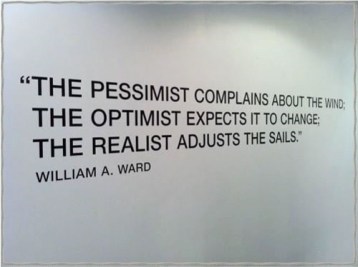
 In order to market yourself, you must first know yourself. The job search process is essentially a highly personalized marketing process. The process starts with your candid self-assessment, which allows you to gain a thorough and workable understanding of who you are in product marketing terms.
 The old “round peg in a round role” theory of career planning is dysfunctional. In the typical professional environment today, job descriptions are changing faster than ever before to keep up with the challenges of an economy in transition. In the traditional job market, job seekers are the sellers and their potential employers are the buyers. The commodity is JOBs and the competition is fierce.
 Does it matter whether you are
  As part of our exploration of interviewing tactics, Brian will help you identify your natural preference for
  YOUR Personal Marketing Plan
 In order to market yourself, you must first know yourself. The job search process is essentially a highly personalized marketing process. The process starts with your candid self-assessment, which allows you to gain a thorough and workable understanding of who you are in product marketing terms.
 When a Company looks for qualified employees, they seek functional evidence that demonstrates a job seeker’s ability to perform to expectations… JOB REQUIREMENTS represent the HR screening process!
 Ultimately, your goal is to secure
  The average time human eyes scan your resume is around 20 seconds before the ‘YES-No-maybe judgment’ is rendered. And in the digital world of recruitment, Automated Tracking Systems (ATS) are even more ruthless in their time management. Therefore, you should get rid of as much excess material as you can in a resume and only keep the stuff that employers want to see. THE Careerpilot will always encourage you to ‘write for the reader,’ giving them what they need to read to make the most positive recruitment decision about you.
 Less is more in this case, because every bit of relevant information supports your personal brand and the ‘story’ you have to relate regarding your candidacy. You need to strike the right balance between just enough data to pique someone’s interest and leaving the hiring manager(s) wanting to hear more of your story in an interview. Take your current draft resume first to good CONTENT, then on to becoming a GREAT RESUME.
 MYCAREERpilot