
 In order to market yourself, you must first know yourself. The job search process is essentially a highly personalized marketing process. The process starts with your candid self-assessment, which allows you to gain a thorough and workable understanding of who you are in product marketing terms.
Next Session: Thursday, August 3rd… Achieving CareerFIT: Developing your unique ‘communication strategy.’
 When a Company looks for qualified employees, they seek functional evidence that demonstrates a job seeker’s ability to perform to expectations… JOB REQUIREMENTS represent the HR screening process!
Especially if you are starting a resume “from scratch”, or if you are truly unsettled on next steps along your career path, this becomes a necessary first step in the process.
Your “Motivated Strengths”
What DO you do best? What are your strongest transferable skills? Think broadly in terms of managerial and technical/ functional strengths involved in what you have to offer. Discovering your “pattern of success and satisfaction” is your goal, here.
Your ability to express the collection of your functional strengths will measure your marketability. This collection of keywords and their supportive evidence creates your communication strategy, the basis of your value proposition.
The old “round peg in a round role” theory of career planning is dysfunctional. In the typical professional environment today, job descriptions are changing faster than ever before to keep up with the challenges of an economy in transition. In the traditional job market, job seekers are the sellers and their potential employers are the buyers. The commodity is JOBs and the competition is fierce.
In The OTHER Job Market, buyers and sellers hold equal responsibility for the recruitment process. The commodity is available, productive WORK… When employers have a need for someone to fulfill a specific role, often the most desired candidates are employed individuals with the credentials they seek. Thus the employer must sell their Company to potential employees in the marketplace in order to attract the best of the lot. Once identified, they simply select their choice and buy their services.
Seize control of such challenges. Understand the nature of FIT.
OFFER CRITERIA
Write out the factors that are important to you in a job…actually write out your list. During your career transition, you learn the value of setting your offer criteria.
1. Creates an objective target for your efforts ahead;
2. Gives you a meaningful set of questions to ask during research and networking;
3. Provides an objective way to analyze and react to offers as they occur.
To manage your career wisely has you extending the same concept.
- Keep your “offer criteria” in that dynamic state of change that allows you to adapt to market conditions.
- If your current goal is to find a new position, then you should prepare your search as a “business model”, manage it accordingly, be flexible, and be ready for the unexpected.
You understand that managing your own career involves three key ingredients:
- Confidence in knowing that your career is on the right path;
- Continuous research and networking leading to awareness of potential “next steps…” to keep your career moving forward;
- Competency with job-changing skills.
To manage your career wisely has you extending the same concept.
 In every marketplace, there are buyers and sellers. In the traditional job market, the one that our Department of Labor measures for us, job seekers are the sellers and their potential employers are the buyers. The commodity is productive work and the competition is fierce.
 In the OTHER Job Market, buyers and sellers hold equal responsibility for the recruitment process. When employers have a need for someone to fulfill a specific role, often the most desired candidates are employed individuals with the credentials they seek. Thus the employer must sell their Company to potential employees in the marketplace in order to attract the best of the lot. Once identified, they simply select their choice and buy their services.
  The most asked question during career transition is, “Tell me about yourself.” Appropriate use of your two-minute drill and related verbal strategies, your “verbal collateral materials,” is a key ingredient to personal salesmanship…
 Many job seekers go into the “journey” of job search without really knowing their destination, their PRIMARY OBJECTIVE. This Pilot has never heard of a ship leaving harbor without knowing their destination or mission, preferring the safety and calm of their dock in the harbor.
 ANSWER: Job seeker’s are being human in taking the path of least resistance….Embracing the OTHER Job Market is a challenging journey, a career strategy that happens to work for job search. Steps one and two lead a well-prepared job seeker to their OFFER CRITERIA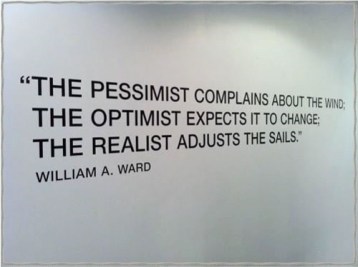


 While involved in ‘the challenging waters’ of career transition, the same chaotic, jobless, trying times are very productive times. Don’t waste them by floundering with lack of focus and direction, falling into the dark, depressive attitude of distractions and, worst of all, inaction…
 So, why not recreate all that with OUR OWN PLAN, a Personal Marketing Plan, to move toward job satisfaction, commitment, and appropriate compensation, for the rest of our careers… including any current, short term job search?
 In order to market yourself, you must first know yourself. The job search process is essentially a highly personalized marketing process. The process starts with your candid self-assessment, which allows you to gain a thorough and workable understanding of who you are in product marketing terms.
 The old “round peg in a round role” theory of career planning is dysfunctional. In the typical professional environment today, job descriptions are changing faster than ever before to keep up with the challenges of an economy in transition. In the traditional job market, job seekers are the sellers and their potential employers are the buyers. The commodity is JOBs and the competition is fierce.
 In every marketplace, there are buyers and sellers. In the traditional job market, the one that our Department of Labor measures for us, job seekers are the sellers and their potential employers are the buyers. The commodity is productive work and the competition is fierce.
 The OTHER Job Market is different, bigger, and more efficient than even approaching “the hidden job market,” the notion that spawned the Corporate-sponsored outplacement world. It all begins by understanding that JOBS evolve from available work…
 Does it matter whether you are
  As part of our exploration of interviewing tactics, Brian will help you identify your natural preference for
 The best interviews are ones in which both participants are equal and can have a mutually beneficial, interactive conversation regarding the opportunity at hand.
 MYCAREERpilot