
Tackling the 500# Gorilla in Job Search

chalk1Lack of knowledge regarding the process. If you don’t understand the interactive nature of networking, now’s the time to learn. To be an effective net-worker, you need to be willing to serve as a conduit, sharing information, building relationships based on trust and reciprocity, leveraging existing relationships to create new ones, and following through to create ways to stay in touch to continue giving.

Those who don’t fully understand the process, who use people for information and never build the relationship, or return the favor, give networking a bad name and lose credibility in the eyes of others.


NEXT Session: Thursday, March 8th… Implementing your Personal Marketing Plan: Creating and sustaining the ‘waves’ of networking


Pilot OnboardNetworking is about building trust and respect, not tearing away at it! Be aware of the effectiveness of networking. Most people in a job search spend too much time canvassing the open job market, the market everyone gets to see through job posting boards and recruiters.  APPLYING for jobs is quite less effective than networking your way toward your next right opportunities.

So, you don’t want to ask for a favor, eh?  Many people think that when you network you’re asking someone for a job. But this is not the goal of networking. When you network, you never ask for a job. You ask for information about an industry, company, or position.  On those phone calls, you are not seeking JOB consideration, rather advice, information and referrals (remember the acronym A.I.R.)

The Careerpilot understands that it’s not comfortable talking to people you don’t know. Sixty percent (60%) of the population consider themselves shy. This perception leads to less networking. If the prospect of speaking to someone you don’t know is overwhelming right now, start to build your network by talking with people you do know such as friends, family, neighbors, or your doctor or dentist.

Fear of rejection. Many people fear that if they ask for information the other person might not be willing to talk to them. While it is true that not everyone will agree to meet with you, many people will extend help to you and you have nothing to lose by asking.

If they can lead you to others who can help you gain necessary information for your search, your network will grow in a steady, comfortable way.  …And at the same time, your confidence and comfort will be growing.  And as your confidence grows, “listen” for the anticipated jobs (PRE-requisition) and the opportunities for undefined roles…

Learn to embrace this OTHER Job Market… but the pathway to IT is through your comfort level in identifying and pursuing the unpublished, or hidden marketplace.

Far fewer explore the hidden market; the actual jobs that are never posted, but instead are filled through connections, internal endorsements, and post-interview placements into a better fitting role  The odds of finding a position through the smaller, hidden market are greater than those in the open market.

You may want to do it on your own. When you’re selected for a position, it’s because you have the skills to support the needs of the position. You showcase your individual accomplishments and differentiate yourself from the competition.

But in order to tell your stories to the right person you need to cast a wide net. You leverage your network to find the right audience, not to get the job.

You may be uncomfortable talking about yourself. Many of us were raised to be humble and not to brag. Networking and interviewing requires that you talk about yourself and your accomplishments.

Consider the use of the ‘third-person’ when discussing your own merits.  When you talk about your skills, you’re not bragging. It’s only bragging if your discussion contains false hyperbole.  OR, you may have concerns about others knowing your business. Feeling too proud to tell people you’re in a job search?

Examine the cause. Have you assumed that networking is asking for a job? Next, examine the consequences. If you fail to incorporate networking as a method of search, it may take you much longer to find a job.

Expecting things to move too quickly. Networking is an ongoing process. Like a child, your network needs time to grow and you need to nurture it along the way. You must pay attention to your network to keep relationships strong. Many contacts are not able to lead you to the person capable of making a hiring decision.

You must constantly “stir the pot” to effectively network.  Maintain consistent, and in-sync presentation of all your personal marketing collateral materials within your network… and it will in turn take care of you.  Nurture your network, building toward ‘top-of-mind’ awareness of your potential candidacy.

PLAN Before You Need To!

Compass-seaLJust as the competent sailor must select their destination in order to have a successful voyage, so must the productive and efficient job seeker know what is a right work opportunity to identify, proceed toward…and secure!  While this seems like an incredible over-simplification, mere ‘common sense,’ it is knowledge that eludes most unemployed people.  You see, when you’re employed you tend to assume that your employer will help you to navigate those ‘next steps’ in your career. Ah, but when you’ve lost your job, your fellow employees, and your employer… WHOA… the rules seem to have changed!


Next Session is Thursday, March 1st: Developing YOUR Personal Marketing Plan… the epicenter of job search and time management, brings FOCUS to the process!


While the sailor’s journey could be defined by its destination, his success is determined by the course he selects, and, most significantly, having an appropriate ship to make the passage as smooth as possible.

In Steps #1 and #2 of our 12-step process we learn to assess (know the features of our ship) and set our objective (select our destination and course) so that we can develop a GREAT Resume, one that allows our future employer to help navigate our journey, thus we embrace the OTHER job market!

 PRODUCT’ ANALYSIS

 You are now the product that must be marketed.  In order to market yourself, you must first know yourself.  The job search process is essentially a highly personalized marketing process.  The process starts with your candid self-assessment, which allows you to gain a thorough and workable understanding of who you are in product marketing terms.

When a Company looks for qualified employees, they seek functional evidence that demonstrates a job seeker’s ability to perform to expectations… JOB REQUIREMENTS represent the HR screening process!

Especially if you are starting a resume “from scratch”, or if you are truly unsettled on next steps along your career path, this becomes a necessary first step in the process.

Your ability to express the collection of your functional strengths will measure your marketability.  This collection of keywords and their supportive evidence creates your communication strategy, the basis of your value proposition.

The old “round peg in a round role” theory of career planning is dysfunctional.  In the typical professional environment today, job descriptions are changing faster than ever before to keep up with the challenges of an economy in transition.

In the traditional job market, job seekers are the sellers and their potential employers are the buyers.  The commodity is JOBs and the competition is fierce.

In The OTHER Job Market, buyers and sellers hold equal responsibility for the recruitment process.  The commodity is available, productive WORK… When employers have a need for someone to fulfill a specific role, often the most desired candidates are employed individuals with the credentials they seek.  Thus the employer must sell their Company to potential employees in the marketplace in order to attract the best of the lot.  Once identified, they simply select their choice and buy their services.

You understand that managing your own career involves three key ingredients:

  • Confidence in knowing that your career is on the right path;
  • Continuous research and networking leading to awareness of potential “next steps…” to keep your career moving forward;
  • Competency with job-changing skills.

To manage your career wisely has you extending the same concept.

Right Resources for An Effective Search

In Steps #3 through #7 we assemble supportive ‘tools and resources’ for the job search ahead (a competent sailor ‘provisions’ his ship for the journey)… the most important of which is having a plan, a Personal Marketing Plan (our charted course to get us to our destination)…which is Step#8.

  1. Develop Personal Marketing collateral materials (Resume, etc.)
  2. Test Market with References
  3. Branding via social media (LinkedIn ‘footprint’)
  4. Basic market research to determine trends and targets
  5. Determine potential marketplace (your initial contact list)
  6. Develop your PMP (chart your course)

Eight out of your 12 Steps and you haven’t even left the harbor yet!

The OTHER Job Market?


roadsign-banner2Many people talk about “information overload” and “decision fatigue” when it comes to how to conduct your job search, or write your resume, or develop your LinkedIn Profile…or answer those challenging interview questions. 

THE Careerpilot  believes there’s another side to the coin… Receiving options is actually motivational and liberating, with the right mindset.  Asking for someone else’s advice isn’t about getting the right answer out of them. Rather, it’s about adding perspective to your view so you can choose the right answer for you.


THIS Week’s session, Thursday, January 25th… Embracing The OTHER Job Market: a discussion of basic philosophies and Waypoints


chalk1So, how can you ensure another ‘second opinion’ doesn’t cloud your judgement?

First and foremost, understand that your ‘core personality,’ defined by your unique strengths, skills, interests, preferences, and values (Step#1: ASSESSMENT), drives your “gut feel” on matters of choice.

TRUST that!

The TRADITIONAL Job Market

You know, the one that the Department of Labor attempts to measure and regularly regurgitates ‘job statistics’ from… the one that The Internet has turned in to a ‘black hole’ of application response… the one that allows a computer to judge you worthy of consideration before ever being considered by a human being.  Why on earth would a job seeker trust THAT?

The OTHER Job Market

You know, the one that prefers to know you before having to face the dysfunctional HR screening process,… or better yet, the one that prefers endorsement of you from a trusted colleague… the one that values proactive relationship building as a way of solving the many dysfunctions of more traditional approaches to finding the right new hire.

The ‘Traditional’ JOB Market The OTHER Job Market
Characterized by “requisitioned” jobs being filled by chosen job seekers. Characterized by available/needed work being fulfilled by job seekers, contractors, internal candidates, third-party consultants, retirees, part-timers, temporary workers, etc.
JOBS rigidly defined by requirements and qualifications… reflected by the screening process aimed at identifying key candidates. Work expectations are subjective, defined by mutual agreement, fulfillment of need or contract… reflected through the identification of qualified candidates.
Process overseen by Human Resource professionals, regulated to consider minimally qualified candidates, hopefully within salary guidelines. Process directed by hiring authorities seeking best available talent at marketplace salary expectations.
JOB Seeking PUBLIC is screened for most desirable candidates. Qualified and available candidates are sourced and recruited, often through process of endorsement or internal referral.
Screening defined by KEYWORDS, often accomplished through computer/internet job banks and resume databases. Screening accomplished by word of mouth and endorsement, often supplementing the organization’s formal process of recruitment.
Recruitment process subject to scrutiny of regulation and political correctness. Often selection process has occurred before active recruitment has been fully engaged.
Actual selection still subject to formal process and subjective choice. Actual selection often a rubber stamp formality to satisfy regulation requirements.

Everyone wants a voice in strategic decisions and to be included in ‘the conversation.’ To truly be included, you need to be invited. And you will only be invited if you are seen as absolutely essential to the TEAM.  Remember, team player and team leader CAN BE interchangeable terms.

In the OTHER Job Market, buyers and sellers hold equal responsibility for the recruitment process.  When employers have a need for someone to fulfill a specific role, often the most desired candidates are employed individuals with the credentials they seek.  Thus the employer must sell their Company to potential employees in the marketplace in order to attract the best of the lot.  Once identified, they simply select their choice and buy their services.  You can…

Trust That!

Turning OPPORTUNITIES Into INTERVIEWS

Compass-seaLThis topic represents what most people call ‘active job search, but, as you can learn, the HOW –TO is what creates your success in networking. It professes strategies and tactics that will generate more effective networking.

In your ‘first wave’ of networking you had the opportunity to reconnect with people you already know or have cause to know… a nice by product of your efforts is the identification of attractive opportunities, and targeted organizations!

Make FIT happen!


NEXT SESSION: Turning Opportunity into INTERVIEWS!  Thursday, January 4th at The Egg and I Restaurant in Addison


chalk1You’ll be the first to know when you’re ready for ‘wave 2’ of networking… which, simply put, is networking your way in to attractive opportunities.  You will focus your activity and time management to the business of creating INTERACTIVE COMMUNICATION with employees, customers, and vendors–the “stakeholders”– within and surrounding any targeted organization.

 THE BASICS

So what are those basics that will allow you to effectively network to identify appropriate opportunities, and then secure the requisite INTERVIEWS in order to “close the deal?”

  1. Practice your two minute drill every chance you get…. it’s the fundamental building material of your communication strategy–your verbal collateral materials!
  2. Practice your exit and qualification statements… most all potential employers and networking contacts will want to know your current situation and why you are available.
  3. Practice answering both common and tough questions… including PRE-offer negotiation tactics. The most asked question during career transition is, “Tell me about yourself.” Appropriate use of your two-minute drill and related verbal strategies, your “verbal collaterals,” is a key ingredient to personal salesmanship.

Let’s not forget a couple of additional ‘collaterals’ that will help you round out your ability to ‘get the word out’ and serve as evidence of your qualifications.

  1. Brag bytes… Wordcraft various collections of words, phrases and sentences to capture memorable moments or accomplishments–the best you have to offer. “…saved 80% cost-perhire…” Used in MSWord, ‘Quick Parts’ can be quite efficient when building high impact correspondence as well.
  2. Personal Portfolio… Your collection of certificates, examples of work, reference letters, etc that can bring life and interest (not to mention PROOF) to your story.

Informational “Interviews” With Key Contacts

In addition to being introspective, it’s also important to get out there and start becoming your own best CAREER Coach, learning about satisfying next steps, the career moves you’re interested in.   And what better resource than the very people already in, or connected with, those you seek?

As an active job seeker, especially in the first few months of a job search, networking your way to one informational interview per week is essential to your campaign’s success.  This may sound like a lot, but initially quantity is more important than quality as you want to get a sense of a wide variety of roles in different industries based on the results of your introspection.

The more people you speak with, the more you’ll be exposed to fields you might wish to pursue. With that said, you don’t want the person on the receiving end to feel that way—so always make sure to come prepared and send a thank you.

The GREAT Informational Interview

Let’s say you managed the tricky process of asking for an informational interview and have succeeded in arranging a meeting with an amazing contact. What now? How do you make the most of this conversation—while still keeping things casual and comfortable?

As always, it’s just a matter of being prepared. Here’s a three-part process for your next meeting that’ll make sure you get the advice you need… and make a great  impression on those who may direct you to your next steps.

  1. The Warm Up

People love to talk about themselves, so when you first sit down, give them a perfect opportunity!  Get the conversation going by asking your contact something about his or her experiences thus far—something he or she knows all about. Some good places to begin:

  • How did you get your start in this field?
  • What’s it like working at your company?
  • What projects are you working on right now?
  • What’s your opinion on [exciting development in the industry]?

You should also be prepared to chat about yourself, your past experiences, and your career goals. Remember, this meeting isn’t just a time to ask for advice and learn from your contact’s experiences—it’s also a chance to make an impression.

  1. Your Pitch

After you’ve made some general conversation, it’s time to move on to what you came for: the advice you can’t get anywhere else. Before the meeting, think through the insider information you want to learn from this person.

  • What information are you seeking?
  • Is there something you can learn from this person that would be difficult for you to learn on your own?

Depending on where you are in the job search process, adjust your questions accordingly. For example, if you’re still in exploration mode, trying to find out if, say, working for an technology startup is for you, then ask questions like:

  • How did you choose this company or position over others in your field?
  • What is the most rewarding thing about working in this industry? The most challenging?
  • My background is in ___________… how do you think I can best leverage my previous experience for this field?

If you’re further along in your job search and could use some job hunting and interviewing tips for specific companies, don’t be afraid to ask questions like:

  • What experiences, skills, or personality traits does your company look for in new hires?
  • What do you wish you had done differently when you first started at your company?
  • What job search advice would you give to someone in my situation?

Of course, you’ll want go with the flow of the conversation—you’re trying to build a relationship, not fire off as many questions as you can.

Also remember that what these questions have in common is that they are all seeking advice, information, or referrals (AIR not JOB). Keep it that way. It’s no mystery that you are clearly looking for a new position or career change, and the fastest way to alienate your contact is to ask for a job (or anything along those lines).

REPEAT: The fastest way to alienate your contact is to ask for a job (or anything along those lines). If your contact offers to forward your resume based on your conversation, then by all means, take advantage of it. But that process is for him or her to initiate, not you.

  1. Tap Into Their Network… a “Lost Owl” Strategy

When wrapping up the meeting, you should ask for recommendations for two or three more people who would be good to talk to as you continue networking.  “WHO else or WHERE else might I go for more advice and information?  The likelihood someone will take time to chat with you goes up significantly if your initial request comes through a mutual contact, so it’s a fast, easy way to broaden the reach of your networking effort.

The key here is to make your request as specific as possible. This might be counter-intuitive, but it actually makes it easier for your contact to think of someone when you say, “Could you recommend a couple more people for me to speak with to learn more about harnessing of available wind energy?”  …than to come up with an answer to, “Is there anyone else you would recommend that I speak with?”

To recap: Get the conversation going, know what you want to get out of the meeting, and don’t leave without knowing who you’re contacting next. And don’t forget to follow up with a thank-you note!

Better yet, follow up again with an update on your meetings with the people he or she recommended and the results of your job search. After all, your informational interviewees aren’t just useful for their one-time advice—they can become a long-term part of your network.

Your Digital Footprint

Compass-seaLJust as the competent sailor must select their destination in order to have a successful voyage, so must the productive and efficient job seeker know what is a right work opportunity to identify, proceed toward…and secure!  While this seems like an incredible over-simplification, mere ‘common sense,’ it is knowledge that eludes most unemployed people.  You see, when you’re employed you tend to assume that your employer will help you to navigate those ‘next steps’ in your career.

Ah, but when you’ve lost your job, your fellow employees, and your employer… WHOA… the rules seem to have changed!


This Week’s session:  Your LinkedIn Primer, TASK#1 and TASK#2…Creating your Profile and extending your network.


chalk1Just what IS a right work opportunity for YOU?
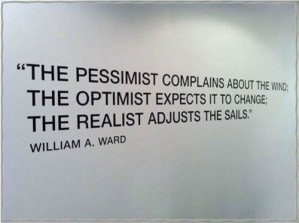
While a sailor’s journey could be defined by its destination, his success is determined by the course he selects, and, most significantly, having an appropriate ship to make the passage as smooth as possible.

In Steps #1 and #2 of our 12-step process we learn to assess (know the features of our ship) and set our objective (select our destination and course) so that we can develop a GREAT Resume, one that allows our future employer to help navigate our journey, thus we embrace the OTHER job market!

What YOU Do Best, and are motivated to do for a future employer…

What do you do best?  What are your strongest transferable skills?  Think broadly in terms of managerial and technical/ functional strengths involved in what you have to offer.  Discovering your “pattern of success and satisfaction” is your goal, here.  Your ability to express the collection of your functional strengths will measure your marketability.

This collection of keywords and their supportive evidence creates your communication strategy, the basis of your value proposition.

The old “round peg in a round role” theory of career planning is dysfunctional.  In the typical professional environment today, job descriptions are changing faster than ever before to keep up with the challenges of an economy in transition.

In the traditional job market, job seekers are the sellers and their potential employers are the buyers.  The commodity is JOBs and the competition is fierce.

In The OTHER Job Market, buyers and sellers hold equal responsibility for the recruitment process.  The commodity is available, productive WORK… When employers have a need for someone to fulfill a specific role, often the most desired candidates are employed individuals with the credentials they seek.

Thus the employer must sell their Company to potential employees in the marketplace in order to attract the best of the lot.  Once identified, they simply select their choice and buy their services.

Seize control of such challenges.   Understand the nature of FIT.  

Your personal brand cannot be desperate, or your brand will not help you. It will hurt you, in fact.  What hiring manager would have confidence in your ability to walk into their department and make a difference when your branding says you aren’t sure what you do professionally?

When your LinkedIn profile says “Multi-skilled Business Professional” you have already eliminated most of your potential audience.

They’re not looking for a Multi-Skilled Business Professional.

Who in history ever was?

Hiring managers have pain in specific areas.  When you have pain in your body, it’s specific, too. Nobody says “I have pain!”

They have a back ache, a tooth ache or a pain in their knee. You can’t brand yourself to appeal to everybody — that’s not how branding works!  Good personal branding is more specific than any of these overly general self-descriptors:

Diverse background in aerospace, consumer products and legal services  (who cares what you did already, unless you want to do it again? Tell us what you intend to do, and why you’re qualified for it!)

Skilled at Marketing, Sales, Operations and Customer Support (what does this even mean? No one who has dug into any of these functions in depth would continue to describe themselves as skilled at all four!)

Trainer/Instructor/Instructional Designer/Training Specialist (tell us what you are dying to do most of all. Commit! The world will reward your belief in yourself)

What’s a better branding approach? Choose the sweet spot at the place where your experience, your talents and employers’ pain intersect.  You’ll find that sweet spot by thinking about and writing down your favorite activities and favorite past roles, as well as things you love to do and are good at outside of work. Then, you’ll check out job ads to learn which positions companies are looking for.

Many people are confused about their career direction. That’s okay. You can leave your overly-broad branding on LinkedIn until you figure out what you want to be when you grow up — at least for this job search!

Read LinkedIn profiles to spot job titles, job descriptions and specific responsibilities that sound like a fit for you. Now, brand yourself for the jobs you really want — not every job you’re qualified for:

  • Freelance Travel Writer and Editor
  • Sales Manager for Pharma/Neutraceuticals
  • Office Manager/Bookkeeper Seeking Overbooked CEO to Support
  • Startup Marketing Manager with Press Contacts

Your LinkedIn branding is important because it tells the world how you see yourself.

Task #2 and 3: Building a FOCUSED LinkedIn Network

AjustDaSailsNever allow your LinkedIn usage to spiral out of control… However, that said, you want to get to your statistical ‘tipping point’ as soon as possible to cut the workload.

Your ultimate goal with social media is to STAY FOCUSED.  Only connect with others who share your professional interests or are related to those interests in a complementary way… and can help you meet your goals.  After you’ve created your profile, it’s time to begin to connect to others.  Remember your goals and adjust to your growing comfort and confidence with this ever evolving digital tool.


Our next session is Thursday, September 14th… LinkedIn Primer Task#2&3: Build your social network and explore ways to apply for posted jobs.


Pilot OnboardLinkedIn will allow you to search for people you know to see if they’re already members. But once you connect to someone, you can also look at the profiles of anyone they know, and in turn anyone those people know. Because of these three degrees of separation, your network can grow rapidly. Before you begin connecting, decide who you want to connect to. LinkedIn suggests in its FAQ, “Only invite those you know and trust.”

I started with twenty contacts from my MSOutlook.  My first line has grown to well over two hundred by accepting and sending out INVITATIONS to people I know, are likely to be interactive within our network, or who could provide resources to me or the Candidates I serve… what’s really impressive is how this translates, numerically, into your second and third lines of contact… we’re talking, WOW!!!

The 411 on “How Not to Be Connected”

If someone contacts you and you don’t want to form a connection with them, you don’t need to flatly reject them and worry about the attendant awkwardness. When looking at the invitation to connect, simply hit “Archive.” The other person does not receive a message saying their invitation has been rejected, and you don’t have to worry about unwanted invitations clogging up your inbox.

Likewise, if you find that an existing contact is blasting you with too much information or making overly aggressive requests for introductions and recommendations, LinkedIn will let you remove that person easily — and without the contact knowing they’re out of your network.

If only it were that easy in real life.

What’s Next?

  1. Check in on “Network Updates.” Found on your LinkedIn homepage, Network Updates are kind of like your Facebook news feed. Check these periodically for a quick snapshot of what your connections are up to and sharing.
  2. Be identifiable. Find out who’s checking out your profile by allowing others to see who you are if you view theirs. When you click the information under “Who’s Viewed My Profile” on your profile page, you’ll be able to view users who have looked at your profile, stats on your profile’s number of views, and its appearances in search recently. To change this, go into your settings and click “See what others see when you’ve viewed their profile.”
  3. Export connections. Transfer your LinkedIn connections to another contact management system? LinkedIn enables you to easily export your connections. Just click on “Contacts,” “My Connections,” and then scroll down and click “Export Connections.” You have the option of either exporting as a .CSV or .VCF file.
  4. Easily find email contacts on LinkedIn. Speaking of connections, the “LinkedIn Companion for Firefox” is a great plugin that helps you identify the LinkedIn profiles of people who are emailing you. It also enables you to easily access other LinkedIn features via your browser.
  1. Leverage the power of LinkedIn Groups. Did you know that if you’re a member of the same group as another user, you can bypass the need to be a first degree connection in order to message them? In addition, group members are also able to view the profiles of other members of the same group without being connected. Join more groups to enable more messaging and profile viewership capabilities.

OK, I’m Prepared… NOW What?

happy-LABOR-dayYou’ve given yourself a Personal Marketing Plan… But, one last gut check:  Do you know where you’re headed (see: Offer Criteria) and HOW you’re planning to get there?  If you are not absolutely clear about what you want as that NEXT STEP in your career, envision an ideal position that will value you for the main characteristics and experiences you want to be hired for.


Thursday, September 7th… Implementing Your PMP:  Learn to manage the “waves” of time management and activity during your job search.


Pilot OnboardSince you need to be concise and clear when developing your Personal Marketing collateral materials (resume, BIO, verbal communication, and your LinkedIn profile),  it’s important to figure out what you best offer in your next position, so you know exactly what skills and experiences to highlight.  Make FIT happen!

RESEARCH: Analyze Your Target Industry

Once you know what you want to do, your next step is identifying where you want to be—think industry, city, and companies. Then, research your industry and key trends affecting it now: Read relevant industry news articles, research companies, and analyze job descriptions you’re interested in.

Find Your CareerFIT and Focus on CAREER Objectives

With your knowledge of your target industry, it’s time to figure out how you fit in (or want to). Identify, describe, and refine your key selling points with your end goal in mind. Then, craft them into 4-6 bullets, shooting for statements that are vivid and that clearly illustrate what you bring to the table over anyone else.

Ask Yourself

  • What is the intersection of your ‘value proposition’ and what your target industry, or specific Company, needs?
  • What are your most impactful areas of experience, knowledge, or skill?
  • What critical problems are you well suited to solve?

Pay Attention to the Nitty Gritty

As you begin to think about the type of career transition you want to make, what IS the next appropriate employment for you… start out by documenting what you already know to be true about your professional self.

  1. Give specific attention to what you spend the most time doing, those functional details of your work that have the greatest impact on your employer’s success, and, especially, what are you uniquely providing that gives value to your role?
  2. Take notes about when you’re feeling particularly unmotivated or unenthused about your job. Write down the tasks that bring you down as well as those that get you excited.
  3. It may seem like a tedious exercise, but if you stick with it, patterns will start to emerge. And it’s in teasing out these patterns that’ll help you build a picture of the role that’s right for you.

BEGINNING OUR EIGHTH YEAR: Embracing The OTHER Job Market

Compass-seaLIn every marketplace, there are buyers and sellers.  In the traditional job market, the one that our Department of Labor measures for us, job seekers are the sellers and their potential employers are the buyers.  The commodity is productive work and the competition is fierce.

It doesn’t matter if you are an operations manager, an internal HR professional, senior finance executive, or a key player on the IT team—ANY experienced and valued professional job seeker—ALL want to become a valued partner in the business of their next employer.


TOMORROW’s Session, Thursday, April 20th:  Embracing The OTHER Job Market... an overview and exploration of basic concepts and philosophies


Everyone wants a voice in strategic decisions and to be included in ‘the conversation.’ To truly be included, you need to be invited. And you will only be invited if you are seen as absolutely essential to the TEAM.  Remember, team player and team leader CAN BE interchangeable terms.

Pilot OnboardThe OTHER Job Market is different, bigger, and more efficient than even approaching “the hidden job market,” the notion that spawned the Corporate-sponsored outplacement world.  It all begins by understanding that JOBS evolve from available work…

NEED IDENTIFIED


Replacement jobs often redefined. No definition to a new need. No competition
WORK ANTICIPATED


Discussion leads to decisions  on JOB definition Often job parameters are set based on market feedback
JOB REQUISTION WRITTEN AND APPROVED


Job Requirements must be defined… expectations creep into the recruitment process Internal candidates often get priority in employment process
JOB is “open”


Job Requirements are often refined based on market feedback Internal AND external candidates compete for the same jobs
JOB is published


Job requirements and qualifications define the screening process MAX competition!!

In the OTHER Job Market, buyers and sellers hold equal responsibility for the recruitment process.  When employers have a need for someone to fulfill a specific role, often the most desired candidates are employed individuals with the credentials they seek.  Thus the employer must sell their Company to potential employees in the marketplace in order to attract the best of the lot.  Once identified, they simply select their choice and buy their services. 

The JOB Market The OTHER Job Market
Characterized by “requisitioned” jobs being filled by chosen job seekers. Characterized by available/needed work being fulfilled by job seekers, contractors, internal candidates, third-party consultants, retirees, part-timers, temporary workers, etc.
JOBS rigidly defined by requirements and qualifications… reflected by the screening process aimed at identifying key candidates. Work expectations are subjective, defined by mutual agreement, fulfillment of need or contract… reflected through the identification of qualified candidates.
Process overseen by Human Resource professionals, regulated to consider minimally qualified candidates, hopefully within salary guidelines. Process directed by hiring authorities seeking best available talent at marketplace salary expectations.
JOB Seeking PUBLIC is screened for most desirable candidates. Qualified and available candidates are sourced and recruited, often through process of endorsement or internal referral.
Screening defined by KEYWORDS, often accomplished through computer/internet job banks and resume databases. Screening accomplished by word of mouth and endorsement, often supplementing the organization’s formal process of recruitment.
Recruitment process subject to scrutiny of regulation and political correctness. Often selection process has occurred before active recruitment has been fully engaged.
Actual selection still subject to formal process and subjective choice. Actual selection often a rubber stamp formality to satisfy regulation requirements.

On the other hand, if an individual is under-employed, seeking a change, or actually unemployed, they must be visible to potential employers who are seeking their services.  Creating this visibility is strategic, personal market planning and execution—in can be marketability without rejection!

Personal Marketing is a contact sport.

Networking is a CONTACT Sport…And the Surest Path to Opportunity!

Compass-seaLWhat is the most critical skill to one’s  CAREER success – yet also the most elusive? Time management? Strategic thinking? Discipline? Decision making? No. While these are important, they pale in comparison to communication skills, BOTH personal and professional: Attentive listening, asking relevant questions, showing empathy, and knowing how to handle difficult communications are the most critical to career success.  They are vital to building healthy relationships, exchanging ideas, sharing feelings, gaining buy-in, setting clear expectations, and working collaboratively.

Pilot OnboardThe lack of these skills is at the root of most conflicts, employee performance issues, failed projects, and lost opportunities…JOBS????

You can be a subject matter expert, but if you can’t communicate your ideas, your ideas are of little value. You can have a great value proposition, branding, for the future, but if you can’t get people to buy into it, your vision doesn’t matter.

You can be a masterful manager, but if you can’t reassure or empathize with your clients, they will seek help elsewhere.


NEXT Week’s session:  Turning Opportunities Into INTERVIEWS… Thursday, March 30


You might have a skill set/experience to sell, but if you can’t articulate a compelling value proposition, you won’t find many takers. Your ability to communicate determines your success at work or home.  How do you rate your current communication’s skills?

And, more importantly, how do you improve them to enhance job search or career transition SUCCESS?

A famous coach, of Green Bay Packer fame, spoke frankly when he said, “Perfect practice makes perfect.” Mr. Lombardi’s intent was CLEAR. He wanted his players to concentrate on PRACTICE, drilling on the “little things”, the basics, so that they became instinct during the heat of real life.

Such is productive mindset during any career transition, specifically related to your ability to relate your well positioned “story” to others, answer questions effectively, conduct productive negotiations, and, in general, fine tune your personal salesmanship skills.

THE BASICS

So what are those basics that will allow you to effectively network to identify appropriate opportunities, and then secure the requisite INTERVIEWS in order to “close the deal?”

  1. Practice your two minute drill every chance you get…. it’s the fundamental building material of your communication strategy–your verbal collaterals!
  2. Practice your exit and qualification statements… most all potential employers and networking contacts will want to know your current situation and why you are available.
  3. Practice answering both common and tough questions… including pre-offer negotiation tactics. The most asked question during career transition is, “Tell me about yourself.” Appropriate use of your two-minute drill and related verbal strategies, your “verbal collaterals,” is a key ingredient to personal salesmanship…
  • A verbal resume… A tightly focused, upbeat telling of “your story” told in a high impact two minute format. With practice, can be easily personalized to your listener.
  • An “elevator pitch”… A succinct summary of your qualifications for a specifically positioned function or opportunity. With practice, can become quite spontaneous.
  • A qualification statement that can be used in introducing yourself

Let’s not forget a couple of additional ‘collaterals’ that will help you round out your ability to ‘get the word out’ and serve as evidence of your qualifications.

  1. Brag bytes… Wordcraft various collections of words, phrases and sentences to capture memorable moments or accomplishments–the best you have to offer. “…saved 80% cost-perhire…” Used in MSWord, ‘Quick Parts’ can be quite efficient when building high impact correspondence as well.
  2. Personal Portfolio… Your collection of certificates, examples of work, reference letters, etc that can bring life and interest (not to mention PROOF) to your story.

Networking is a CONTACT Sport!

Job search does not happen in a digital vacuum.

Compass-seaLYou have learned in embracing the OTHER job market that the key to the whole notion of productive and efficient networking is to generate INTERACTIVE communication, the initial basis of relationship building!  When involved with active job search, part of our preparation is to develop our set of Personal Marketing collateral materials.

I have long suggested that steps one and two of our 12-step Process M.A.P. give us all the ingredients we need to “get in the galley” and cook up a three course meal of our personal marketing collateral materials.


NEXT WEEK’s Session, Thursday, March 16th: IMPLEMENTING Your PMP


Pilot OnboardWhile most job seekers seem to prefer starting with a resume, so that they can begin simply applying to any job that seems remotely close to what they can do… I encourage you to work with all your ingredients at the same time…if your desired result is a nice prime rib dinner, don’t start with the meat—start with the seasonings and vegetables, even get your dessert started…

Because that “meaty” resume is the easiest and quickest of what you need to prepare, let’s look at the ingredients that you have identified through assessment of your galley shelves, and your dinner of choice.

WHERE To Start

As a contact sport, networking is about interaction between sender and receiver, buyer and seller… job seeker and potential employers. The great news is that you get to start from YOUR ‘sweet spot’ or middle ground where all this interaction occurs the easiest!

You start with people that you already know or have some connection to. If your ‘natural network’ doesn’t have a regular meeting—most do not, by their very diverse nature—groups of like-minded people are easy to identify and attend. As you begin to reach out and broaden your ‘sweet spot,’ be selective in your attempt to create a supportive ‘community’ grouping close to your targeted marketplace.

Networking within your targeted marketplace, your unique, job search ‘community’ should play a critical role in your Personal Marketing strategies. It is an easy means to getting the word out about your business to people who may purchase and influence others to purchase your service or goods. But just as with any other job search activity, we get what we put into it.

That being said, local networking events are seeing record turnouts lately, a sign that leads us to believe the networking is paying off. A Local Networking Group is any organization, which meets on a regular basis, to share and receive referrals and leads. Examples of formal Local Networking groups for small and medium sized business include: BNI (Business Networking International), Merchants’ Associations, Chambers of Commerce, and Business Associations.

Some of the largest local organizations devoted to supporting job seeker efforts are  Frisco Connect, Cathedral of Hope, the Southlake Group, Watermark Church… to name just a few. Many are associated with church support organizations… but are completely nondenominational in their approach, operation and outreach.

The WAVES of PMP Implementation

The concept, here, is to keep a pulse of activity going consistently and regularly into the job market.  When you let up, if you take time away from the marketplace, they will tend to forget you…the job market has no memory.  It’s up to you to achieve top-of-mind awareness.

Get the Most From Your ‘first wave’ of Networking… Your purpose in this ‘first wave’ of networking is to gain information, advice, and most importantly names of other individuals you can call. The lifeline of networking is to always get more names. Be sure to ask each person if they have a minute to talk to you, and when finished talking thank them for their time.

Make networking calls in a block of time. Each call is more comfortable than the one before. Do not call people and ask them if they have any openings at their company… This is almost always totally non-productive. THE PRINCIPLES BEHIND A SUCCESSFUL JOB SEARCH ARE ALWAYS THE SAME: the search process itself is time consuming work, and the more productive time you spend on your job search the more interviews and job offers you will generate.

So the question at this point is “Where do you find out about job openings and on which avenues of job search should you spend the most time?”

 THE BEST (And Worst) OF BOTH WORLDS

Technology has done a terrific job of consolidating posted job leads. Web crawling software can reach out and consolidate classified ads, recruitment posts and company posted job opportunities. We know these consolidated sites as Internet Job Banks… and some of them contain a huge amount of postings.

Unfortunately, their very size makes it challenging to stay current and eliminate redundancy. Also unfortunate is the fact that these very same job banks have consolidated your competition and rejection from Corporate America. This is not even mentioning that Corporate America is also missing it’s goal of better qualified resumes to fuel its recruitment effort… they’re simply getting MORE resumes to process!

Solution? Use the Job Banks to generate your most attractive leads, then network your way into those targeted organizations.