
Practice Makes Perfect, Right?

Ready+aim+fireWRONG… but, perfect practice gets you headed in the right direction.  Ever made a mistake?  Ever shoot yourself in the foot because you failed to exercise the READY-AIM components of implementation?  Maybe you did something careless, without proper planning or sufficient attention?

Unless you were just born, you surely have. So, the more important question is “are you better off as a result?” As painful as mistakes can be, they can provide great benefit.


NEXT SESSION: Thursday, November 15th at 8:45 AM @ The Egg & I Restaurant in Addison… A PRIMER on Headhunters and Other 3rd Party Recruiters


bob-maher-4587-editThere is no teacher better than adversity. People do their best learning through tough times, mistakes, and failures. Prosperity is great, but not a good teacher. Those who live a privileged, sheltered, and adversity-free life miss life’s education.

In contrast, those who deal with tough bosses, demanding clients, relationship conflicts, and their own bad decisions, learn many valuable lessons. Counter-intuitively, the extent of adversity people have been through is a better determinate of their future success than how much prosperity they have enjoyed.

But adversity is only beneficial if it is properly processed.  When people make a mistake, they have three fundamental choices on how to process it. Two of the choices lead to no benefit and the other to significant benefit.

  • Choice #1 is to be frustrated by or dismissive of the mistake.
  • Choice #2 is to blame others or circumstances.
  • Choice #3 is to reflect on and find the learning in it.

Intellectually, people see choice #3 as the correct choice, yet regularly practice choices #1 and #2. Rather than embrace the opportunity for change, they stay in their comfort zone. Rather than learn what they can and make adjustments, they get frustrated until they “get over it” or worse—blame others or circumstances.

They may be quick to correct others, but unable to see the need for change in themselves. Mistakes are like road signs… you have earned the opportunity to learn from and be better for them. Don’t waste a good mistake.

Studies find that successful and unsuccessful people both have generally the same experiences in life. The key difference is that successful people grow through their experiences, particularly their adversity. They accept responsibility when things don’t go well, reflect on what happened, and make adjustments in how they think and act.

In contrast, unsuccessful people tend to dismiss their role in their misfortunes, blame others, blame circumstances, or simply ignore what happened. Studies also find that professionals’ learning primarily comes from their on-the-job experience (52%) with mentoring, coaching, and reading being second (27%), and formal training (21%) third.

Yet people’s on-the-job-experience only translates into learning if they take time to reflect on their work and learn from it rather than just perform the work. Learning to the fullest extent, whether from normal daily work or from adversity, is an intentional activity.

Whether in your professional or personal life, your future success largely depends on how well you learn from your experience, especially your mistakes. Here are seven principles to follow to get the most benefit from your mistakes:

  1. Acknowledge the mistake. Don’t let the good qualities of being calm, resilient, and forgiving prevent you from seeing that a mistake was made. Confront reality.  Don’t be so positive and forgiving that you foolishly miss the opportunity to see that a mistake worth understanding was made.
  2. Take responsibility. Don’t be quick to fault external influences. There are always contributing circumstances. Rarely is anything all your responsibility.  Whether your role was limited or significant, accept responsibility.
  3. Reflect on the mistake. Consider what happened and your role in it. Assess the root cause. Get to the real issue. Most mistakes are symptoms. Ask “why did this happen?” Again… And again, as needed, until you’ve exhausted the likely root causes that deserve your attention.
  4. Involve others. Seek input from others who can help you objectively think through your assessment. Share your reflections with someone you trust who can help you understand the nuances of your situation.
  5. Record your lessons learned. After assessing the root causes, consider what you can do going forward to mitigate or avoid the mistake in the future. Take note of the thoughts and behaviors you need to adopt and practice.
  6. Process your feelings. It’s alright to be frustrated and even angry just as much as it is to be excited and happy. A mistake doesn’t define you any more than an achievement does. Allow yourself to go through a healthy ‘grief cycle.’
  7. Look forward. Forgive yourself and others. Realize that you are not perfect and its okay. Recover and move on. Embed your lessons learned into your plans, processes, and daily habits. Don’t ruminate any longer.

ADVICE OVERLOAD vs. “LISTENING TO YOUR MARKETPLACE”

roadsign-banner2Many people talk about “information overload” and “decision fatigue” when it comes to how to conduct your job search, or write your resume, or develop your LinkedIn Profile…or answer those challenging interview questions.  THE Careerpilot  believes there’s another side to the coin… Receiving options is actually motivational and liberating, with the right mindset.  Asking for someone else’s advice isn’t about getting the right answer out of them. Rather, it’s about adding perspective to your view so you can choose the right answer for you.

So, how can you ensure another ‘second opinion’ doesn’t cloud your judgement?


NEXT Session: Thursday, November 8th @8:45 AM… Closing The Deal I: Interview STRATEGIES, including MoneySpeak and PRE-Offer negotiation.


chalk1First and foremost, understand that your ‘core personality,’ defined by your unique strengths, skills, interests, preferences, and values (Step#1: ASSESSMENT), drives your “gut feel” on matters of choice.  TRUST that!

In THE Careerpilot’s 12-Step M.A.P. for career transition, Steps #1 and #2 are in place for one simple reason: If you don’t have a grip on what you want to do next in your career, work toward giving yourself that grip!  Your core personality should be represented in your offer criteria BEFORE development of your Personal Marketing collateral materials, like your resume!

If you cannot connect your motivated skills and strengths to supportive and confirming episodes from your actual experience, you should be utilizing your first wave of implementing your Personal Marketing Plan (Step#9) to identify and resolve this vital issue.

Only then will it become effective to proceed with Step#3 in the development and practice of your collective communication strategies (keywords) in the design of your collateral materials, both verbal and written.  Remember: Perfect practice makes PERFECT!

And that brings us to Step#4, once you are satisfied with a market-ready resume, share it with your references, coaching them to be in sync with your communication strategies.  Your references should know you well, better than any other editorial resource available to you.  Consider these two things before reaching out:

  1. ALWAYS respect the time management of the person you’re interacting with
  2. Instead of seeking JOB help… consider a very different acronym: AIR… you should be seeking Advice, Information, and/or a R

When asked, your contact may throw ideas out there for the kind of job you should have, the kind of path you should take, the kind of responsibilities you should own, or the kinds of decisions you should make. You can let it overwhelm you, or you can pick and choose what you want to factor in, and let everything else fall to the wayside…

This is an over-simplification, but it’s truly that simple. Once you see others’ advice as something you can take rather than something you have to take, the pressures off, and you can make decisions that align with your values.

This also frees you up to make the more challenging decisions based on cumulative feedback that you have heard and listened to from the job market…  how to conduct your job search, or write your resume, or develop your LinkedIn Profile…or answer those challenging interview questions. The more collective ‘advice and information,’ the better!

Remember, too, that the traditional marketplace’s over-reliance and obsession with keywords is what drives your dynamic need for feedback on your resume.  Besides, you should be constantly tweaking your market-ready resume to stay in sync with actual job descriptions and other opportunities.

Learn to embrace the OTHER job market!

IDENTIFYING OPPORTUNITIES…And Turning Them into INTERVIEWS

Compass-seaLIf you are not absolutely clear about what you want as that NEXT STEP in your career, envision an ideal position that will value you for the main characteristics and experiences you want to be hired for.

Since you need to be concise and clear when developing your Personal Marketing collateral materials (resume, BIO, verbal communication, and your LinkedIn profile),  it’s important to figure out what you best offer in your next position, so you know exactly what skills and experiences to highlight.

Make FIT happen!


NEXT Session:  Thursday, November 1st…Turning Opportunities Into INTERVIEWS: A HOW-TO look at turning research and target organization networking into INTERVIEWS!


Ready+aim+fireRESEARCH: Analyze Your Target Industry

Once you know what you want to do, your next step is identifying where you want to be—think industry, city, and companies. Then, research your industry and key trends affecting it now: Read relevant industry news articles, research companies, and analyze job descriptions you’re interested in.

SELF-Assessment: Find Your Fit and Focus on CAREER Objectives

With your knowledge of your target industry, it’s time to figure out how you fit in (or want to). Identify, describe, and refine your key selling points with your end goal in mind. Then, craft them into 4-6 bullets, shooting for statements that are vivid and that clearly illustrate what you bring to the table over anyone else.

Ask Yourself

  • What is the intersection of your ‘value proposition’ and what your target industry, or specific Company, needs?
  • What are your most impactful areas of experience, knowledge, or skill?
  • What critical problems are you well suited to solve?

Pay Attention to the Nitty Gritty

As you begin to think about the type of career transition you want to make, what IS the next appropriate employment for you… start out by documenting what you already know to be true about your professional self.

  1. Give specific attention to what you spend the most time doing, those functional details of your work that have the greatest impact on your employer’s success, and, especially, what are you uniquely providing that gives value to your role?
  2. Take notes about when you’re feeling particularly unmotivated or unenthused about your job. Write down the tasks that bring you down as well as those that get you excited.
  3. It may seem like a tedious exercise, but if you stick with it, patterns will start to emerge. And it’s in teasing out these patterns that’ll help you build a picture of the role that’s right for you.

Schedule  Informational “Interviews” With Key Contacts

In addition to being introspective, it’s also important to get out there and start becoming your own best CAREER Coach, learning about satisfying next steps, the career moves you’re interested in.   And what better resource than the very people already in, or connected with, those you seek?

As an active job seeker, especially in the first few months of a job search, networking your way to one informational interview per week is essential to your campaign’s success.  This may sound like a lot, but initially quantity is more important than quality as you want to get a sense of a wide variety of roles in different industries based on the results of your introspection.

The more people you speak with, the more you’ll be exposed to fields you might wish to pursue. With that said, you don’t want the person on the receiving end to feel that way—so always make sure to come prepared and send a thank you.

“Making Waves” in The OTHER Job Market

chalk1If you don’t understand the interactive nature of networking, now’s the time to learn. To be an effective networker, you need to be willing to serve as a conduit, sharing information, building relationships based on trust and reciprocity, leveraging existing relationships to create new ones, and following through to create ways to stay in touch to continue giving.  Remember, networking is a contact sport!

Those who don’t fully understand the process, who use people for information and never build the relationship, or return the favor, give networking a bad name and lose credibility in the eyes of others. Networking is about building trust and respect, not tearing away at it!

Lack of awareness regarding the effectiveness of networking. Most people in a job search spend too much time canvassing the open job market, the market everyone gets to see through job posting boards and recruiters.


NEXT Session:  Thursday, October 25th… Implementing Your PMP:  Creating waves in your networking efforts!  Start with the “low hanging fruit” to develop your skill and confidence.


bob-maher-4587-editTo “embrace the OTHER job market” is to understand that, if 70+% of actual placements come from personal networking, then 70+% of your job seeking time and efforts should be committed there to optimize your desired result…your next right employment!

Here are some of the illogical ‘excuses’ I hear a lot of…

I don’t want to ask for a favor. Many people think that when you network you’re asking someone for a job. But this is not the goal of networking. When you network, you never ask for a job. You ask for information about an industry, company, or position.  (A.I.R. = advice, information, and referral activity!)

Not comfortable talking to people they don’t know. Sixty percent (60%) of the population consider themselves shy. This perception leads to less networking. If the prospect of speaking to someone you don’t know is overwhelming right now, start to build your network by talking with people you do know such as friends, family, neighbors, or your doctor or dentist.

Fear of rejection. Many people fear that if they ask for information the other person might not be willing to talk to them. While it is true that not everyone will agree to meet with you, many people will extend help to you and you have nothing to lose by asking.

If they can lead you to others who can help you gain necessary information for your search, your network will grow in a steady, comfortable way.  And at the same time, your confidence and comfort will be growing.  And as your confidence grows, “listen” for the anticipated jobs (PRE-requisition) and the opportunities for undefined roles…

Learn to embrace this OTHER Job Market… but the pathway to IT is through your comfort level in identifying and pursuing the unpublished, or hidden marketplace.

Far fewer explore the hidden market; the actual jobs that are never posted, but instead are filled through connections, internal endorsements, and post-interview placements into a better fitting role.  The odds of finding a position through the smaller, hidden market are greater than those in the open market.

I want to do it on my own. When you’re selected for a position, it’s because you have the skills to support the needs of the position. You showcase your individual accomplishments and differentiate yourself from the competition. But in order to tell your stories to the right person you need to cast a wide net. You leverage your network to find the right audience, not to get the job.

Uncomfortable talking about yourself. Many of us were raised to be humble and not to brag. Networking and interviewing requires that you talk about yourself and your accomplishments.

Consider the use of the ‘third-person’ when discussing your own merits.  When you talk about your skills, you’re not bragging. It’s only bragging if your discussion contains false hyperbole.

Concerns about others knowing your business. Feeling too proud to tell people you’re in a job search? Examine the cause. Have you assumed that networking is asking for a job? Next, examine the consequences. If you fail to incorporate networking as a method of search, it may take you much longer to find a job.

Expecting things to move too quickly. Networking is an ongoing process. Like a child, your network needs time to grow and you need to nurture it along the way. You must pay attention to your network to keep relationships strong. Many contacts are not able to lead you to the person capable of making a hiring decision.

You must constantly “stir the pot” to effectively network.  Maintain consistent, and in-sync presentation of all your personal marketing collateral materials within your network… and it will in turn take care of you.  Nurture your network, build toward ‘top-of-mind’ awareness of your potential candidacy.

WHY Focus on Achieving CareerFIT?

roadsign-banner2In order to market yourself, you must first know yourself.  The job search process is essentially a highly personalized marketing process.  The process starts with your candid self-assessment, which allows you to gain a thorough and workable understanding of who you are in product marketing terms.  When a Company looks for qualified employees, they seek functional evidence that demonstrates a job seeker’s ability to perform to expectations… JOB REQUIREMENTS represent the HR screening process!


THIS Week’s Session: Thursday, September 27th… Achieving CareerFIT,  Taking a look at the “real you” to assist you in making challenging career decisions, then creating your communication strategy to “get the word out.”


Ready+aim+fireEspecially if you are starting a resume “from scratch”, or if you are truly unsettled on next steps along your career path, this becomes a necessary first step in the process.

WHY?

There’s a reason for the ol’ cliche’, Ready-Aim-FIRE! You actually hit more targets.  In job search terms, all your preparation and knowledge of the process is close to worthless without the vital AIM which is accomplished through Achieving CareerFIT

  1. Employers are looking for applicants who FIT work requirements, so why shouldn’t you be seeking the next appropriate work opportunity?  Your value proposition (what YOU offer) needs to be in sync with the employer’s needs.
  2. If you lack specific and clear career objectives, you WILL conduct a random search!
  3. Having appropriate offer criteria allows you to research efficiently and ask the right questions during networking and the interview process.
  4. When your employment ‘fits’ the real you, you are more likely to find your employment more satisfying.

What YOU Do Best, and are motivated to do for a future employer…

What do you do best?  What are your strongest transferable skills?  Think broadly in terms of managerial and technical/ functional strengths involved in what you have to offer.  Discovering your “pattern of success and satisfaction” is your goal, here.

Your ability to express the collection of your functional strengths will measure your marketability.  This collection of keywords and their supportive evidence creates your communication strategy, the basis of your value proposition.

NOTE:  The old “round peg in a round role” theory of career planning is dysfunctional.  In the typical professional environment today, job descriptions are changing faster than ever before to keep up with the challenges of an economy in transition. In the traditional job market, job seekers are the sellers and their potential employers are the buyers.  The commodity is JOBs and the competition is fierce.

In The OTHER Job Market, buyers and sellers hold equal responsibility for the recruitment process.  The commodity is available, productive WORK… When employers have a need for someone to fulfill a specific role, often the most desired candidates are employed individuals with the credentials they seek.  Thus the employer must sell their Company to potential employees in the marketplace in order to attract the best of the lot.  Once identified, they simply select their choice and buy their services.

Seize control of such challenges.   Understand the nature of FIT.  

What is a Good, Career FIT For You?  To achieve a good “fit” between you and any future opportunity, you have to ask yourself some basic questions about yourself and your prospective employers. The fit depends on how well the jobs meets your needs and how well your skills and abilities meet the employer’s needs. The employer will make a decision and extend an offer to you: now it is time for you to make your decision.

Write out the factors that are important to you in a job… actually write out your list.  During your career transition, learn the value of setting your offer criteria, a key element of your Personal Market Plan:

  • Creates an objective target for your efforts ahead;
  • Gives you a meaningful set of questions to ask during research (factual information) and networking (more subjective information);
  • Provides an objective way to analyze and react to offers as they occur.

 OFFER CRITERIA

Write out the factors that are important to you in a job…actually write out your list. During your career transition, you learn the value of setting your offer criteria.

1. Creates an objective target for your efforts ahead;
2. Gives you a meaningful set of questions to ask during research and networking;
3. Provides an objective way to analyze and react to offers as they occur.

To manage your career wisely has you extending the same concept.

  • Keep your “offer criteria” in that dynamic state of change that allows you to adapt to market conditions.
  • If your current goal is to find a new position, then you should prepare your search as a “business model”, manage it accordingly, be flexible, and be ready for the unexpected.

You understand that managing your own career involves three key ingredients:

  1. Confidence in knowing that your career is on the right path;
  2. Continuous research and networking leading to awareness of potential “next steps…” to keep your career moving forward;
  3. Competency with job-changing skills.

To manage your career wisely has you extending the same concept.  Consider some of the factors listed below … Examine each factor through the questions listed – and then ask “does this opportunity fit me?”

Work Requirements and Expectations: What is the next  appropriate work for you? Is the work process or project oriented?  If it’s process oriented, are the requirements and expectations clear?  What kinds of projects will you work on? Will you work on one project at a time, or multiple projects? Are the projects long term or short term? Will you work on a project long enough to see the end result? Is it important to you to be able to see the project as a whole, including the result? Or will you be content to do the work without a big picture understanding?

Work Environment: Will the work space be a source of comfort and confidence for you? How formal or informal is the environment? Hectic, fast paced? Will you have the opportunity to have flex time, or to tele-commute? How many hours a week does the employer expect you to work? Will you have the freedom to wear casual clothes? What is a typical day like at the company you are considering?  Would they allow a “trial visit” or at least a site visit?

Career Path: Is there a defined succession plan? What position(s) can you move to next? How long do new hires generally stay in the same job? How quickly do people get promoted? Are your opportunities for professional development well defined and available to you? Are mentors available?

Training and Personal Development: what kind of training will you get from the employer to do the job? What kind of training will you get to stay current in your area of interest? Are the answers to these two questions different? Does it matter to you if the answers are different?

There’s An “OTHER Job Market?”

Compass-seaLIn every marketplace, there are buyers and sellers.  In the traditional job market, the one that our Department of Labor measures for us, job seekers are the sellers and their potential employers are the buyers.  The commodity is productive work and the competition is fierce.

It doesn’t matter if you are an operations manager, an internal HR professional, senior finance executive, or a key player on the IT team—ANY experienced and valued professional job seeker—ALL want to become a valued partner in the business of their next employer.

Everyone wants a voice in strategic decisions and to be included in ‘the conversation.’ To truly be included, you need to be invited. And you will only be invited if you are seen as absolutely essential to the TEAM.  Remember, team player and team leader CAN BE interchangeable terms.


Next Week’s Session: Thursday, September 20th… Embracing The OTHER Job Market: Our introductory and overview session… a great place for new-comers to start!


chalk1In the OTHER Job Market, buyers and sellers hold equal responsibility for the recruitment process.  When employers have a need for someone to fulfill a specific role, often the most desired candidates are employed individuals with the credentials they seek.  Thus the employer must sell their Company to potential employees in the marketplace in order to attract the best of the lot.  Once identified, they simply select their choice and buy their services.

If an individual is actually UN-employed…. Or UNDER-employed, seeking a change, they must be visible to potential employers who are seeking their services.  Creating this visibility is strategic, personal market planning and execution—in can be marketability without rejection!

Personal Marketing is a contact sport.

The Evolution of a JOB…

NEED IDENTIFIED


Replacement jobs often redefined. No definition to a new need. No competition
WORK ANTICIPATED


Discussion leads to decisions  on JOB definition Often job parameters are set based on market feedback
JOB REQUISITION WRITTEN AND APPROVED


Job Requirements must be defined… expectations creep into the recruitment process Internal candidates often get priority in employment process
JOB is “open”


Job Requirements are often refined based on market feedback Internal AND external candidates compete for the same jobs
JOB is published


Job requirements and qualifications define the screening process MAX competition!!

Standing-out in the “sea of unwashed faces”

Create an expectation of who you are and what you can do for your next employer by clearly positioning and targeting your collateral materials, both written and verbal.  When stating your career objective, clearly state your appropriate work and make an offer of your services.

PLAN Before You’ll Need a Plan

Compass-seaLWhile involved in ‘the challenging waters’ of career transition, the same chaotic, jobless, trying times are very productive times. Don’t waste them by floundering with lack of focus and direction, falling into the dark, depressive attitude of distractions and, worst of all, inaction…

When we are employed, we tend to function under the guidance of our employer’s business plan, or, more specifically, our job description. Our ‘routine’ is defined by:

  • Personal accountability to a labyrinth of responsibilities, some structured— some not structured at all—but all contributing to productive work activities…
  • We create productivity and efficiency with our sense of time management…
  • And as ‘top talent’ professionals, we often take initiative, make process improvements, and contribute to the Company’s growth.

This Week’s Session, Thursday, August 2nd, 8:45 AM, at The Egg and I Restaurant in Addison… Developing Your Personal Marketing Plan


chalk1So, why not recreate all that with OUR OWN PLAN, a Personal Marketing Plan, to move toward job satisfaction, commitment, and appropriate compensation, for the rest of our careers… including any current, short term job search?   But, before looking at what such a Personal Marketing Plan would look like, let’s review the PREPARATION Portion of the 12-step Process Model (on the left).
If an individual is under-employed, seeking a change, or actually unemployed, they must be visible to potential employers who are seeking their services. Creating this visibility is strategic, personal market planning and execution—in can be marketability without rejection!

And, employed or not, Modify and improve your Personal Market Plan’s implementation model as needed… As you move through your career transition or ‘job search campaign,’ make adjustments as you would a business model.

BRANDING Yourself In The OTHER Job Market

Your “market-tested” RESUME TEMPLATE can now serve as the basis of your correspondence templates. Become familiar with the AUTO TEXT and MAIL MERGE applications within MS Word to create efficiency in the editing of your templates to meet the needs of specific opportunities that you are marketing yourself to.

Now it is REALLY beginning to feel like YOU are market-ready… but, THE Careerpilot encourages you to be totally prepared before you do. Let’s not forget to be prepared for the digital face of the job market…

 LinkedIn Task#1: INITIATING YOUR SOCIAL MEDIA STRATEGY

The Careerpilot’s high TECH-HIGH TOUCH philosophy comes into play with the explosive growth of using social networks to recruit top talent and for job seekers to build relationships, meet new contacts, and market themselves. While the Internet provides many choices, diving into the virtual meet-and-greet can represent a real challenge.

Which one is worthy of your start-up investment: learning curve time and actual ROI of your efforts… Where to begin? The Careerpilot encourages a choice that reasonably assures one’s confidentiality, has a multitude of useful applications, and can serve as your focal point of networking decisions… LinkedIn.

INITIAL RESEARCH:  To Create Focus

 Make a concerted effort to research trends and target organizations of geographies, industries, and functions that interest you. Access market research reports, the Internet, your own network… start with the resources with which you are already comfortable. Develop your research awareness and abilities.

Begin to assemble your INITIAL Target Organization List.  Start your list of companies and industries that are attractive to you. Your targets are companies that utilize the functionality and RESULTS that you can bring to the table. A great start is to consider industrial trends in the marketplace that point to an organization’s need for your services.

 INITIAL CONTACTS List

 Make a list of coworkers, bosses, customers, suppliers, associates, external consultants, etc. Make a list of family, extended family, friends, relatives of friends, neighbors, people you know from special interest groups like bowling or bridge, church contacts, former classmates or alumni, and professionals like your doctor, dentist, or hair stylist.

Surviving and Thriving in “The Sea of Unwashed Faces”

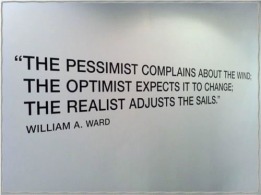
AjustDaSailsIn the traditional marketplace, potential employers seem to have the upper hand… but like the ol’ half full glass of water, remember that from the employer’s view available top talent seems like a sea of unwashed faces, too.

So what is it that the job seeker can control to make THEIR face stand out…network to and interview with the true decision maker… BE the chosen one?


THIS Week’s Session: Thursday, July 12th at The Egg and I…

Embracing The OTHER Job Market


bob-maher-4587-editStanding-out in the “sea of unwashed faces” becomes the simple matter of adjusting ones sales when in the challenging waters of career transition.

Create an expectation of who you are and what you can do for your next employer by clearly positioning and targeting your collateral materials, both written and verbal.  When stating your career objective, clearly state your appropriate work and make an offer of your services.

Here are some tips on becoming a valued partner…

Walk the talk.  Nothing speaks louder than results…. From the recruitment perspective, the best indicator of one’s potential for success is one’s prior experience and results gained.  A partner helps others within the organization achieve their goals. And results require actions, not just words. The better the results you get, the more likely you are to be invited on to ‘the team.’

Deep knowledge. You must have a true understanding of every aspect of the business, how all the moving parts work together, the obstacles ahead, and intimate knowledge of the competition in the marketplace. In other words, you’ve done your homework and understand your potential employer’s need.  And you must be able to articulate your understanding to anyone involved in the decision-making process in a manner that demonstrates that you truly get it.

Two of the many ways of accomplishing this image are to…

  1. Keep a file of relevant articles to share with key decision-makers, take advantage of the approaches that email and social media have to offer… create and maintain top-of-mind awareness.
  2. Further, create a set of ‘white papers’ that express, from your knowledge and experience, your perspective on relevant issues to your Profession or industry of choice.

Listen well. Everyone loves to feel that they have been heard and understood. One attribute of leadership is being known as a good listener. And if you can reiterate and articulate what has been said, you will be valued as a partner in the decision-making process.

Remember, as a job seeker, NETWORKING is your way to share knowledge, ‘branding’ yourself as a valued resource.  It is also your best source of confirming the subjective information you seek to supplement your research of factual information about a potential employer.

Big picture thinking. Having a strategic vision requires you to see all areas of the business, internal and external.   This is a valuable trait well beyond the C-suite.  If you only have a deep understanding of one area, you are more likely to be tactical in your decisions, rather than strategic.

You must be able to foresee problems from the stakeholders’ perspective in order to offer the most highly valued and comprehensive solutions.

Tying all of this together, the best way to be treated like a valued partner is to act like one. The more you demonstrate your value, the more you will become recognized as the new go-to person in the organization.

What IS This OTHER Job Market?

Compass-seaLIn every marketplace, there are buyers and sellers.  In the traditional job market, the one that our Department of Labor measures for us, job seekers are the sellers and their potential employers are the buyers.  The commodity is productive work and the competition is fierce.

It doesn’t matter if you are an operations manager, an internal HR professional, senior finance executive, or a key player on the IT team—ANY experienced and valued professional job seeker—ALL want to become a valued partner in the business of their next employer.


NEXT Session, Thursday, July 12th at The Egg & I: Embracing The OTHER Job Market, our introductory and overview look at The 12-Step process


chalk1Everyone wants a voice in strategic decisions and to be included in ‘the conversation.’ To truly be included, you need to be invited. And you will only be invited if you are seen as absolutely essential to the TEAM.  Remember, team player and team leader CAN BE interchangeable terms.

In the OTHER Job Market, buyers and sellers hold equal responsibility for the recruitment process.  When employers have a need for someone to fulfill a specific role, often the most desired candidates are employed individuals with the credentials they seek.  Thus the employer must sell their Company to potential employees in the marketplace in order to attract the best of the lot.  Once identified, they simply select their choice and buy their services. 

The JOB Market The OTHER Job Market
Characterized by “requisitioned” jobs being filled by chosen job seekers. Characterized by available/needed work being fulfilled by job seekers, contractors, internal candidates, third-party consultants, retirees, part-timers, temporary workers, etc.
JOBS rigidly defined by requirements and qualifications… reflected by the screening process aimed at identifying key candidates. Work expectations are subjective, defined by mutual agreement, fulfillment of need or contract… reflected through the identification of qualified candidates.
Process overseen by Human Resource professionals, regulated to consider minimally qualified candidates, hopefully within salary guidelines. Process directed by hiring authorities seeking best available talent at marketplace salary expectations.
JOB Seeking PUBLIC is screened for most desirable candidates. Qualified and available candidates are sourced and recruited, often through process of endorsement or internal referral.
Screening defined by KEYWORDS, often accomplished through computer/internet job banks and resume databases. Screening accomplished by word of mouth and endorsement, often supplementing the organization’s formal process of recruitment.
Recruitment process subject to scrutiny of regulation and political correctness. Often selection process has occurred before active recruitment has been fully engaged.
Actual selection still subject to formal process and subjective choice. Actual selection often a rubber stamp formality to satisfy regulation requirements.

On the other hand, if an individual is under-employed, seeking a change, or actually unemployed, they must be visible to potential employers who are seeking their services.  Creating this visibility is strategic, personal market planning and execution—in can be marketability without rejection!

Personal Marketing is a contact sport.

OVERCOMING “Call Reluctance”

accountability-partnerTargeted Organization Networking (networking your way IN to an organization of choice) is the first step to getting desired interviews and landing an offer, CLOSING THE DEAL. Still, many jobseekers experience Call Reluctance, an emotional hesitation to prospect and self-promote.  In our culture, it is not the hardest-working, the best-prepared or the smartest who lands the best next opportunity. Rather, it is the person who is most willing to prospect and self-promote.


NEXT WEEK’s Session: Thursday, June 7th… Turning Opportunity Into INTERVIEWS


chalk1Call Reluctance is nothing to be embarrassed about; living with it needlessly is. Call Reluctance is a mental response to a perceived threat. The act of prospecting is not what causes job seeking/ cold call anxiety; it is their “thoughts” about prospecting that do.

One might suggest to just change your thoughts from fearful ones to positive ones. However, positive thinking on its own is insufficient without its crucial counterpart: positive emotions.

Take a deep breath and think about your most recent business success. Your thought just sent happy hormones through your blood stream. Now, think about picking up the phone to call someone who has been on your list, but with whom you have not yet initiated contact. What fear or anxiety is attached to the thought of picking up the phone?

Guess what? Your hypothalamus just secreted hormones that match that fear and anxiety.  We can train the brain to secrete happier hormones (endorphins) so we feel better. And the better we feel, the more positive we become.

Endorphins actually calm the brain. Beliefs are merely thoughts we think again and again. Our beliefs become our expectations, and our expectations become our experience. This has been scientifically proven by behavioral scientists studying cellular biology. By overcoming Call Reluctance, you literally change your body’s chemistry so that fear and anxiety are no longer your go-to emotions.

Below are three exercises to help you set the “feeling” tone for your prospecting success:

  1. At the end of your workday, before you leave the office, sit down with your journal, iPhone or a piece of paper. Write down three things that went well during your day, and why they went well. Repeat this every day! You’ll begin to notice how much better you start feeling immediately.
  2. Monitor the “stories” you tell yourself (i.e., your inner dialogue). An example might be, “Making phone calls doesn’t work in the age of social media.” Until you become aware of your negative stories and learn how to change those stories, no training, coaching, or self-help books will enable you to achieve your goals. Identifying your stories is at the core of identifying Call Reluctance issues.
  3. The opposite of fear is love. Love and gratitude go hand-in-hand. Back to the hypothalamus: when you focus on what you are grateful for, your hypothalamus pumps out happy hormones. When you feel better, you are more solution-oriented—and you’re no longer the victim of any habitual negative thoughts. Psychologists recommend making a list of five things for which you are grateful every morning to set you up for a more successful day.