Help Potential Employers To Find You

Compass-seaLEmployment is one of the grandest of games… right up there with courtship and marriage: building good relationships and finding the right partner.  Most job seekers have been ‘single’ at some point in their lives.  The courtship game is a challenging one, difficult as it can be ‘seductive FUN.’

Recruitment is equally challenging for potential employers!


NEXT Week’s session:  Thursday, October 26th… Achieving CareerFIT II: Turning what you see as a next right employment opportunity into your communication strategy.


Pilot OnboardIn The OTHER Job Market, buyers and sellers hold equal responsibility for the recruitment process.  The commodity is available, productive WORK… When employers have a need for someone to fulfill a specific role, often the most desired candidates are employed individuals with the credentials they seek.  Thus the employer must sell their Company to potential employees in the marketplace in order to attract the best of the lot.  Once identified, they simply select their choice and buy their services.

The informed job seeker, then, must have a well thought out communication strategy in order to create visibility and top-of-mind awareness

Seize control of such challenges.   Understand the nature of FIT.  

What is a Good, Career FIT For You? 

To achieve a good “fit” between you and any future opportunity, you have to ask yourself some basic questions about yourself and your prospective employers. The fit depends on how well the jobs meets your needs and how well your skills and abilities meet the employer’s needs. The employer will make a decision and extend an offer to you: now it is time for you to make your decision.

Write out the factors that are important to you in a job… actually write out your list.  During your career transition, learn the value of setting your offer criteria, a key element of your Personal Market Plan:

  • Creates an objective target for your efforts ahead;
  • Gives you a meaningful set of questions to ask during research (factual information) and networking (more subjective information);
  • Provides an objective way to analyze and react to offers as they occur.

 OFFER CRITERIA

Write out the factors that are important to you in a job…actually write out your list. During your career transition, you learn the value of setting your offer criteria.

1. Creates an objective target for your efforts ahead;
2. Gives you a meaningful set of questions to ask during research and networking;
3. Provides an objective way to analyze and react to offers as they occur.

To manage your career wisely has you extending the same concept.

  • Keep your “offer criteria” in that dynamic state of change that allows you to adapt to market conditions.
  • If your current goal is to find a new position, then you should prepare your search as a “business model”, manage it accordingly, be flexible, and be ready for the unexpected.

You understand that managing your own career involves three key ingredients:

  1. Confidence in knowing that your career is on the right path;
  2. Continuous research and networking leading to awareness of potential “next steps…” to keep your career moving forward;
  3. Competency with job-changing skills.

To manage your career wisely has you extending the same concept.  Consider some of the factors listed below … Examine each factor through the questions listed – and then ask “does this opportunity fit me?”

Work Requirements and Expectations: What is the next  appropriate work for you? Is the work process or project oriented?  If it’s process oriented, are the requirements and expectations clear?  What kinds of projects will you work on? Will you work on one project at a time, or multiple projects? Are the projects long term or short term? Will you work on a project long enough to see the end result? Is it important to you to be able to see the project as a whole, including the result? Or will you be content to do the work without a big picture understanding?

Work Environment: Will the work space be a source of comfort and confidence for you? How formal or informal is the environment? Hectic, fast paced? Will you have the opportunity to have flex time, or to tele-commute? How many hours a week does the employer expect you to work? Will you have the freedom to wear casual clothes? What is a typical day like at the company you are considering?  Would they allow a “trial visit” or at least a site visit?

Career Path: Is there a defined succession plan? What position(s) can you move to next? How long do new hires generally stay in the same job? How quickly do people get promoted? Are your opportunities for professional development well defined and available to you? Are mentors available?

Training and Personal Development: what kind of training will you get from the employer to do the job? What kind of training will you get to stay current in your area of interest? Are the answers to these two questions different? Does it matter to you if the answers are different?

Who IS that masked man?

chalk1In order to market yourself, you must first know yourself, peeling back the layers of learned behaviors (Everyone has a ‘mask’)

The job search process is essentially a highly personalized marketing process.  The process starts with your candid self-assessment, which allows you to gain a thorough and workable understanding of who you are in product marketing terms.

When a Company looks for qualified employees, they seek functional evidence that demonstrates a job seeker’s ability to perform to expectations… especially those “motivated strengths” driven by personal preference and choice.  Remember, JOB REQUIREMENTS represent the HR screening process!

Especially if you are starting a resume “from scratch”, or if you are truly unsettled on next steps along your career path, this becomes a necessary first step in the process.


THIS WEEK’s session, Thursday, October 19, is a look at “Finding YOUR Career FIT,” facilitated by Brian Allen


Pilot OnboardIn The OTHER Job Market, buyers and sellers hold equal responsibility for the recruitment process.  The commodity is available, productive WORK… When employers have a need for someone to fulfill a specific role, often the most desired candidates are employed individuals with the credentials they seek.  Thus the employer must sell their Company to potential employees in the marketplace in order to attract the best of the lot.  Once identified, they simply select their choice and buy their services.

Seize control of such challenges.   Understand the nature of FIT.

Strengths          Strengths differ from skills, in that your strengths were not learned or taught, but inborn.  The kind of things which you find easy to do, when others struggle with the same task, can be thought of as a strength.  Perhaps you have used strengths on the job in the past, and if so, you should consider leveraging that strength in your future.

Unfortunately, many people never recognize their strengths, or don’t see a way to use them in the work roles they have played. But, what if you could….?

 Skills                     What we have learned, developed, or have experienced in the workplace.  Those tasks you have performed for another employer, for pay, in the past.  You need to consider skills in two ways:

  1. Competency, or how good you are at the skill, as well as
  2. Motivation, how you feel about performing the skill.

You want to focus on skills where you have both High Competency and High Motivation for your future career development.

Be careful about those skills with High Competency, but Low Motivation.  If you would rather never perform a skill that you have done well for years, it might not be wise to include that skill in your personal marketing collateral materials.

Interests      What kind of things would you enjoy doing, or learning about, even if there was no paycheck involved? Can you identify some topics or activities to which you are, and have always been, naturally drawn?  These might be called your Interests, and they are a key to career success.

Passions are simply very strong interests, and you may have heard someone give career advice about “following your passion!) Interests combined with skills can be very rewarding in the workplace.

Personality/Emotional Intelligence We are all different from one another, in many different ways.  Those differences do not make us wrong, or bad, but they can create conflict or poor communication between people who do not appreciate or understand natural differences.

Learning how you “see the world” differently than other people do can provide clues to how to better understand or relate to people.  This can provide a major advantage in a person who has to work with others, or lead others.

What are your natural preferences? The answer to this question can guide a person to make better decisions regarding their career.

Another difference that has gotten a lot of attention in recent years surrounds the issue of Emotional Intelligence.  This is the degree by which a person is both aware of their and other’s emotional state, as well as the degree by which they manage those emotions.  It seems likely that the higher your EQ, the more likely you will find success in relationships and in the workplace.

Values     What is most important to you, and what will you protect or defend if necessary? How do you expect to be treated in the workplace, by co-workers and leaders? What are the “rules” by which you choose to live your life? These are the rules that define how you, and others, should behave in society.  These “rules”, or values, can be the most important self-awareness a person should draw from when considering career moves.

If the work you do, or the people and organization where you perform you work, share some of your highest values, you are more likely to feel satisfied and fulfilled in that work.  Where our higher values are routinely violated, or when we are required to abandon some of them on a regular basis at work, the result can be frustration, anger, dis-engagement, and ultimately burn-out.

The problem is that we rarely think about our values, and probably can’t list them if asked. Even though we constantly use them to react to people or events.  Most values are buried deep in our minds.

***

Ultimately, your goal is to secure the right employment for yourself…

That must start with your identification of what right is.  THAT requires some exploration, identification of key elements of your Career FIT, and planning to pull it all together, create focus… make it happen!


OK, I’m Prepared… NOW What?

happy-LABOR-dayYou’ve given yourself a Personal Marketing Plan… But, one last gut check:  Do you know where you’re headed (see: Offer Criteria) and HOW you’re planning to get there?  If you are not absolutely clear about what you want as that NEXT STEP in your career, envision an ideal position that will value you for the main characteristics and experiences you want to be hired for.


Thursday, September 7th… Implementing Your PMP:  Learn to manage the “waves” of time management and activity during your job search.


Pilot OnboardSince you need to be concise and clear when developing your Personal Marketing collateral materials (resume, BIO, verbal communication, and your LinkedIn profile),  it’s important to figure out what you best offer in your next position, so you know exactly what skills and experiences to highlight.  Make FIT happen!

RESEARCH: Analyze Your Target Industry

Once you know what you want to do, your next step is identifying where you want to be—think industry, city, and companies. Then, research your industry and key trends affecting it now: Read relevant industry news articles, research companies, and analyze job descriptions you’re interested in.

Find Your CareerFIT and Focus on CAREER Objectives

With your knowledge of your target industry, it’s time to figure out how you fit in (or want to). Identify, describe, and refine your key selling points with your end goal in mind. Then, craft them into 4-6 bullets, shooting for statements that are vivid and that clearly illustrate what you bring to the table over anyone else.

Ask Yourself

  • What is the intersection of your ‘value proposition’ and what your target industry, or specific Company, needs?
  • What are your most impactful areas of experience, knowledge, or skill?
  • What critical problems are you well suited to solve?

Pay Attention to the Nitty Gritty

As you begin to think about the type of career transition you want to make, what IS the next appropriate employment for you… start out by documenting what you already know to be true about your professional self.

  1. Give specific attention to what you spend the most time doing, those functional details of your work that have the greatest impact on your employer’s success, and, especially, what are you uniquely providing that gives value to your role?
  2. Take notes about when you’re feeling particularly unmotivated or unenthused about your job. Write down the tasks that bring you down as well as those that get you excited.
  3. It may seem like a tedious exercise, but if you stick with it, patterns will start to emerge. And it’s in teasing out these patterns that’ll help you build a picture of the role that’s right for you.

Your Personal Marketing Collateral Materials

WRITTEN COLLATERAL… 

  1. A GREAT Resume that positions you clearly as a terrific FIT with your career objectives… and in today’s technologies, a database-friendly, asci version;
  2. A correspondence template package that consistently carries your communication strategy, your message… and in today’s technologies, a reformatted, text only version of your resume ready for email needs;
  3. A high impact, personal biography and/or NETWORKING PROFILE that you can lead with in your referral based networking strategies.
  4. A clear and complete LinkedIn Profile, one that is based on your communication strategy and in synch with your other written collaterals.

VERBAL COLLATERAL… 

  1. A well rehearsed “two minute commercial,” your answer to the most asked question during career transition, “Tell me about yourself.”
  2. Several, well though out, “elevator speeches,” examples that support your primary, positioning, key words. These are usually your representative accomplishments under the SUMMARY of your resume. (30 seconds to 1 minute)
  3. A succinct “qualification statement” that you can use as an introduction at networking events. (usually 20 – 30 seconds)
  4. An “exit statement” which explains your availability, to address the second most asked question during career transition.

Having your collateral materials prepared and rehearsed prior to active personal marketing is central to your success and builds confidence.

Consistency in the delivery of your message is what creates memory… and frequency of your message helps you get there… strive for top-of-mind awareness where it relates to your candidacy.

As we learned last week, your personal marketing communication strategy, your story, must be built around keywords and phrases that best describe your unique value proposition. These words come from your concerted self-assessment process. The challenge is matching the words that best describe your next right employment with the words that best describe a potential new employer’s needs.

A communication strategy that does not achieve that is doomed to otherwise controllable difficulties—and, worst…failure. So, understand that getting recruited involves two distinct elements…

  • Being screened for meeting a JOB’s requirements… a subjective process created by the potential employers of the marketplace. They set the bar HIGH, defined by functional experience, skill set, and knowledge standards so they don’t have to interview every JOB applicant.
  • Being selected by the hiring authority… another subjective process which now involves their assessment of a job-seeker’s FIT with their needs, including personality, work habits, and other ‘cultural’ standards. They cannot hire all qualified candidates. They must choose.

A job-seeker, then, can give themselves choices when they choose to embrace the OTHER Job Market. They improve their probability of success by nearly eliminating the pre-mature screening and rejection process.


Instead, the SMART job-seeker chooses to build relationships with potential employers first, researching attractive trends and targeted organizations in order to maximize probability of success, avoiding the HR-driven screening process to identify appropriate opportunities for securing their next right employment.

So, What’s YOUR Story?

To manage your career you should…

  • Keep your “offer criteria” in that dynamic state of change that allows you to adapt to market conditions…stay aware of ‘next steps.’
  • If your current goal is to find a new position, then you should prepare your search as a “business model”, manage it accordingly, be flexible, and be ready for the unexpected.

THIS Week’s session:  CareerFIT II… Understanding how and what to communicate about yourself during active career transition.


Pilot OnboardYou understand that managing your own career involves three key ingredients:

  1. Confidence in knowing that your career is on the right path;
  2. Continuous research and networking leading to awareness of potential “next steps…” to keep your career moving forward;
  3. Competency with career transition strategies and job-changing skills.

To manage your career wisely has you extending the same concepts.  Consider some of the factors listed below … Examine each factor through the questions listed – and then ask “does this opportunity fit me?”

Work Requirements and Expectations: What is the next  appropriate work for you? Is the work process or project oriented?  If it’s process oriented, are the requirements and expectations clear?  What kinds of projects will you work on? Will you work on one project at a time, or multiple projects? Are the projects long term or short term? Will you work on a project long enough to see the end result? Is it important to you to be able to see the project as a whole, including the result? Or will you be content to do the work without a big picture understanding?

Work Environment: Will the work space be a source of comfort and confidence for you? How formal or informal is the environment? Hectic, fast paced? Will you have the opportunity to have flex time, or to tele-commute? How many hours a week does the employer expect you to work? Will you have the freedom to wear casual clothes? What is a typical day like at the company you are considering?  Would they allow a “trial visit” or at least a site visit?

Career Path: Is there a defined succession plan? What position(s) can you move to next? How long do new hires generally stay in the same job? How quickly do people get promoted? Are your opportunities for professional development well defined and available to you? Are mentors available?

Training and Personal Development: what kind of training will you get from the employer to do the job? What kind of training will you get to stay current in your area of interest? Are the answers to these two questions different? Does it matter to you if the answers are different?

sq-knot2

GETTING RECRUITED

Determine your career objective…Know what your next right employment  is. This will help focus your actual search. With clarity in your positioning goals, you can write a great resume to convey your story.

“WORDCRAFT” your resume and other collateral materials…Create a forward looking “story” of what YOU CAN DO. Target your accomplishments, such as increased sales and profits, reductions in costs, etc. Focus on achievements that support your qualifications for your job goal.

Are you challenged in finding the right words?  LinkedIn can be a valuable tool for you to use in self-assessment.  Access the LinkedIn Profiles of other professionals like you… experiment by searching for a person like you in LinkedIn.

KEYWORDS become personalized phrases by incorporating adjectives and adverbs that uniquely FIT you…

Those phrases should be confirmed for the reader and listener with high-impact accomplishment statements (think behavioral evidence, like the bulleted information in a well written resume)…

a well-‘crafted’ accomplishment statement can trigger appropriate questions that allow you to expand on your strengths, with positive, supportive examples, elements of your career story—PROOF of your value proposition.

ACHIEVING A Good CareerFIT In Your Next Employment Opportunity

Compass-seaLIn order to market yourself, you must first know yourself.  The job search process is essentially a highly personalized marketing process.  The process starts with your candid self-assessment, which allows you to gain a thorough and workable understanding of who you are in product marketing terms.


Next Session:  Thursday, August 3rd… Achieving CareerFIT:  Developing your unique ‘communication strategy.’


Pilot OnboardWhen a Company looks for qualified employees, they seek functional evidence that demonstrates a job seeker’s ability to perform to expectations… JOB REQUIREMENTS represent the HR screening process!

Especially if you are starting a resume “from scratch”, or if you are truly unsettled on next steps along your career path, this becomes a necessary first step in the process.

Your “Motivated Strengths”

What DO you do best?  What are your strongest transferable skills?  Think broadly in terms of managerial and technical/ functional strengths involved in what you have to offer.  Discovering your “pattern of success and satisfaction” is your goal, here.

Your ability to express the collection of your functional strengths will measure your marketability.  This collection of keywords and their supportive evidence creates your communication strategy, the basis of your value proposition.

The old “round peg in a round role” theory of career planning is dysfunctional.  In the typical professional environment today, job descriptions are changing faster than ever before to keep up with the challenges of an economy in transition. In the traditional job market, job seekers are the sellers and their potential employers are the buyers.  The commodity is JOBs and the competition is fierce.

In The OTHER Job Market, buyers and sellers hold equal responsibility for the recruitment process.  The commodity is available, productive WORK… When employers have a need for someone to fulfill a specific role, often the most desired candidates are employed individuals with the credentials they seek.  Thus the employer must sell their Company to potential employees in the marketplace in order to attract the best of the lot.  Once identified, they simply select their choice and buy their services.

Seize control of such challenges.   Understand the nature of FIT.

OFFER CRITERIA

Write out the factors that are important to you in a job…actually write out your list. During your career transition, you learn the value of setting your offer criteria.

1. Creates an objective target for your efforts ahead;
2. Gives you a meaningful set of questions to ask during research and networking;
3. Provides an objective way to analyze and react to offers as they occur.

To manage your career wisely has you extending the same concept.

  • Keep your “offer criteria” in that dynamic state of change that allows you to adapt to market conditions.
  • If your current goal is to find a new position, then you should prepare your search as a “business model”, manage it accordingly, be flexible, and be ready for the unexpected.

You understand that managing your own career involves three key ingredients:

  1. Confidence in knowing that your career is on the right path;
  2. Continuous research and networking leading to awareness of potential “next steps…” to keep your career moving forward;
  3. Competency with job-changing skills.

To manage your career wisely has you extending the same concept.


What IS a Good Opportunity?

Compass-seaLMany job seekers go into the “journey” of job search without really knowing their destination, their PRIMARY OBJECTIVE.  This Pilot has never heard of a ship leaving harbor without knowing their destination or mission, preferring the safety and calm of their dock in the harbor.

QUESTION:  Why, then, do these job seekers overlook Steps one and two of our 12-Step Process, heading out, doomed to a random search for a desirable destination… their next right employment?


We’ll be taking a break for the long, July 4th Holiday weekend ahead… our next session will be Thursday, July 6th: Closing The Deal I: An exploration of interview strategies, including MoneySpeak and PRE-Offer negotiation!


Pilot OnboardANSWER:  Job seeker’s are being human in taking the path of least resistance….Embracing the OTHER Job Market is a challenging journey, a career strategy that happens to work for job search.  Steps one and two lead a well-prepared job seeker to their OFFER CRITERIA

A GREAT resume must make a job seeker’s positioning clear… Steps one and two of our 12-Step Process drive the entire process from both sides of the table.  It is the most controllable part of your efforts and success.  If you are not absolutely clear about what you want as that NEXT STEP in your career, envision an ideal position that will value you for the main characteristics and experiences you want to be hired for.

Since you need to be concise and clear when developing your Personal Marketing collateral materials (resume, BIO, verbal communication, and your LinkedIn profile),  it’s important to figure out what you best offer in your next position, so you know exactly what skills and experiences to highlight.

Make FIT happen!

RESEARCH: Analyze Your Target Industry

Once you know what you want to do, your next step is identifying where you want to be—think industry, city, and companies. Then, research your industry and key trends affecting it now: Read relevant industry news articles, research companies, and analyze job descriptions you’re interested in.

SELF-Assessment: Find Your CareerFIT and Focus on CAREER Objectives

With your knowledge of your target industry, it’s time to figure out how you fit in (or want to). Identify, describe, and refine your key selling points with your end goal in mind. Then, craft them into 4-6 bullets, shooting for statements that are vivid and that clearly illustrate what you bring to the table over anyone else.

Ask Yourself

  • What is the intersection of your ‘value proposition’ and what your target industry, or specific Company, needs?
  • What are your most impactful areas of experience, knowledge, or skill?
  • What critical problems are you well suited to solve?

Pay Attention to the Nitty Gritty

As you begin to think about the type of career transition you want to make, what IS the next appropriate employment for you… start out by documenting what you already know to be true about your professional self.

  1. Give specific attention to what you spend the most time doing, those functional details of your work that have the greatest impact on your employer’s success, and, especially, what are you uniquely providing that gives value to your role?
  2. Take notes about when you’re feeling particularly unmotivated or unenthused about your job. Write down the tasks that bring you down as well as those that get you excited.
  3. It may seem like a tedious exercise, but if you stick with it, patterns will start to emerge. And it’s in teasing out these patterns that’ll help you build a picture of the role that’s right for you.

Schedule  Informational “Interviews”

In addition to being introspective, it’s also important to get out there and start becoming your own best CAREER Coach, learning about satisfying next steps, the career moves you’re interested in.   And what better resource than the very people already in, or connected with, those you seek?

As an active job seeker, especially in the first few months of a job search, networking your way to one informational interview per week is essential to your campaign’s success.  This may sound like a lot, but initially quantity is more important than quality as you want to get a sense of a wide variety of roles in different industries based on the results of your introspection.

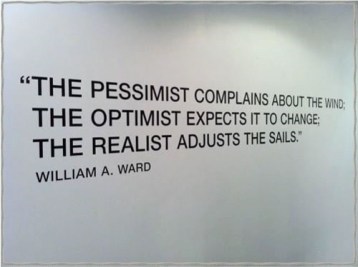
AjustDaSails

The more people you speak with, the more you’ll be exposed to fields you might wish to pursue. With that said, you don’t want the person on the receiving end to feel that way—so always make sure to come prepared and send a thank you.

ACHIEVING CareerFIT: Your PMP’s ‘PRODUCT’ ANALYSIS

Compass-seaLIn order to market yourself, you must first know yourself.  The job search process is essentially a highly personalized marketing process.  The process starts with your candid self-assessment, which allows you to gain a thorough and workable understanding of who you are in product marketing terms.

When a Company looks for qualified employees, they seek functional evidence that demonstrates a job seeker’s ability to perform to expectations… JOB REQUIREMENTS represent the HR screening process!

Especially if you are starting a resume “from scratch”, or if you are truly unsettled on next steps along your career path, this becomes a necessary first step in the process.

What YOU Do Best, and are motivated to do for a future employer…

What do you do best?  What are your strongest transferable skills?  Think broadly in terms of managerial and technical/ functional strengths involved in what you have to offer.  Discovering your “pattern of success and satisfaction” is your goal, here.

Your ability to express the collection of your functional strengths will measure your marketability.  This collection of keywords and their supportive evidence creates your communication strategy, the basis of your value proposition.


THIS Week’s Session, Thursday, April 27th is Achieving CareerFIT I, facilitated by Brian Allen.  He’ll be exploring the motivational side of your personality with us.


Pilot OnboardThe old “round peg in a round role” theory of career planning is dysfunctional.  In the typical professional environment today, job descriptions are changing faster than ever before to keep up with the challenges of an economy in transition. In the traditional job market, job seekers are the sellers and their potential employers are the buyers.  The commodity is JOBs and the competition is fierce.

In The OTHER Job Market, buyers and sellers hold equal responsibility for the recruitment process.  The commodity is available, productive WORK… When employers have a need for someone to fulfill a specific role, often the most desired candidates are employed individuals with the credentials they seek.  Thus the employer must sell their Company to potential employees in the marketplace in order to attract the best of the lot.  Once identified, they simply select their choice and buy their services.

Seize control of such challenges.   Understand the nature of FIT.  

MAKING A DIFFERENCE: Your IntervIEwing Preference

Your Career CompassDoes it matter whether you are Introverted or Extraverted when it comes to participating in a job interview?   You can bet it does, because, based on your personality’s preference, you will have different challenges during your job search and transition. Introverts and Extraverts have different strengths and blind spots, and, therefore, may find different tips helpful for performing at their best.


Much of THIS WEEK’s Session, Thursday, April 13th,  will be facilitated by Brian Allen of Whittier Creek Consulting, our ‘resident MBTI Guru.’


Pilot OnboardAs part of our exploration of interviewing tactics, Brian will help you identify your natural preference for Extraversion or Introversion, then explore how to overcome some of the most common interviewing challenges faced by both types. You just might discover the key to solving one of your most frustrating interview roadblocks.

The most asked question during career transition is, “Tell me about yourself.”  Your appropriate use of a two-minute drill and related verbal strategies, your “verbal collaterals,” is a key ingredient to personal salesmanship…

  • A verbal resume… A tightly focused, upbeat telling of “your story” told in a high impact two minute format.  With practice, can be easily personalized to your listener.
  • An “elevator pitch”…  A succinct summary of your qualifications for a specifically positioned function or opportunity.  With practice, can become quite spontaneous.
  • Brag bytes…  Wordcraft various collections of words, phrases and sentences to capture memorable moments or accomplishments–the best you have to offer.  “…saved 80% cost-per-hire…”  Used in MSWord Auto Text Format can be quite efficient when building high impact correspondence as well.
  • Personal Portfolio…  Your collection of certificates, examples of work, reference letters, etc that can bring life and interest (not to mention PROOF) to your story.

sq-knot2

“If you practice the way you play, there shouldn’t be any difference. That’s why I practiced so hard. I wanted to be prepared for the game.”

Michael Jordan (1963- )
American basketball player & business person
regarded by many as the greatest basketball player who ever played the game
sq-knot2

A productive networking call sometimes can result in a screening interview, so BE PREPARED.  Most interviews follow a predictable format, with steps that both the interviewer and applicant follow to decide if both will benefit from working together.  The best interviews are ones in which both participants are equal and have a mutually beneficial, interactive conversation regarding the opportunity at hand.

Think of an interview as the natural extension, the successful result of your effective networking.  Many networking conversations actually become screening interviews, where influential contacts are assessing your qualifications, skill sets and experience relative to an opportunity at hand.  “Perfect practice” of the basics builds the confidence necessary to perform well in formal job interviews.

Let’s break down the basics into four areas

  1. pre-contact preparation/ research,
  2. greeting and rapport,
  3. questions/answers, and …
  4. meeting closure.

All four stages are equally important and deserve your consideration and preparation.


ACHIEVING CareerFIT

Your Career CompassIn order to market yourself, you must first know yourself.  The job search process is essentially a highly personalized marketing process.  The process starts with your candid self-assessment, which allows you to gain a thorough and workable understanding of who you are in product marketing terms.


Thursday, February 9th… Communicating and Achieving YOUR CareerFIT


Pilot OnboardWhen a Company looks for qualified employees, they seek functional evidence that demonstrates a job seeker’s ability to perform to expectations… JOB REQUIREMENTS represent the HR screening process!

Especially if you are starting a resume “from scratch”, or if you are truly unsettled on next steps along your career path, this becomes a necessary first step in the process.

What YOU Do Best, and are motivated to do for a future employer…

What do you do best?  What are your strongest transferable skills?  Think broadly in terms of managerial and technical/ functional strengths involved in what you have to offer.  Discovering your “pattern of success and satisfaction” is your goal, here.

Your ability to express the collection of your functional strengths will measure your marketability.  This collection of keywords and their supportive evidence creates your communication strategy, the basis of your value proposition.

The old “round peg in a round role” theory of career planning is dysfunctional.  In the typical professional environment today, job descriptions are changing faster than ever before to keep up with the challenges of an economy in transition. In the traditional job market, job seekers are the sellers and their potential employers are the buyers.  The commodity is JOBs and the competition is fierce.

In The OTHER Job Market, buyers and sellers hold equal responsibility for the recruitment process.  The commodity is available, productive WORK… When employers have a need for someone to fulfill a specific role, often the most desired candidates are employed individuals with the credentials they seek.  Thus the employer must sell their Company to potential employees in the marketplace in order to attract the best of the lot.  Once identified, they simply select their choice and buy their services.

Seize control of such challenges.   Understand the nature of FIT.  

What is a Good, Career FIT For You?  To achieve a good “fit” between you and any future opportunity, you have to ask yourself some basic questions about yourself and your prospective employers. The fit depends on how well the jobs meets your needs and how well your skills and abilities meet the employer’s needs. The employer will make a decision and extend an offer to you: now it is time for you to make your decision.

Write out the factors that are important to you in a job… actually write out your list.  During your career transition, learn the value of setting your offer criteria, a key element of your Personal Market Plan:

  • Creates an objective target for your efforts ahead;
  • Gives you a meaningful set of questions to ask during research (factual information) and networking (more subjective information);
  • Provides an objective way to analyze and react to offers as they occur.


OFFER CRITERIA

Write out the factors that are important to you in a job…actually write out your list. During your career transition, you learn the value of setting your offer criteria.

1. Creates an objective target for your efforts ahead;
2. Gives you a meaningful set of questions to ask during research and networking;
3. Provides an objective way to analyze and react to offers as they occur.

To manage your career wisely has you extending the same concept.

  • Keep your “offer criteria” in that dynamic state of change that allows you to adapt to market conditions.
  • If your current goal is to find a new position, then you should prepare your search as a “business model”, manage it accordingly, be flexible, and be ready for the unexpected.