
 What is the most critical skill to one’s CAREER success – yet also the most elusive?
While many skills contribute, ONE stands out… communication skills, BOTH personal and professional: Attentive listening, asking relevant questions, showing empathy, and knowing how to handle difficult communications are the most critical to career success.
They are vital to building healthy relationships, exchanging ideas, sharing feelings, gaining buy-in, setting clear expectations, and working collaboratively. The lack of these skills is at the root of most conflicts, employee performance issues, failed projects, and lost opportunities…JOBS????
You can be a subject matter expert, but if you can’t communicate your ideas, your ideas are of little value.
You can have a great value proposition, branding, for the future, but if you can’t get people to buy into it, your vision doesn’t matter.
You can be a masterful manager, but if you can’t reassure or empathize with your clients, they will seek help elsewhere.
You might have a skill set/experience to sell, but if you can’t articulate a compelling value proposition, you won’t find many takers.
NEXT Session: Thursday, September 21st…Turning Opportunity into INTERVIEWS: Targeted organization networking made simple.
 A famous coach, of Green Bay Packer fame, spoke frankly when he said, “Perfect practice makes perfect.” Mr. Lombardi’s intent was CLEAR. He wanted his players to concentrate on PRACTICE, drilling on the “little things”, the basics, so that they became instinct during the heat of real life.
Such is productive mindset during any career transition, specifically related to your ability to relate your well positioned “story” to others, answer questions effectively, conduct productive negotiations, and, in general, fine tune your personal salesmanship skills.
THE BASICS
So what are those basics that will allow you to effectively network to identify appropriate opportunities, and then secure the requisite INTERVIEWS in order to “close the deal?”
- Practice your two minute drill every chance you get…. it’s the fundamental building material of your communication strategy–your verbal collaterals!
- Practice your exit and qualification statements… most all potential employers and networking contacts will want to know your current situation and why you are available.
- Practice answering both common and tough questions… including pre-offer negotiation tactics. The most asked question during career transition is, “Tell me about yourself.” Appropriate use of your two-minute drill and related verbal strategies, your “verbal collaterals,” is a key ingredient to personal salesmanship…
- A verbal resume… A tightly focused, upbeat telling of “your story” told in a high impact two minute format. With practice, can be easily personalized to your listener.
- An “elevator pitch”… A succinct summary of your qualifications for a specifically positioned function or opportunity. With practice, can become quite spontaneous.
- A qualification statement that can be used in introducing yourself
Your ability to communicate determines your success at work or home. How do you rate your current communication’s skills? And, more importantly, how do you improve them to enhance job search or career transition SUCCESS?
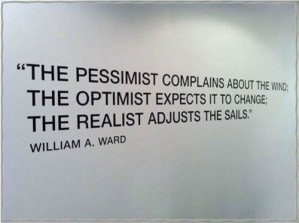 Never allow your LinkedIn usage to spiral out of control… However, that said, you want to get to your statistical ‘tipping point’ as soon as possible to cut the workload.
 LinkedIn will allow you to search for people you know to see if they’re already members. But once you connect to someone, you can also look at the profiles of anyone they know, and in turn anyone those people know. Because of these three degrees of separation, your network can grow rapidly. Before you begin connecting, decide who you want to connect to. LinkedIn suggests in its FAQ, “Only invite those you know and trust.”
 Too many times, we fall victim to distractions from the job search. The trap of sleeping late, watching TV, and playing on the Web can ensnare us. With no one but ourselves to hold us accountable for our job-search goals and plans, time can just slip away. It’s so easy to lose balance between personal needs and wants and our job search.
 It’s about adding good habits to your routine. What behaviors should you engage in every day for greater grit? Here’s a handful of the Careerpilot’s suggested habits to get you started.
 Step #3 in Our 12-step Process had you beginning to develop your Personal Marketing collateral materials. Like any good chemist with a fully stocked laboratory, you’ve made all those 1001 decisions, you’ve begun to practice your verbal collaterals along with your resume’s development… it FEELS like you’re ready for an active job search.
  How can one accomplish this critical element of your Personal Marketing Plan, your ‘digital footprint?’ Use the time you spend on LinkedIn to address your three critical tasks:
 In order to market yourself, you must first know yourself. The job search process is essentially a highly personalized marketing process. The process starts with your candid self-assessment, which allows you to gain a thorough and workable understanding of who you are in product marketing terms.
 When a Company looks for qualified employees, they seek functional evidence that demonstrates a job seeker’s ability to perform to expectations… JOB REQUIREMENTS represent the HR screening process!
 How does a concept from the field of engineering get itself into the dysfunctional event called INTERVIEWING? ‘Reverse engineering’ is a detailed examination of an idea or product with the aim of producing something similar. In fact, this method could also apply to the job interview because sometimes, in a job interview, the candidate does not properly understand the question the interviewer has asked, and therefore the answer, of course, would likely not be the best.
 In other words, the most important element of the job interview is that the candidate clearly and fully understand each question if that candidate’s answers are to meet the interviewer’s expectations.

 While involved in ‘the challenging waters’ of career transition, the same chaotic, jobless, trying times are very productive times. Don’t waste them by floundering with lack of focus and direction, falling into the dark, depressive attitude of distractions and, worst of all, inaction…
 So, why not recreate all that with OUR OWN PLAN, a Personal Marketing Plan, to move toward job satisfaction, commitment, and appropriate compensation, for the rest of our careers… including any current, short term job search?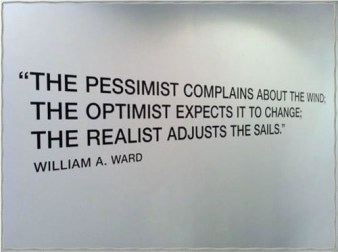
 In every marketplace, there are buyers and sellers. In the traditional job market, the one that our Department of Labor measures for us, job seekers are the sellers and their potential employers are the buyers. The commodity is productive work and the competition is fierce.
 The OTHER Job Market is different, bigger, and more efficient than even approaching “the hidden job market,” the notion that spawned the Corporate-sponsored outplacement world. It all begins by understanding that JOBS evolve from available work…
 MYCAREERpilot