
 Many job seekers go into the “journey” of job search without really knowing their destination, their PRIMARY OBJECTIVE. This Pilot has never heard of a ship leaving harbor without knowing their destination or mission, preferring the safety and calm of their dock in the harbor.
QUESTION: Why, then, do these job seekers overlook Steps one and two of our 12-Step Process, heading out, doomed to a random search for a desirable destination… their next right employment?
We’ll be taking a break for the long, July 4th Holiday weekend ahead… our next session will be Thursday, July 6th: Closing The Deal I: An exploration of interview strategies, including MoneySpeak and PRE-Offer negotiation!
 ANSWER: Job seeker’s are being human in taking the path of least resistance….Embracing the OTHER Job Market is a challenging journey, a career strategy that happens to work for job search. Steps one and two lead a well-prepared job seeker to their OFFER CRITERIA
A GREAT resume must make a job seeker’s positioning clear… Steps one and two of our 12-Step Process drive the entire process from both sides of the table. It is the most controllable part of your efforts and success. If you are not absolutely clear about what you want as that NEXT STEP in your career, envision an ideal position that will value you for the main characteristics and experiences you want to be hired for.
Since you need to be concise and clear when developing your Personal Marketing collateral materials (resume, BIO, verbal communication, and your LinkedIn profile), it’s important to figure out what you best offer in your next position, so you know exactly what skills and experiences to highlight.
Make FIT happen!
RESEARCH: Analyze Your Target Industry
Once you know what you want to do, your next step is identifying where you want to be—think industry, city, and companies. Then, research your industry and key trends affecting it now: Read relevant industry news articles, research companies, and analyze job descriptions you’re interested in.
SELF-Assessment: Find Your CareerFIT and Focus on CAREER Objectives
With your knowledge of your target industry, it’s time to figure out how you fit in (or want to). Identify, describe, and refine your key selling points with your end goal in mind. Then, craft them into 4-6 bullets, shooting for statements that are vivid and that clearly illustrate what you bring to the table over anyone else.
Ask Yourself
- What is the intersection of your ‘value proposition’ and what your target industry, or specific Company, needs?
- What are your most impactful areas of experience, knowledge, or skill?
- What critical problems are you well suited to solve?
Pay Attention to the Nitty Gritty
As you begin to think about the type of career transition you want to make, what IS the next appropriate employment for you… start out by documenting what you already know to be true about your professional self.
- Give specific attention to what you spend the most time doing, those functional details of your work that have the greatest impact on your employer’s success, and, especially, what are you uniquely providing that gives value to your role?
- Take notes about when you’re feeling particularly unmotivated or unenthused about your job. Write down the tasks that bring you down as well as those that get you excited.
- It may seem like a tedious exercise, but if you stick with it, patterns will start to emerge. And it’s in teasing out these patterns that’ll help you build a picture of the role that’s right for you.
Schedule Informational “Interviews”
In addition to being introspective, it’s also important to get out there and start becoming your own best CAREER Coach, learning about satisfying next steps, the career moves you’re interested in. And what better resource than the very people already in, or connected with, those you seek?
As an active job seeker, especially in the first few months of a job search, networking your way to one informational interview per week is essential to your campaign’s success. This may sound like a lot, but initially quantity is more important than quality as you want to get a sense of a wide variety of roles in different industries based on the results of your introspection.
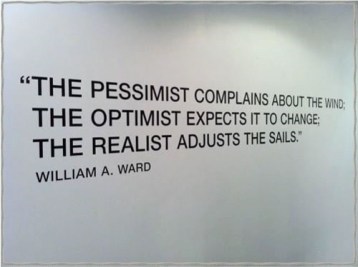
The more people you speak with, the more you’ll be exposed to fields you might wish to pursue. With that said, you don’t want the person on the receiving end to feel that way—so always make sure to come prepared and send a thank you.


 While involved in ‘the challenging waters’ of career transition, the same chaotic, jobless, trying times are very productive times. Don’t waste them by floundering with lack of focus and direction, falling into the dark, depressive attitude of distractions and, worst of all, inaction…
 So, why not recreate all that with OUR OWN PLAN, a Personal Marketing Plan, to move toward job satisfaction, commitment, and appropriate compensation, for the rest of our careers… including any current, short term job search?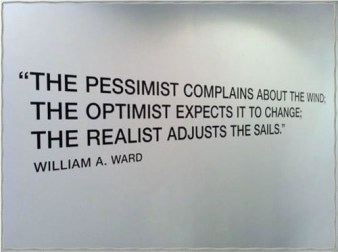
 In order to market yourself, you must first know yourself. The job search process is essentially a highly personalized marketing process. The process starts with your candid self-assessment, which allows you to gain a thorough and workable understanding of who you are in product marketing terms.
 The old “round peg in a round role” theory of career planning is dysfunctional. In the typical professional environment today, job descriptions are changing faster than ever before to keep up with the challenges of an economy in transition. In the traditional job market, job seekers are the sellers and their potential employers are the buyers. The commodity is JOBs and the competition is fierce.
 In every marketplace, there are buyers and sellers. In the traditional job market, the one that our Department of Labor measures for us, job seekers are the sellers and their potential employers are the buyers. The commodity is productive work and the competition is fierce.
 The OTHER Job Market is different, bigger, and more efficient than even approaching “the hidden job market,” the notion that spawned the Corporate-sponsored outplacement world. It all begins by understanding that JOBS evolve from available work…
 Does it matter whether you are
  As part of our exploration of interviewing tactics, Brian will help you identify your natural preference for
 A productive mindset, during any career transition, is your ability to relate your well positioned “story” to others, answer questions effectively, conduct productive negotiations, and, in general, fine tune your personal salesmanship skills. So what are those basic tactics that will allow you to effectively “close the deal?”
 Every step in the job search process is aimed at obtaining interviews. It is at that point, a potential hiring manager decides if you are right for the job, and, just as important, it is your time to evaluate whether the job is right for you. Most interviews follow a predictable format, with steps that both the interviewer and applicant follow to decide if both will benefit from working together.
 The best interviews are ones in which both participants are equal and can have a mutually beneficial, interactive conversation regarding the opportunity at hand.
 MYCAREERpilot