CREATING Opportunities In The OTHER Job Market

roadsign-banner2If you are not absolutely clear about what you want as that NEXT STEP in your career, envision an ideal position that will value you for the main characteristics and experiences you want to be hired for. Since you need to be concise and clear when developing your Personal Marketing collateral materials (resume, BIO, verbal communication, and your LinkedIn profile),  it’s important to figure out what you best offer in your next position, so you know exactly what skills and experiences to highlight.  Make FIT happen!


NEXT SESSION: Turning Opportunity into INTERVIEWS!  Thursday, January 4th at The Egg and I Restaurant in Addison


RESEARCH: Analyze Your Target Industrychalk1

Once you know what you want to do, your next step is identifying where you want to be—think industry, city, and companies. Then, research your industry and key trends affecting it now: Read relevant industry news articles, research companies, and analyze job descriptions you’re interested in.

SELF-Assessment: Find Your Fit

With your knowledge of your target industry, it’s time to figure out how you fit in (or want to). Identify, describe, and refine your key selling points with your end goal in mind. Then, craft them into 4-6 bullets, shooting for statements that are vivid and that clearly illustrate what you bring to the table over anyone else.

Ask Yourself

  • What is the intersection of your ‘value proposition’ and what your target industry, or specific Company, needs?
  • What are your most impactful areas of experience, knowledge, or skill?
  • What critical problems are you well suited to solve?

Pay Attention to the Nitty Gritty

As you begin to think about the type of career transition you want to make, what IS the next appropriate employment for you… start out by documenting what you already know to be true about your professional self.

  1. Give specific attention to what you spend the most time doing, those functional details of your work that have the greatest impact on your employer’s success, and, especially, what are you uniquely providing that gives value to your role?
  2. Take notes about when you’re feeling particularly unmotivated or unenthused about your job. Write down the tasks that bring you down as well as those that get you excited.
  3. It may seem like a tedious exercise, but if you stick with it, patterns will start to emerge. And it’s in teasing out these patterns that’ll help you build a picture of the role that’s right for you.

Turning Good Opportunity into INTERVIEWS

chalk1What is the most critical skill to one’s  CAREER success – yet also the most elusive?

While many skills contribute, ONE stands out… communication skills, BOTH personal and professional: Attentive listening, asking relevant questions, showing empathy, and knowing how to handle difficult communications are the most critical to career success.

They are vital to building healthy relationships, exchanging ideas, sharing feelings, gaining buy-in, setting clear expectations, and working collaboratively. The lack of these skills is at the root of most conflicts, employee performance issues, failed projects, and lost opportunities…JOBS????

You can be a subject matter expert, but if you can’t communicate your ideas, your ideas are of little value.

You can have a great value proposition, branding, for the future, but if you can’t get people to buy into it, your vision doesn’t matter.

You can be a masterful manager, but if you can’t reassure or empathize with your clients, they will seek help elsewhere.

You might have a skill set/experience to sell, but if you can’t articulate a compelling value proposition, you won’t find many takers.


NEXT Session: Thursday, September 21st…Turning Opportunity into INTERVIEWS: Targeted organization networking made simple.


Pilot OnboardA famous coach, of Green Bay Packer fame, spoke frankly when he said, “Perfect practice makes perfect.” Mr. Lombardi’s intent was CLEAR. He wanted his players to concentrate on PRACTICE, drilling on the “little things”, the basics, so that they became instinct during the heat of real life.

Such is productive mindset during any career transition, specifically related to your ability to relate your well positioned “story” to others, answer questions effectively, conduct productive negotiations, and, in general, fine tune your personal salesmanship skills.

THE BASICS

So what are those basics that will allow you to effectively network to identify appropriate opportunities, and then secure the requisite INTERVIEWS in order to “close the deal?”

  1. Practice your two minute drill every chance you get…. it’s the fundamental building material of your communication strategy–your verbal collaterals!
  2. Practice your exit and qualification statements… most all potential employers and networking contacts will want to know your current situation and why you are available.
  3. Practice answering both common and tough questions… including pre-offer negotiation tactics. The most asked question during career transition is, “Tell me about yourself.” Appropriate use of your two-minute drill and related verbal strategies, your “verbal collaterals,” is a key ingredient to personal salesmanship…
  • A verbal resume… A tightly focused, upbeat telling of “your story” told in a high impact two minute format. With practice, can be easily personalized to your listener.
  • An “elevator pitch”… A succinct summary of your qualifications for a specifically positioned function or opportunity. With practice, can become quite spontaneous.
  • A qualification statement that can be used in introducing yourself

Your ability to communicate determines your success at work or home.  How do you rate your current communication’s skills?  And, more importantly, how do you improve them to enhance job search or career transition SUCCESS?

Task #2 and 3: Building a FOCUSED LinkedIn Network

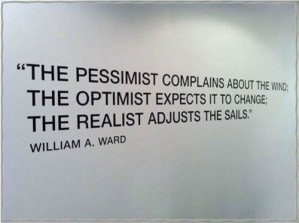
AjustDaSailsNever allow your LinkedIn usage to spiral out of control… However, that said, you want to get to your statistical ‘tipping point’ as soon as possible to cut the workload.

Your ultimate goal with social media is to STAY FOCUSED.  Only connect with others who share your professional interests or are related to those interests in a complementary way… and can help you meet your goals.  After you’ve created your profile, it’s time to begin to connect to others.  Remember your goals and adjust to your growing comfort and confidence with this ever evolving digital tool.


Our next session is Thursday, September 14th… LinkedIn Primer Task#2&3: Build your social network and explore ways to apply for posted jobs.


Pilot OnboardLinkedIn will allow you to search for people you know to see if they’re already members. But once you connect to someone, you can also look at the profiles of anyone they know, and in turn anyone those people know. Because of these three degrees of separation, your network can grow rapidly. Before you begin connecting, decide who you want to connect to. LinkedIn suggests in its FAQ, “Only invite those you know and trust.”

I started with twenty contacts from my MSOutlook.  My first line has grown to well over two hundred by accepting and sending out INVITATIONS to people I know, are likely to be interactive within our network, or who could provide resources to me or the Candidates I serve… what’s really impressive is how this translates, numerically, into your second and third lines of contact… we’re talking, WOW!!!

The 411 on “How Not to Be Connected”

If someone contacts you and you don’t want to form a connection with them, you don’t need to flatly reject them and worry about the attendant awkwardness. When looking at the invitation to connect, simply hit “Archive.” The other person does not receive a message saying their invitation has been rejected, and you don’t have to worry about unwanted invitations clogging up your inbox.

Likewise, if you find that an existing contact is blasting you with too much information or making overly aggressive requests for introductions and recommendations, LinkedIn will let you remove that person easily — and without the contact knowing they’re out of your network.

If only it were that easy in real life.

What’s Next?

  1. Check in on “Network Updates.” Found on your LinkedIn homepage, Network Updates are kind of like your Facebook news feed. Check these periodically for a quick snapshot of what your connections are up to and sharing.
  2. Be identifiable. Find out who’s checking out your profile by allowing others to see who you are if you view theirs. When you click the information under “Who’s Viewed My Profile” on your profile page, you’ll be able to view users who have looked at your profile, stats on your profile’s number of views, and its appearances in search recently. To change this, go into your settings and click “See what others see when you’ve viewed their profile.”
  3. Export connections. Transfer your LinkedIn connections to another contact management system? LinkedIn enables you to easily export your connections. Just click on “Contacts,” “My Connections,” and then scroll down and click “Export Connections.” You have the option of either exporting as a .CSV or .VCF file.
  4. Easily find email contacts on LinkedIn. Speaking of connections, the “LinkedIn Companion for Firefox” is a great plugin that helps you identify the LinkedIn profiles of people who are emailing you. It also enables you to easily access other LinkedIn features via your browser.
  1. Leverage the power of LinkedIn Groups. Did you know that if you’re a member of the same group as another user, you can bypass the need to be a first degree connection in order to message them? In addition, group members are also able to view the profiles of other members of the same group without being connected. Join more groups to enable more messaging and profile viewership capabilities.

WHAT IS This “Other” Job Market???

Compass-seaLIn every marketplace, there are buyers and sellers.  In the traditional job market, the one that our Department of Labor measures for us, job seekers are the sellers and their potential employers are the buyers.  The commodity is productive work and the competition is fierce.


NEXT SESSION: Thursday, July 20th… Embracing The OTHER Job Market, our introductory event covering an overview of the 12-step process and ‘The Basics’ of efficient job search.


Pilot OnboardIn the OTHER Job Market, buyers and sellers hold equal responsibility for the recruitment process.  When employers have a need for someone to fulfill a specific role, often the most desired candidates are employed individuals with the credentials they seek.  Thus the employer must sell their Company to potential employees in the marketplace in order to attract the best of the lot.  Once identified, they simply select their choice and buy their services. 

The JOB Market The OTHER Job Market
 

Characterized by “requisitioned” jobs being filled by chosen job seekers.


Characterized by available/needed work being fulfilled by job seekers, contractors, internal candidates, third-party consultants, retirees, part-timers, temporary workers, etc.


JOBS rigidly defined by requirements and qualifications… reflected by the screening process aimed at identifying key candidates. Work expectations are subjective, defined by mutual agreement, fulfillment of need or contract… reflected through the identification of qualified candidates.
Process overseen by Human Resource professionals, regulated to consider minimally qualified candidates, hopefully within salary guidelines. Process directed by hiring authorities seeking best available talent at marketplace salary expectations.
JOB Seeking PUBLIC is screened for most desirable candidates. Qualified and available candidates are sourced and recruited, often through process of endorsement or internal referral.
Screening defined by KEYWORDS, often accomplished through computer/internet job banks and resume databases. Screening accomplished by word of mouth and endorsement, often supplementing the organization’s formal process of recruitment.
Recruitment process subject to scrutiny of regulation and political correctness. Often selection process has occurred before active recruitment has been fully engaged.
Actual selection still subject to formal process and subjective choice. Actual selection often a rubber stamp formality to satisfy regulation requirements.

On the other hand, if an individual is under-employed, seeking a change, or actually unemployed, they must be visible to potential employers who are seeking their services.  Creating this visibility is strategic, personal market planning and execution—in can be marketability without rejection!

Personal Marketing is a contact sport.

BEGINNING OUR EIGHTH YEAR: Embracing The OTHER Job Market

Compass-seaLIn every marketplace, there are buyers and sellers.  In the traditional job market, the one that our Department of Labor measures for us, job seekers are the sellers and their potential employers are the buyers.  The commodity is productive work and the competition is fierce.

It doesn’t matter if you are an operations manager, an internal HR professional, senior finance executive, or a key player on the IT team—ANY experienced and valued professional job seeker—ALL want to become a valued partner in the business of their next employer.


TOMORROW’s Session, Thursday, April 20th:  Embracing The OTHER Job Market... an overview and exploration of basic concepts and philosophies


Everyone wants a voice in strategic decisions and to be included in ‘the conversation.’ To truly be included, you need to be invited. And you will only be invited if you are seen as absolutely essential to the TEAM.  Remember, team player and team leader CAN BE interchangeable terms.

Pilot OnboardThe OTHER Job Market is different, bigger, and more efficient than even approaching “the hidden job market,” the notion that spawned the Corporate-sponsored outplacement world.  It all begins by understanding that JOBS evolve from available work…

NEED IDENTIFIED


Replacement jobs often redefined. No definition to a new need. No competition
WORK ANTICIPATED


Discussion leads to decisions  on JOB definition Often job parameters are set based on market feedback
JOB REQUISTION WRITTEN AND APPROVED


Job Requirements must be defined… expectations creep into the recruitment process Internal candidates often get priority in employment process
JOB is “open”


Job Requirements are often refined based on market feedback Internal AND external candidates compete for the same jobs
JOB is published


Job requirements and qualifications define the screening process MAX competition!!

In the OTHER Job Market, buyers and sellers hold equal responsibility for the recruitment process.  When employers have a need for someone to fulfill a specific role, often the most desired candidates are employed individuals with the credentials they seek.  Thus the employer must sell their Company to potential employees in the marketplace in order to attract the best of the lot.  Once identified, they simply select their choice and buy their services. 

The JOB Market The OTHER Job Market
Characterized by “requisitioned” jobs being filled by chosen job seekers. Characterized by available/needed work being fulfilled by job seekers, contractors, internal candidates, third-party consultants, retirees, part-timers, temporary workers, etc.
JOBS rigidly defined by requirements and qualifications… reflected by the screening process aimed at identifying key candidates. Work expectations are subjective, defined by mutual agreement, fulfillment of need or contract… reflected through the identification of qualified candidates.
Process overseen by Human Resource professionals, regulated to consider minimally qualified candidates, hopefully within salary guidelines. Process directed by hiring authorities seeking best available talent at marketplace salary expectations.
JOB Seeking PUBLIC is screened for most desirable candidates. Qualified and available candidates are sourced and recruited, often through process of endorsement or internal referral.
Screening defined by KEYWORDS, often accomplished through computer/internet job banks and resume databases. Screening accomplished by word of mouth and endorsement, often supplementing the organization’s formal process of recruitment.
Recruitment process subject to scrutiny of regulation and political correctness. Often selection process has occurred before active recruitment has been fully engaged.
Actual selection still subject to formal process and subjective choice. Actual selection often a rubber stamp formality to satisfy regulation requirements.

On the other hand, if an individual is under-employed, seeking a change, or actually unemployed, they must be visible to potential employers who are seeking their services.  Creating this visibility is strategic, personal market planning and execution—in can be marketability without rejection!

Personal Marketing is a contact sport.

MAKING A DIFFERENCE: Your IntervIEwing Preference

Your Career CompassDoes it matter whether you are Introverted or Extraverted when it comes to participating in a job interview?   You can bet it does, because, based on your personality’s preference, you will have different challenges during your job search and transition. Introverts and Extraverts have different strengths and blind spots, and, therefore, may find different tips helpful for performing at their best.


Much of THIS WEEK’s Session, Thursday, April 13th,  will be facilitated by Brian Allen of Whittier Creek Consulting, our ‘resident MBTI Guru.’


Pilot OnboardAs part of our exploration of interviewing tactics, Brian will help you identify your natural preference for Extraversion or Introversion, then explore how to overcome some of the most common interviewing challenges faced by both types. You just might discover the key to solving one of your most frustrating interview roadblocks.

The most asked question during career transition is, “Tell me about yourself.”  Your appropriate use of a two-minute drill and related verbal strategies, your “verbal collaterals,” is a key ingredient to personal salesmanship…

  • A verbal resume… A tightly focused, upbeat telling of “your story” told in a high impact two minute format.  With practice, can be easily personalized to your listener.
  • An “elevator pitch”…  A succinct summary of your qualifications for a specifically positioned function or opportunity.  With practice, can become quite spontaneous.
  • Brag bytes…  Wordcraft various collections of words, phrases and sentences to capture memorable moments or accomplishments–the best you have to offer.  “…saved 80% cost-per-hire…”  Used in MSWord Auto Text Format can be quite efficient when building high impact correspondence as well.
  • Personal Portfolio…  Your collection of certificates, examples of work, reference letters, etc that can bring life and interest (not to mention PROOF) to your story.

sq-knot2

“If you practice the way you play, there shouldn’t be any difference. That’s why I practiced so hard. I wanted to be prepared for the game.”

Michael Jordan (1963- )
American basketball player & business person
regarded by many as the greatest basketball player who ever played the game
sq-knot2

A productive networking call sometimes can result in a screening interview, so BE PREPARED.  Most interviews follow a predictable format, with steps that both the interviewer and applicant follow to decide if both will benefit from working together.  The best interviews are ones in which both participants are equal and have a mutually beneficial, interactive conversation regarding the opportunity at hand.

Think of an interview as the natural extension, the successful result of your effective networking.  Many networking conversations actually become screening interviews, where influential contacts are assessing your qualifications, skill sets and experience relative to an opportunity at hand.  “Perfect practice” of the basics builds the confidence necessary to perform well in formal job interviews.

Let’s break down the basics into four areas

  1. pre-contact preparation/ research,
  2. greeting and rapport,
  3. questions/answers, and …
  4. meeting closure.

All four stages are equally important and deserve your consideration and preparation.


The THREE Phases of an Interview

Compass-seaLEvery step in the job search process is aimed at obtaining interviews.  It is at that point, a potential hiring manager decides if you are right for the job, and, just as important, it is your time to evaluate whether the job is right for you. Most interviews follow a predictable format, with steps that both the interviewer and applicant follow to decide if both will benefit from working together.

Pilot OnboardThe best interviews are ones in which both participants are equal and can have a mutually beneficial, interactive conversation regarding the opportunity at hand.

Think of an interview as the natural extension, the successful result of your effective networking.

Many networking conversations actually become screening interviews, where influential contacts are assessing your qualifications, skill sets and experience relative to an opportunity at hand.  “Perfect practice” of the basics builds the confidence necessary to perform well in formal job interviews.  Let’s break down the basics into four areas…

  1. pre-contact preparation/ research,
  2. greeting and rapport,
  3. questions/answers, and …
  4. meeting closure.

Next week’s session: Thursday, April 6th:  Closing The Deal I, covering interview strategies and PRE-Offer negotiation


All four stages are equally important and deserve your consideration and preparation.

The Three Phases of Every Interview

There are three things that must be discussed in every interview:  First, the Candidate, a discussion usually conducted in the past tense to assess experience, knowledge, and skills… do they meet the potential employer’s REQUIREMENTS?

Second, the job itself.  Beyond meeting requirements, each Candidate must be judged for their potential to meet EXPECTATIONS.  As important, will the Candidate “fit in” on the team and Company culture?  This discussion occurs in the future tense… very obvious transition in a “good” interview.

Last, but certainly not least, is the quality of FIT.  While this is the most subjective and dysfunctional part of the process, it is where both sides must come together for a desired outcome.  When both sides like and find the other to be attractive, a “right” employment opportunity can result.

This is also where the QandA can become more defensive in nature.

 Research the company/position

Second level research will help you to identify attractive companies.  But, this is third level (in-depth) research.  Learn as much as possible about the company, the position and the individual who will be conducting the interview.

Your research goals ought to include developing information about the company’s products, people, organizational structure, successes (and failures), profits (and losses), capital spending, strategic plans, philosophy and labor climate.  Showing your knowledge of some of this information can give you added credibility over other candidates interviewing for the job.

Use the following research strategies:

  • FOLLOW the Company through LinkedIn.  Research the company web site, looking for information relative to your function and level… a company’s financial and annual reports can provide clues to their stability and market share.
  • Don’t forget directories, trade journals, the “business press,” and databases of articles and other news.
  • Ask a friendly recruiter, business acquaintance or stockbroker what they know about the company… and by extension, call people with whom you have networked and ask what they know about the company and/or individual conducting the interview.
  • Check with the local Chamber of Commerce or Better Business Bureau.
  • Call the company directly; request a sales brochure, annual report or other company information. Companies have to market themselves, too, you know!

Know the needs of the company

Once your basic research is complete, you must next identify how your abilities, experience and expertise can meet the needs of the interviewer, the company and the job.  This point cannot be over-emphasized.  It is the company’s needs that you must fill, not your own.  Surprisingly, however, by meeting the company’s needs, your needs also will be met.

Your VALUE PROPOSITION

Prepare for your interviews (and networking meetings) by fully understanding the value you bring to a potential employer and hiring company.    Incorporate portions of this information into your interview responses, or use some of the material in your interview closing remarks.  Tell them why you are good at what you do!

Networking is a CONTACT Sport…And the Surest Path to Opportunity!

Compass-seaLWhat is the most critical skill to one’s  CAREER success – yet also the most elusive? Time management? Strategic thinking? Discipline? Decision making? No. While these are important, they pale in comparison to communication skills, BOTH personal and professional: Attentive listening, asking relevant questions, showing empathy, and knowing how to handle difficult communications are the most critical to career success.  They are vital to building healthy relationships, exchanging ideas, sharing feelings, gaining buy-in, setting clear expectations, and working collaboratively.

Pilot OnboardThe lack of these skills is at the root of most conflicts, employee performance issues, failed projects, and lost opportunities…JOBS????

You can be a subject matter expert, but if you can’t communicate your ideas, your ideas are of little value. You can have a great value proposition, branding, for the future, but if you can’t get people to buy into it, your vision doesn’t matter.

You can be a masterful manager, but if you can’t reassure or empathize with your clients, they will seek help elsewhere.


NEXT Week’s session:  Turning Opportunities Into INTERVIEWS… Thursday, March 30


You might have a skill set/experience to sell, but if you can’t articulate a compelling value proposition, you won’t find many takers. Your ability to communicate determines your success at work or home.  How do you rate your current communication’s skills?

And, more importantly, how do you improve them to enhance job search or career transition SUCCESS?

A famous coach, of Green Bay Packer fame, spoke frankly when he said, “Perfect practice makes perfect.” Mr. Lombardi’s intent was CLEAR. He wanted his players to concentrate on PRACTICE, drilling on the “little things”, the basics, so that they became instinct during the heat of real life.

Such is productive mindset during any career transition, specifically related to your ability to relate your well positioned “story” to others, answer questions effectively, conduct productive negotiations, and, in general, fine tune your personal salesmanship skills.

THE BASICS

So what are those basics that will allow you to effectively network to identify appropriate opportunities, and then secure the requisite INTERVIEWS in order to “close the deal?”

  1. Practice your two minute drill every chance you get…. it’s the fundamental building material of your communication strategy–your verbal collaterals!
  2. Practice your exit and qualification statements… most all potential employers and networking contacts will want to know your current situation and why you are available.
  3. Practice answering both common and tough questions… including pre-offer negotiation tactics. The most asked question during career transition is, “Tell me about yourself.” Appropriate use of your two-minute drill and related verbal strategies, your “verbal collaterals,” is a key ingredient to personal salesmanship…
  • A verbal resume… A tightly focused, upbeat telling of “your story” told in a high impact two minute format. With practice, can be easily personalized to your listener.
  • An “elevator pitch”… A succinct summary of your qualifications for a specifically positioned function or opportunity. With practice, can become quite spontaneous.
  • A qualification statement that can be used in introducing yourself

Let’s not forget a couple of additional ‘collaterals’ that will help you round out your ability to ‘get the word out’ and serve as evidence of your qualifications.

  1. Brag bytes… Wordcraft various collections of words, phrases and sentences to capture memorable moments or accomplishments–the best you have to offer. “…saved 80% cost-perhire…” Used in MSWord, ‘Quick Parts’ can be quite efficient when building high impact correspondence as well.
  2. Personal Portfolio… Your collection of certificates, examples of work, reference letters, etc that can bring life and interest (not to mention PROOF) to your story.

Put Some ENERGY Into IT!

Compass-seaLI have long suggested that steps one and two of our 12-step Process M.A.P. give us all the ingredients we need to “get in the galley” and cook up a three course meal of our personal marketing collateral materials.  While most job seekers seem to prefer starting with a resume, so that they can begin simply applying to any job that seems remotely close to what they can do… I encourage you to work with all your ingredients at the same time…if your desired result is a nice prime rib dinner, don’t start with the meat—start with the seasonings and vegetables, even get your dessert started…


THIS Week’s Session, Thursday, March 16th: IMPLEMENTING Your PMP


Pilot Onboard

Because that “meaty” resume is the easiest and quickest of what you need to prepare, let’s look at the ingredients that you have identified through assessment of your galley shelves, and your dinner of choice.

WHERE To Start PMP Implementation

As a contact sport, networking is about interaction between sender and receiver, buyer and seller… job seeker and potential employers. The great news is that you get to start from YOUR ‘sweet spot’ or middle ground where all this interaction occurs the easiest!

You start with people that you already know or have some connection to. If your ‘natural network’ doesn’t have a regular meeting—most do not, by their very diverse nature—groups of like-minded people are easy to identify and attend. As you begin to reach out and broaden your ‘sweet spot,’ be selective in your attempt to create a supportive ‘community’ grouping close to your targeted marketplace.

THIS can be accomplished without a resume, but, after all, Step#3 in our process is to develop your in-sync personal marketing materials.  Your collateral materials might be grouped into three categories:

VERBAL COLLATERALS…

  1. A well rehearsed “two minute commercial,” your answer to the most asked question during career transition, “Tell me about yourself.”
  2. Several, well though out, “elevator speeches,” examples that support your primary, positioning, key words. These are usually your representative accomplishments under the SUMMARY of your resume. (30 seconds to 1 minute )
  3. A succinct “qualification statement” that you can use as an introduction at networking events. (usually 20 – 30 seconds)
  4. An “exit statement” which explains your availability, to address the second most asked question during career transition.

Be working on both your written and verbal collaterals at the same time. One will help you “edit” and practice the other. Having your collaterals prepared and rehearsed prior to active personal marketing is central to your success and builds confidence. Consistency in the delivery of your message is what creates memory… and frequency of your message helps you get there.

WRITTEN COLLATERALS…

  1. A GREAT Resume that positions you clearly as a terrific FIT with your career objectives… and in today’s technologies, a database-friendly, asci version;
  2. A correspondence template package that consistently carries your communication strategy, your message… and in today’s technologies, a reformatted, text only version of your resume ready for email needs;
  3. A high impact, personal biography and/or NETWORKING PROFILE that you can lead with in your referral based networking strategies.
  4. And, after you have coached your REFERENCES, a complete and clearly positioned LinkedIn Profile, written to reflect your communication strategy and in synch with your other collaterals.

NON-VERBAL COLLATERALS…

  1. Personal appearance, dress and grooming;
  2. Positive attitude and bearing, a sense of purpose and worth;
  3. Presence + Preparation = Confidence
  4. Be prepared for phone calls and interviews: Research
  5. Confidence feeds on itself and provides a pathway to success!
  6. Practice the “learnable skills” consistently PRACTICE TO GAIN CONFIDENCE IN PHONE CALLS… and remember, there are only TWO reasons to be on the phone during active job search networking:
  • To gather information, advice, referral names and opportunities.
  • Second, to secure actual interviews.

Networking is a CONTACT Sport!

Job search does not happen in a digital vacuum.

Compass-seaLYou have learned in embracing the OTHER job market that the key to the whole notion of productive and efficient networking is to generate INTERACTIVE communication, the initial basis of relationship building!  When involved with active job search, part of our preparation is to develop our set of Personal Marketing collateral materials.

I have long suggested that steps one and two of our 12-step Process M.A.P. give us all the ingredients we need to “get in the galley” and cook up a three course meal of our personal marketing collateral materials.


NEXT WEEK’s Session, Thursday, March 16th: IMPLEMENTING Your PMP


Pilot OnboardWhile most job seekers seem to prefer starting with a resume, so that they can begin simply applying to any job that seems remotely close to what they can do… I encourage you to work with all your ingredients at the same time…if your desired result is a nice prime rib dinner, don’t start with the meat—start with the seasonings and vegetables, even get your dessert started…

Because that “meaty” resume is the easiest and quickest of what you need to prepare, let’s look at the ingredients that you have identified through assessment of your galley shelves, and your dinner of choice.

WHERE To Start

As a contact sport, networking is about interaction between sender and receiver, buyer and seller… job seeker and potential employers. The great news is that you get to start from YOUR ‘sweet spot’ or middle ground where all this interaction occurs the easiest!

You start with people that you already know or have some connection to. If your ‘natural network’ doesn’t have a regular meeting—most do not, by their very diverse nature—groups of like-minded people are easy to identify and attend. As you begin to reach out and broaden your ‘sweet spot,’ be selective in your attempt to create a supportive ‘community’ grouping close to your targeted marketplace.

Networking within your targeted marketplace, your unique, job search ‘community’ should play a critical role in your Personal Marketing strategies. It is an easy means to getting the word out about your business to people who may purchase and influence others to purchase your service or goods. But just as with any other job search activity, we get what we put into it.

That being said, local networking events are seeing record turnouts lately, a sign that leads us to believe the networking is paying off. A Local Networking Group is any organization, which meets on a regular basis, to share and receive referrals and leads. Examples of formal Local Networking groups for small and medium sized business include: BNI (Business Networking International), Merchants’ Associations, Chambers of Commerce, and Business Associations.

Some of the largest local organizations devoted to supporting job seeker efforts are  Frisco Connect, Cathedral of Hope, the Southlake Group, Watermark Church… to name just a few. Many are associated with church support organizations… but are completely nondenominational in their approach, operation and outreach.

The WAVES of PMP Implementation

The concept, here, is to keep a pulse of activity going consistently and regularly into the job market.  When you let up, if you take time away from the marketplace, they will tend to forget you…the job market has no memory.  It’s up to you to achieve top-of-mind awareness.

Get the Most From Your ‘first wave’ of Networking… Your purpose in this ‘first wave’ of networking is to gain information, advice, and most importantly names of other individuals you can call. The lifeline of networking is to always get more names. Be sure to ask each person if they have a minute to talk to you, and when finished talking thank them for their time.

Make networking calls in a block of time. Each call is more comfortable than the one before. Do not call people and ask them if they have any openings at their company… This is almost always totally non-productive. THE PRINCIPLES BEHIND A SUCCESSFUL JOB SEARCH ARE ALWAYS THE SAME: the search process itself is time consuming work, and the more productive time you spend on your job search the more interviews and job offers you will generate.

So the question at this point is “Where do you find out about job openings and on which avenues of job search should you spend the most time?”

 THE BEST (And Worst) OF BOTH WORLDS

Technology has done a terrific job of consolidating posted job leads. Web crawling software can reach out and consolidate classified ads, recruitment posts and company posted job opportunities. We know these consolidated sites as Internet Job Banks… and some of them contain a huge amount of postings.

Unfortunately, their very size makes it challenging to stay current and eliminate redundancy. Also unfortunate is the fact that these very same job banks have consolidated your competition and rejection from Corporate America. This is not even mentioning that Corporate America is also missing it’s goal of better qualified resumes to fuel its recruitment effort… they’re simply getting MORE resumes to process!

Solution? Use the Job Banks to generate your most attractive leads, then network your way into those targeted organizations.