Taking “The Pulse” of Your Job Search

A lot of individuals with a rebellious streak resist structure, snub the idea of a schedule, and then find that their lives and creative output aren’t nearly as harmonious as they hoped.  As job seekers, they may find it quite difficult to get in to a productive and efficient routine, the implementation of their Personal Marketing Plan.

If you fall at this end of the spectrum and find it hard to accept — and even harder to follow — a standard routine, maybe it’s time to stop thinking about managing your time and effort as developing a set of strict rules to follow.  In fact, implementing your PMP wisely is to commit to averaging your activity counts and time management ‘numbers’ over a longer stretch of time.

Pilot OnboardStart thinking about increasing productivity as a process of finding and cultivating your unique creative rhythm — your cadence, your implementation beat… your job search “PULSE.”  Create a personal discipline for yourself, a way of being, where there’s a realistic goal (your next right employment opportunity) and recognize the need to maintain a consistency of fruitful activity to propel our 12-step process of career transition forward… all while allowing room for improvisation and job search/ LIFE balance!

If this sort of approach sounds appealing to you, here are some ideas based on my own anecdotal experiences with thousands of unemployed people over my 36 years of experience in consulting with job seekers around the U.S.of A.

 Monthly Cadence

Job Seekers can typically get more done in a month when they plan for less. Most people have a natural rhythm where they can accomplish about one major professional project or one personal milestone in a month. As an example, think about developing your resume and related personal marketing materials.

  1. Resume
  2. “Tell me about yourself” or your ‘elevator pitch’ or even your qualification statement
  3. Your digital footprint: Branding yourself in your LinkedIn Profile

If you tell yourself that you’ll do three items of this stature in a month, you’ll probably make little progress on any of them. If you commit to one specifically for the month, there’s a high probability that you’ll accomplish it or get close to finishing within the four weeks. Honor that monthly project cadence, and you’ll feel much more satisfied.

What’s more, it’s also essential that you honor your personal and emotional energy cadence over the course of the month. Of course, there are exceptions, but as a general rule, one or two distractions a month are the max that most individuals can take without getting thrown significantly off rhythm.

Also, consider pacing yourself in regard to events you host or visitors that you have in your home. All of these events add a nice sense of variety to life, but can make you lose the beat if the exceptions become the norm.

 Weekly Cadence

I would never attempt to define a “normal” week of job search…there are simply TOO MANY variables!  But, I do encourage those Candidates that I serve to commit to AVERAGING the numbers they select in the Personal Marketing Plan.  You can think about this in the same way you would a design template. It’s a format that you can then build and modify as necessary for any given project — in this case, your job search week.

  1. Include ramp-up time on Monday morning, so that the first few hours of the week are blocked out for weekly planning and processing after the weekend.
  2. Schedule focused practice or research time on Wednesday afternoons.
  3. Get out of the house on Tuesdays and Thursdays… go to a coffee shop and get quality, uninterrupted work done. This turns moving a major initiative forward into something that feels like a nice mid-week mini-break from the normal day-to-day.
  4. Wind down on Friday afternoons. I block out about three hours to wrap up anything that took longer than I anticipated or to work on non-urgent administrative tasks that are nice to get done before closing up for the weekend.
  5. At least one weekday evening, accomplish personal to-do items and recharge. I’m very involved in my community and lifestyle, but even extroverts need a day off.

NORMAL? … Don’t hold your breath, but you can, of course, adapt, adjust, and amend all of this as necessary. But this rhythm is what I suggest, and I find it leads to a productive week with closure before the weekend… and plenty of time for those “normal” distractions!

Your Personal Marketing PLAN

Compass-seaLWhile involved in ‘the challenging waters’ of career transition, the same chaotic, jobless, trying times are very productive times.  Don’t waste them by floundering with lack of focus and direction, falling into the dark, depressive attitude of distractions and, worst of all, inaction…

When we are employed, we tend to function under the guidance of our employer’s business plan, or, more specifically, our job description. Our ‘routine’ is defined by:

  • Personal accountability to a labyrinth of responsibilities, some structured— some not structured at all—but all contributing to productive work activities…
  • We create productivity and efficiency with our sense of time management…
  • And as ‘top talent’ professionals, we often take initiative, make process improvements, and contribute to the Company’s growth.

                                                    This week’s session, Thursday, May 25...

             Developing Your Personal Marketing Plan


Pilot OnboardSo, why not recreate all that with OUR OWN PLAN, a Personal Marketing Plan, to move toward job satisfaction, commitment, and appropriate compensation, for the rest of our careers… including any current, short term job search?
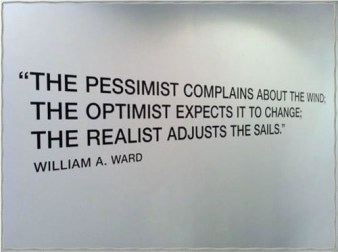
If an individual is under-employed, seeking a change, or actually unemployed, they must be visible to potential employers who are seeking their services. Creating this visibility is strategic, personal market planning and execution—in can be marketability without rejection!

And, employed or not, Modify and improve your Personal Market Plan’s implementation model as needed… As you move through your career transition or ‘job search campaign,’ make adjustments as you would a business model.

AjustDaSails


BEGINNING OUR EIGHTH YEAR: Embracing The OTHER Job Market

Compass-seaLIn every marketplace, there are buyers and sellers.  In the traditional job market, the one that our Department of Labor measures for us, job seekers are the sellers and their potential employers are the buyers.  The commodity is productive work and the competition is fierce.

It doesn’t matter if you are an operations manager, an internal HR professional, senior finance executive, or a key player on the IT team—ANY experienced and valued professional job seeker—ALL want to become a valued partner in the business of their next employer.


TOMORROW’s Session, Thursday, April 20th:  Embracing The OTHER Job Market... an overview and exploration of basic concepts and philosophies


Everyone wants a voice in strategic decisions and to be included in ‘the conversation.’ To truly be included, you need to be invited. And you will only be invited if you are seen as absolutely essential to the TEAM.  Remember, team player and team leader CAN BE interchangeable terms.

Pilot OnboardThe OTHER Job Market is different, bigger, and more efficient than even approaching “the hidden job market,” the notion that spawned the Corporate-sponsored outplacement world.  It all begins by understanding that JOBS evolve from available work…

NEED IDENTIFIED


Replacement jobs often redefined. No definition to a new need. No competition
WORK ANTICIPATED


Discussion leads to decisions  on JOB definition Often job parameters are set based on market feedback
JOB REQUISTION WRITTEN AND APPROVED


Job Requirements must be defined… expectations creep into the recruitment process Internal candidates often get priority in employment process
JOB is “open”


Job Requirements are often refined based on market feedback Internal AND external candidates compete for the same jobs
JOB is published


Job requirements and qualifications define the screening process MAX competition!!

In the OTHER Job Market, buyers and sellers hold equal responsibility for the recruitment process.  When employers have a need for someone to fulfill a specific role, often the most desired candidates are employed individuals with the credentials they seek.  Thus the employer must sell their Company to potential employees in the marketplace in order to attract the best of the lot.  Once identified, they simply select their choice and buy their services. 

The JOB Market The OTHER Job Market
Characterized by “requisitioned” jobs being filled by chosen job seekers. Characterized by available/needed work being fulfilled by job seekers, contractors, internal candidates, third-party consultants, retirees, part-timers, temporary workers, etc.
JOBS rigidly defined by requirements and qualifications… reflected by the screening process aimed at identifying key candidates. Work expectations are subjective, defined by mutual agreement, fulfillment of need or contract… reflected through the identification of qualified candidates.
Process overseen by Human Resource professionals, regulated to consider minimally qualified candidates, hopefully within salary guidelines. Process directed by hiring authorities seeking best available talent at marketplace salary expectations.
JOB Seeking PUBLIC is screened for most desirable candidates. Qualified and available candidates are sourced and recruited, often through process of endorsement or internal referral.
Screening defined by KEYWORDS, often accomplished through computer/internet job banks and resume databases. Screening accomplished by word of mouth and endorsement, often supplementing the organization’s formal process of recruitment.
Recruitment process subject to scrutiny of regulation and political correctness. Often selection process has occurred before active recruitment has been fully engaged.
Actual selection still subject to formal process and subjective choice. Actual selection often a rubber stamp formality to satisfy regulation requirements.

On the other hand, if an individual is under-employed, seeking a change, or actually unemployed, they must be visible to potential employers who are seeking their services.  Creating this visibility is strategic, personal market planning and execution—in can be marketability without rejection!

Personal Marketing is a contact sport.

MAKING A DIFFERENCE: Your IntervIEwing Preference

Your Career CompassDoes it matter whether you are Introverted or Extraverted when it comes to participating in a job interview?   You can bet it does, because, based on your personality’s preference, you will have different challenges during your job search and transition. Introverts and Extraverts have different strengths and blind spots, and, therefore, may find different tips helpful for performing at their best.


Much of THIS WEEK’s Session, Thursday, April 13th,  will be facilitated by Brian Allen of Whittier Creek Consulting, our ‘resident MBTI Guru.’


Pilot OnboardAs part of our exploration of interviewing tactics, Brian will help you identify your natural preference for Extraversion or Introversion, then explore how to overcome some of the most common interviewing challenges faced by both types. You just might discover the key to solving one of your most frustrating interview roadblocks.

The most asked question during career transition is, “Tell me about yourself.”  Your appropriate use of a two-minute drill and related verbal strategies, your “verbal collaterals,” is a key ingredient to personal salesmanship…

  • A verbal resume… A tightly focused, upbeat telling of “your story” told in a high impact two minute format.  With practice, can be easily personalized to your listener.
  • An “elevator pitch”…  A succinct summary of your qualifications for a specifically positioned function or opportunity.  With practice, can become quite spontaneous.
  • Brag bytes…  Wordcraft various collections of words, phrases and sentences to capture memorable moments or accomplishments–the best you have to offer.  “…saved 80% cost-per-hire…”  Used in MSWord Auto Text Format can be quite efficient when building high impact correspondence as well.
  • Personal Portfolio…  Your collection of certificates, examples of work, reference letters, etc that can bring life and interest (not to mention PROOF) to your story.

sq-knot2

“If you practice the way you play, there shouldn’t be any difference. That’s why I practiced so hard. I wanted to be prepared for the game.”

Michael Jordan (1963- )
American basketball player & business person
regarded by many as the greatest basketball player who ever played the game
sq-knot2

A productive networking call sometimes can result in a screening interview, so BE PREPARED.  Most interviews follow a predictable format, with steps that both the interviewer and applicant follow to decide if both will benefit from working together.  The best interviews are ones in which both participants are equal and have a mutually beneficial, interactive conversation regarding the opportunity at hand.

Think of an interview as the natural extension, the successful result of your effective networking.  Many networking conversations actually become screening interviews, where influential contacts are assessing your qualifications, skill sets and experience relative to an opportunity at hand.  “Perfect practice” of the basics builds the confidence necessary to perform well in formal job interviews.

Let’s break down the basics into four areas

  1. pre-contact preparation/ research,
  2. greeting and rapport,
  3. questions/answers, and …
  4. meeting closure.

All four stages are equally important and deserve your consideration and preparation.


READY…Aim…fire!

Pilot OnboardYOUR Personal Marketing Plan

 Your PMP is as unique as you are.  While the elements that you must address in your Plan are similar in all well-documented Plans, your commitments to time and activities, and your interface with “real life” will bring said personalization to your Plan.  Our 12-step process accounts for all necessary elements in planning…


THIS Week’s Session: Thursday, March 9th…8:45 at The Egg and I

           Developing YOUR Personal Marketing Plan


PRODUCT ANALYSIS

 The first three steps: Assessment, setting your objectives, and developing your personal marketing collateral materials… What is your communication strategy?  In today’s digital world of recruitment, it is that set of keywords and concepts that comprise your story.

Your proven skills, areas of knowledge, and your actual, collective experience are the features of YOU, ‘your product,’ and your collateral materials (think RESUME) is your ‘story’ of the benefits of employing you.  Actual employment happens when YOUR value proposition meets an employers’ needs.

If you are still unclear on the next steps along your career path, it may be appropriate for you to use your initial wave of networking with people that already know you, to ASSESS your strengths (think: market research).

TEST MARKETING

 Steps four and five are in place to provide you with confirming feedback that you have selected an appropriate approach to the marketplace.  Coaching your references, then branding yourself in the digital world of recruitment will help you validate your initial decisions.  This validation that the marketplace needs you and your value proposition helps you to have the necessary confidence in your story.

  • Discuss your resume with your references… does your story capture the real YOU? Have you missed any key bits of supportive information?
  • Use LinkedIn, your “digital footprint,” to pull interest in you to your Profile, and to push your message out to the marketplace through your network of contacts and Group activity.

DISTRIBUTION NETWORK

 The next two steps, initial research and pulling together your initial contact list are in place to create focus to your efforts…  What are the trends in the market that are attractive to you, and which target organizations are most needy of your value proposition?  Your evolving contact list will take you through the A-B-C’s of networking and the development of your distribution channels…

  1. Start with people you already know or have reason to “should know,” as they are the most likely to be receptive to your initial efforts.
  2. As you develop your network, identify key bridge contacts that can give you specific information or introduce you to key decision-makers and hiring authorities.
  3. Critical to your success is building relationships with people who can influence your hiring. This ‘must see’ list of influential contacts and hiring authorities is the epicenter of your job search campaign!

YOUR CAMPAIGN LAUNCH

 Have an implementation strategy and stick to your plan.   Your Personal Marketing Plan should evolve as you progress in your job search. I would recommend early on in your search you attend several events where other job seekers hang out. These are great places to meet new people, develop and practice your elevator pitch, and get some support.

However, within 6-8 weeks you want to begin moving AWAY from those kinds of events to places where potential employers and people close to potential employers hang out. The former of these events will usually be free.

The latter may cost you something. That’s why you want to work out the bugs in your verbal and printed “brand image” in the early stages of your job search. So you can be more effective and efficient when you implement your PMP. Yes, this means you will say “no” to some things.

You want to be strategic!  Remember that an occasional job search is the most predictable part of your career-long strategy!

Critical to the efficiency and productivity of your campaign is the regularity and frequency of the activities you are willing to commit to, and the uses of your time, that will create top-of-mind awareness of YOU (the product) in the desirable or chosen marketplace.  In other words, what are you willing and able to commit to to get HIRED!…to LAND your next right employment?

READY… The first seven steps of the 12-step process are there to prepare you to be successful in a job search campaign.  You are READY!

AIM… Steps five, six, and seven are there to help you focus your efforts.  You’re ready and have your targets in sight… you have the correct AIM!

FIRE… Anyone can pick up a weapon and fire it… most of us can push the button that launches a missile.  But the practiced, prepared, and confident marksman is the one most likely to have the skill to actually hit their target!

Failing to Plan = Planning to FAIL

Compass-seaLWhile involved in ‘the challenging waters’ of career transition, the same chaotic, jobless, trying times are very productive times. Don’t waste them by floundering with lack of focus and direction, falling into the dark, depressive attitude of distractions and, worst of all, inaction…

Pilot Onboard

When we are employed, we tend to function under the guidance of our employer’s business plan, or, more specifically, our job description. Our ‘routine’ is defined by:

  • Personal accountability to a labyrinth of responsibilities, some structured— some not structured at all—but all contributing to productive work activities…
  • We create productivity and efficiency with our sense of time management…
  • And as ‘top talent’ professionals, we often take initiative, make process improvements, and contribute to the Company’s growth.

    NEXT Week’s session, Thursday, March 9th: Developing Your PMP, what ARE those activities and time management issues that will define your weekly routine?


    So, why not recreate all that with OUR OWN PLAN, a Personal Marketing Plan, to move toward job satisfaction, commitment, and appropriate compensation, for the rest of our careers… including any current, short term job search?If an individual is under-employed, seeking a change, or actually unemployed, they must be visible to potential employers who are seeking their services. Creating this visibility is strategic, personal market planning and execution—in can be marketability without rejection!

    And, employed or not, Modify and improve your Personal Market Plan’s implementation model as needed… As you move through your career transition or ‘job search campaign,’ make adjustments as you would a business model.

    Personal Marketing is a contact sport.

Discovering CareerFIT

Your Career CompassUltimately, your goal is to secure the next right employment for yourself… that must start with your identification of what right is.  THAT requires some exploration, identification of key elements of your Career FIT, and planning to pull it all together, create focus… make it happen.


This week’s Session:  Discovering Your CareerFIT… Thursday, February 2, 8:45 AM at The Egg and I Restaurant in Addison.


Pilot OnboardUnderstand that managing your own career involves three key ingredients:

  1. Confidence in knowing that your career is on the right path;
  2. Continuous research and networking leading to awareness of potential “next steps…” to keep your career moving forward;
  3. Competency with job-changing skills.

To manage your career wisely has you extending the same concept.  Consider some of the factors listed below … Examine each factor through the questions listed – and then ask “does this opportunity fit me?”

Work Requirements and Expectations: What is the next  appropriate work for you? Is the work process or project oriented?  If it’s process oriented, are the requirements and expectations clear?  What kinds of projects will you work on? Will you work on one project at a time, or multiple projects? Are the projects long term or short term? Will you work on a project long enough to see the end result? Is it important to you to be able to see the project as a whole, including the result? Or will you be content to do the work without a big picture understanding?

Work Environment: Will the work space be a source of comfort and confidence for you? How formal or informal is the environment? Hectic, fast paced? Will you have the opportunity to have flex time, or to tele-commute? How many hours a week does the employer expect you to work? Will you have the freedom to wear casual clothes? What is a typical day like at the company you are considering?  Would they allow a “trial visit” or at least a site visit?

Career Path: Is there a defined succession plan? What position(s) can you move to next? How long do new hires generally stay in the same job? How quickly do people get promoted? Are your opportunities for professional development well defined and available to you? Are mentors available?

Training and Personal Development: what kind of training will you get from the employer to do the job? What kind of training will you get to stay current in your area of interest? Are the answers to these two questions different? Does it matter to you if the answers are different?

And, What about YOU???

Strengths          Strengths differ from skills, in that your strengths were not learned or taught, but inborn.  The kind of things which you find easy to do, when others struggle with the same task, can be thought of as a strength.  Perhaps you have used strengths on the job in the past, and if so, you should consider leveraging that strength in your future.

Unfortunately, many people never recognize their strengths, or don’t see a way to use them in the work roles they have played. But, what if you could….?

 Skills                     What we have learned, developed, or have experienced in the workplace.  Those tasks you have performed for another employer, for pay, in the past.  You need to consider skills in two ways:

  1. Competency, or how good you are at the skill, as well as
  2. Motivation, how you feel about performing the skill.

You want to focus on skills where you have both High Competency and High Motivation for your future career development.  Be careful about those skills with High Competency, but Low Motivation.  If you would rather never perform a skill that you have done well for years, it might not be wise to include that skill in your personal marketing collateral materials.

Interests      What kind of things would you enjoy doing, or learning about, even if there was no paycheck involved? Can you identify some topics or activities to which you are, and have always been, naturally drawn?  These might be called your Interests, and they are a key to career success.

Passions are simply very strong interests, and you may have heard someone give career advice about “following your passion!) Interests combined with skills can be very rewarding in the workplace.

Personality/Emotional Intelligence We are all different from one another, in many different ways.  Those differences do not make us wrong, or bad, but they can create conflict or poor communication between people who do not appreciate or understand natural differences.

Learning how you “see the world” differently than other people do can provide clues to how to better understand or relate to people.  This can provide a major advantage in a person who has to work with others, or lead others.  What are your natural preferences? The answer to this question can guide a person to make better decisions regarding their career.

Another difference that has gotten a lot of attention in recent years surrounds the issue of Emotional Intelligence.  This is the degree by which a person is both aware of their and other’s emotional state, as well as the degree by which they manage those emotions.  It seems likely that the higher your EQ, the more likely you will find success in relationships and in the workplace.

Values     What is most important to you, and what will you protect or defend if necessary? How do you expect to be treated in the workplace, by co-workers and leaders? What are the “rules” by which you choose to live your life? These are the rules that define how you, and others, should behave in society.  These “rules”, or values, can be the most important self-awareness a person should draw from when considering career moves.

If the work you do, or the people and organization where you perform you work, share some of your highest values, you are more likely to feel satisfied and fulfilled in that work.  Where our higher values are routinely violated, or when we are required to abandon some of them on a regular basis at work, the result can be frustration, anger, dis-engagement, and ultimately burn-out.

The problem is that we rarely think about our values, and probably can’t list them if asked. Even though we constantly use them to react to people or events.  Most values are buried deep in our minds.

NEXT WEEK’s Session: Communicating and Achieving CareerFit.

The Beat Goes On

Compass-seaLThe stress and spontaneous pressures of job search can take their toll, making it easy to give in to ‘the path of less resistance…’ aka: distractions.  Asa drummer, I learned that regardless of personal desire to provide a more creative beat for the corps to march to, it was important to maintain a steady and consistent beat (called a cadence) so that everyone could stay in step… or as we use to say, “The Beat Goes On!”


Thursday, September 29th… Implementing your Personal Marketing Plan: An exploration of routine job search activities.


Pilot OnboardThe same thing is true when implementing your Personal Marketing Plan… in order to create the desired result–top-of-mind awareness–you must maintain a steady beat of activities to brand yourself, to be remembered, in the job market.

Weekly Cadence

I would never attempt to define a “normal” week of job search…there are simply TOO MANY variables!  But, I do encourage those Candidates that I serve to commit to AVERAGING the numbers they select in the Personal Marketing Plan.  You can think about this in the same way you would a design template. It’s a format that you can then build and modify as necessary for any given project — in this case, your job search week.

  1. Include ramp-up time on Monday morning, so that the first few hours of the week are blocked out for weekly planning and processing after the weekend.
  2. Schedule focused practice or research time on Wednesday afternoons.
  3. Get out of the house on Tuesdays and Thursdays… go to a coffee shop and get quality, uninterrupted work done. This turns moving a major initiative forward into something that feels like a nice mid-week mini-break from the normal day-to-day.
  4. Wind down on Friday afternoons. I block out about three hours to wrap up anything that took longer than I anticipated or to work on non-urgent administrative tasks that are nice to get done before closing up for the weekend.
  5. At least one weekday evening, accomplish personal to-do items and recharge. I’m very involved in my community and lifestyle, but even extroverts need a day off.

NORMAL? … Don’t hold your breath, but you can, of course, adapt, adjust, and amend all of this as necessary. But this rhythm is what I suggest, and I find it leads to a productive week with closure before the weekend… and plenty of time for those “normal” distractions!

 Daily Cadence

There is no one right formula for having a productive day of job search activities. The trick is to be honest with yourself about what works best for you to get the most of your 24 hours.

Personally, I spend the first hour to hour and a half planning, answering e-mail, and completing small to-do items, and then I jump into more in-depth work and client calls by 8:30.

With some of my Candidates, the best daily rhythm is to check e-mail very quickly in the morning and then focus on in-depth work until lunch. After lunch they have meetings or respond to emergencies that have come up.

No matter which you prefer, you want to have clarity on when you do your best focused work, when you prefer to have meetings, and when you’ll make space for the processing and planning that keeps everything moving in the right direction.

Back-to-Center Cadence

Finally, it’s important to know what pattern can help you to get back on track when there are major variations to your Personal Marketing Plan. Being honest with yourself and giving yourself permission to spend time reorganizing when you need it keeps you from feeling perpetually behind and guilty.

For example, you will experience the least pressure when you block out a few days before and after any significant time away from your job search so that no one can schedule meetings with you on those days. That gives you the flexibility you need for wrapping up work and getting your head back in the game after being away…maintaining your visibility in the job market.

Also, consider blocking out at least a half day after a conference or major networking event to tie up loose ends, follow up, and sort through your notes. This will give you the ability to extract the value from what just happened. The more disruptive the event, the more time you’ll want to allot to resettle in and get back on a rhythm.

Rhythm on a weekly and daily basis can create the order, productivity, efficiency, and flexibility you need for the implementation of your Personal Marketing Plan to flow in harmony.

It’s time to “take your pulse,” and discover your personal marketing cadence, your BEST career strategy… always have a next contact to make and be aware of ‘next steps’ in your career.

Did you say OTHER Job Market?

Your Career CompassIn every marketplace, there are buyers and sellers.  In the traditional job market, the one that our Department of Labor measures for us, job seekers are the sellers and their potential employers are the buyers.  The commodity is productive work and the competition is fierce.

It doesn’t matter if you are an operations manager, an internal HR professional, senior finance executive, or a key player on the IT team—ANY experienced and valued professional job seeker—ALL want to become a valued partner in the business of their next employer.


Thursday, August 18th… Embracing The OTHER Job Market, our introductory and overview session in which we discuss the entire 12-step M.A.P. and The Pilot’s basic assumptions and philosophies of career transition.  New-comers and tire-kickers welcome!


Pilot OnboardEveryone wants a voice in strategic decisions and to be included in ‘the conversation.’ To truly be included, you need to be invited. And you will only be invited if you are seen as absolutely essential to the TEAM.  Remember, team player and team leader CAN BE interchangeable terms.

In the OTHER Job Market, buyers and sellers hold equal responsibility for the recruitment process.  When employers have a need for someone to fulfill a specific role, often the most desired candidates are employed individuals with the credentials they seek.  Thus the employer must sell their Company to potential employees in the marketplace in order to attract the best of the lot.  Once identified, they simply select their choice and buy their services.

On the other hand, if an individual is under-employed, seeking a change, or actually unemployed, they must be visible to potential employers who are seeking their services.  Creating this visibility is strategic, personal market planning and execution—in can be marketability without rejection!

Personal Marketing is a contact sport.

The Evolution of a JOB…

NEED IDENTIFIED


Replacement jobs often redefined. No definition to a new need. No competition
WORK ANTICIPATED


Discussion leads to decisions  on JOB definition Often job parameters are set based on market feedback
JOB REQUISTION WRITTEN AND APPROVED


Job Requirements must be defined… expectations creep into the recruitment process Int candidates often get priority in employment process
JOB is “open”


Job Requirements are often refined based on market feedback Int and ext candidates compete for the same jobs
JOB is published


Job requirements and qualifications define the screening process MAX competition!!

Your Personal Marketing Plan: A CAREER Strategy

Your Career CompassWhile involved in ‘the challenging waters’ of career transition, the same chaotic, jobless, trying times are very productive times. Don’t waste them by floundering with lack of focus and direction, falling into the dark, depressive attitude of distractions and, worst of all, inaction…

When we are employed, we tend to function under the guidance of our employer’s business plan, or, more specifically, our job description. Our ‘routine’ is defined by:

  • Personal accountability to a labyrinth of responsibilities, some structured— some not structured at all—but all contributing to productive work activities… 
  • We create productivity and efficiency with our sense of time management…
  • And as ‘top talent’ professionals, we often take initiative, make process improvements, and contribute to the Company’s growth.

    THIS WEEK’s Session, Thursday, June 23rd: Developing your Personal Marketing Plan… being prepared for a productive and efficient job search.


Pilot OnboardSo, why not recreate all that with OUR OWN PLAN, a Personal Marketing Plan, to move toward job satisfaction, commitment, and appropriate compensation, for the rest of our careers… including any current, short term job search?   But, before looking at what such a Personal Marketing Plan would look like, you should review the PREPARATION Portion of the 12-step Process Model.

If an individual is under-employed, seeking a change, or actually unemployed, they must be visible to potential employers who are seeking their services. Creating this visibility is strategic, personal market planning and execution—in can be marketability without rejection!

And, employed or not, Modify and improve your Personal Market Plan’s implementation model as needed… As you move through your career transition or ‘job search campaign,’ make adjustments as you would a business model.

Personal Marketing is a contact sport.

Following the first three steps, it may feel like you’re ready to take on the job market… but, THE Careerpilot encourages you to be totally prepared before you do.

4)  “Coaching” Your Chosen REFERENCES…  It is essential that you make certain that persons you use as a reference will respond in a positive manner. A good rule of thumb is to select four to six references, including supervisors, indirect supervisors, customers, peers, and possibly someone of stature in your profession.

Contact every person you are using for a reference, get their permission, discuss what type of position you are targeting, and send them a copy of your ‘market-ready’ resume template. There are times when you can actually negotiate what you want them to say.

Practice your networking skills while you validate your RESUME TEMPLATE, tweaking as appropriate based on feedback from those that know and respect you.

 5)  BRANDING YOURSELF In The Marketplace… Your “market-tested” RESUME TEMPLATE can now serve as the basis of your correspondence templates. Become familiar with the AUTO TEXT and MAIL MERGE applications within MS Word to create efficiency in the editing of your templates to meet the needs of specific opportunities that you are marketing yourself to.

Now it is REALLY beginning to feel like YOU are market-ready… but, THE Careerpilot encourages you to be totally prepared before you do. Let’s not forget to be prepared for the digital face of the job market…

 6)  INITIAL RESEARCH:  To Create Focus… Make a concerted effort to research trends and target organizations of geographies, industries, and functions that interest you. Access market research reports, the Internet, your own network… start with the resources with which you are already comfortable. Develop your research awareness and abilities.

7) Begin to assemble your INITIAL Target Organization List…  Start your list of companies and industries that are attractive to you. Your targets are companies that utilize the functionality and RESULTS that you can bring to the table. A great start is to consider industrial trends in the marketplace that point to an organization’s need for your services.

 8) INITIAL CONTACTS List… Make a list of coworkers, bosses, customers, suppliers, associates, external consultants, etc. Make a SINGLE list of family, extended family, friends, relatives of friends, neighbors, people you know from special interest groups like bowling or bridge, church contacts, former classmates or alumni, and professionals like your doctor, dentist, or hair stylist.